


Op-Ed: LNG Has Matured Into a Proven Solution for the Cruise Industry
[By Maikel Arts]
As the cruise industry embraces LNG, the focus has shifted from proving feasibility to tackling methane slip. New engine technology, independent validation, and how the cruise sector is operating high-profile vessels such as MSC’s World Europa, Princess Cruises’ Princess Sun and Royal Caribbean’s Icon of the Seas are showing how LNG is maturing into a credible, scalable fuel solution for passenger shipping. All of these ships use the latest advanced Wärtsilä engines, demonstrating how technology and operational strategies are driving progress. When methane slip is actively and effectively reduced, LNG-fueled cruise ships can achieve a longer regulatory compliance window than any other fossil-based marine fuel currently in use, says Maikel Arts, Head of Cruise, Wärtsilä.
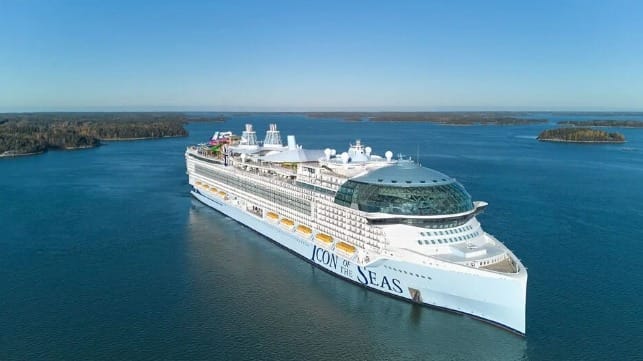
When Icon of the Seas entered service early last year, she became more than the world’s largest cruise ship. She also became the clearest demonstration yet of LNG’s ability to power a vessel of unprecedented scale. Six advanced dual-fuel engines deliver the energy needed to operate a floating city capable of carrying nearly 10,000 people. With her arrival, LNG was no longer a promise. It was a proven solution for the cruise sector.
For all the benefits LNG brings, from cutting sulfur oxides, nitrogen oxides, and particulates to delivering a meaningful CO? reduction against heavy fuel oil, one issue cannot be neglected. Methane slip, the unburned methane that escapes through the exhaust, has been a constant source of attention. Because methane is a GHG that is far more potent than CO? over a 100-year period, even small percentages of slip can damage LNG’s reputation as a climate solution.
A stepwise journey
The cruise segment is now showing how this challenge can be solved in practice. MSC has been central to this progress, with advanced dual-fuel engines powering three LNG-fuelled vessels: Euribia, World Europa and World America. These ships have proven the reliability and efficiency of dual-fuel technology at scale and helped establish LNG as a practical foundation for further emissions reductions. The next milestone will arrive with World Asia, the first cruise ship to feature next-generation dual-fuel engines equipped with advanced methane-reduction technologies. Together, these advances bring methane slip down to levels once thought out of reach.
Cruise vessels typically operate within load ranges where methane slip is significantly lower than in most single-engine applications. This has been confirmed by independent measurements on board MSC Cruises’ LNG-fuelled ships as well as Brittany Ferries’ Salamanca, which recorded an annual average methane-slip coefficient of 1.57 percent. Earlier in-service cruise ship studies reported around 1.7 percent, both well below the regulatory default factors often cited in discussion. These results provide a strong operational foundation for further improvement.
The LNG story in cruise has unfolded through a series of landmark vessels. MSC’s World Europa came first, delivered in late 2022 and was even used as floating accommodation during the FIFA World Cup in Qatar before embarking on her maiden voyage that December. She is powered by advanced dual-fuel engines and carries a 150-kW solid oxide fuel cell demonstrator which was used to test how hybridization could reduce fuel use and emissions. Just over a year later, in January 2024, Royal Caribbean’s Icon of the Seas raised the bar further as the largest cruise ship ever built, also running on advanced dual-fuel engines and proving LNG viable at an unprecedented scale in the cruise sector.
The advancement continues with MSC’s World Asia, which will feature next-generation dual-fuel engines incorporating two-stage turbocharging to optimize efficiency across the entire load range. This configuration aims to set new performance standards for reducing methane slip. One engine on board will pilot an advanced methane-reduction system designed to achieve emissions below 1.4 percent of fuel use across all load points, with results as low as 1.1 percent in a wide operating range. The pilot will validate the technology under real cruise conditions, confirming its consistency across typical service profiles. Similar methane-reduction features are being extended to mid-size and smaller dual-fuel engines, enabling operators of a broad range of LNG-fuelled cruise ships to further reduce greenhouse gas emissions.
Performance at this level depends not only on engine design but also on how systems are operated and maintained. Long-term lifecycle agreements with major cruise lines illustrate the importance of proactive maintenance strategies. For example, Royal Caribbean has a five-year agreement covering 37 ships that includes scheduled and unscheduled maintenance, predictive monitoring, and a performance-based model that shares gains from improved operations. These measures help ensure engines deliver optimal efficiency and emissions performance throughout their service life.
Why cruise matters for LNG
Cruise has become the proving ground for LNG innovation for three reasons. The first is visibility. Cruise ships are destinations as well as vessels, operating close to port cities and coastal communities; therefore, every emissions decision is scrutinised by passengers, port communities, investors, and NGOs. Tackling methane slip delivers significant contributions to GHG emissions and credibly strengthens trust in our sector and in LNG as a whole – vital for the fossil fuel with the longest environmental compliance.
The second is scale and complexity. Cruise ships operate as hotels, entertainment venues, and logistics hubs at sea. Demonstrating LNG’s reliability and emissions performance here builds confidence across the maritime industry. When the largest and most complex cruise ships choose LNG, with Icon of the Seas establishing scale and World Europa adding hybrid capability, it signals that LNG is not a marginal option but a mainstream energy choice for high-profile operators.
Third, cruise is integrating complementary technologies that make LNG better. Batteries and hybrid systems help engines run at more stable loads, which is where methane slip is naturally lower. Fuel cells, waste-heat recovery and shore-power connectivity provide further incremental gains. These steps do not replace LNG. They enhance it, and they create a pathway to renewable drop-in fuels such as bio-LNG and synthetic LNG when supply scales.
LNG offers a strong foundation that continues to evolve. As the industry explores renewable e-LNG and further opportunities to lower methane slip, its overall climate performance can continue to improve. These developments, combined with the growing use of lifecycle partnerships and operational optimisation, will help define LNG’s role within shipping’s broader transition pathway.
Some cruise operators are already beginning to test renewable drop-in fuels. In July 2025, TUI Cruises’ Mein Schiff Relax completed a ship-to-ship bio-LNG bunkering operation via a barge at the Port of Barcelona. Powered by advanced dual-fuel engines, the vessel demonstrated that renewable methane can be used directly within existing LNG systems and infrastructure. Bio-LNG, recycling carbon that is already part of the natural carbon cycle, can reduce emissions by up to 80% compared with traditional marine fuels like HFO.
Even in today’s market, where most LNG-fuelled ships rely on fossil LNG, the greenhouse-gas benefits remain significant. Methane slip from engines has been cut by more than 90 percent over three decades. Advanced methane-reduction technologies now achieve weighted averages close to one percent in real operation. These are not modelling claims. They are practical improvements being delivered in ships entering service now.
One further point deserves attention. At present, both EU and IMO frameworks still rely on default methane slip factors, with no clear guidance yet on how to account for lower real-world values achieved by new technologies. This is an area where progress is needed so that early adopters investing in best-in-class systems receive the regulatory recognition their investments merit.
For cruise operators investing billions in new tonnage, this matters. LNG provides compliance today, a route to renewable gases tomorrow and, with advanced methane-reduction technologies, a practical solution for reducing methane slip. That balance of fuel availability, infrastructure readiness and emissions performance explains why LNG remains the fuel of choice for the cruise segment. Every new LNG cruise delivery marks another step in that journey.

that matters most
Get the latest maritime news delivered to your inbox daily.
Progress in cruise has never relied on a single breakthrough. It is the accumulation of practical advances, ship by ship and class by class. LNG is not standing still. It is adapting, strengthening and proving itself under the most demanding operational and reputational conditions. That is the story cruise is telling today, and it is one that matters not only for passengers and operators, but for shipping’s wider transition to a lower-carbon future.
Maikel Arts is Head of Cruise at Wärtsilä.
The opinions expressed herein are the author's and not necessarily those of The Maritime Executive.
