


World’s First Large LCO2/Multi-Gas Carrier Delivered to Capital
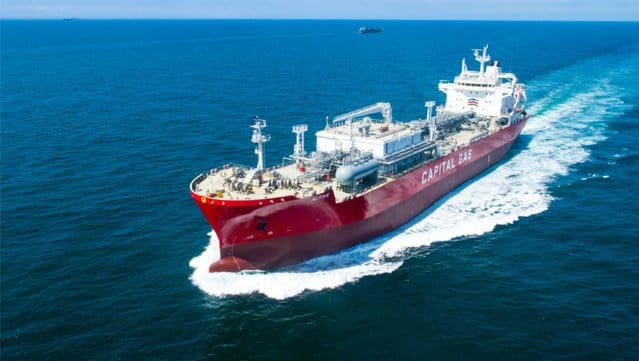
The first large capacity vessel designed to support the efforts for the capture, transport, and storage or reuse of CO2 has been completed, marking a new segment for shipping. The vessel, which has a capacity of 22,000 cubic meters, is designed for charter operations and can move seamlessly between LCO2 transport and gas cargos, including LPG, ammonia, and selected petrochemicals.
Greece’s Capital Maritime Group launched the new operation known as Capital Clean Energy Carriers to develop the emerging market. It initially placed an order for two vessels in July 2023 with South Korea’s Hyundai Mipo Dockyard and later expanded it to four vessels. The ships were designed with an approximate length of 525 feet and a unique cargo system. Capital is saying the vessels will “stand out for their versatility and optionality as they adapt to shifting market dynamics.”
They use a semi-refrigerated gas carrier system. The first ship, named Active (27,926 dwt), was delivered on January 6, and it will be immediately deployed under a six-month charter transporting LPG for an energy trading company. The charter has an option to extend the contract for an additional six months. Active is registered in the Marshall Islands.
Unlike the first LCO2 carriers, which were built tied to the specific Northern Lights project, these ships are owned by a company well established as a tanker operator. In addition to cargo versatility, they can be shifted to support different projects and cargo uses. They are also much larger than the 10,170 dwt Northern Pioneer and her sisters operating to transport LCO2 to the storage project in Norway.
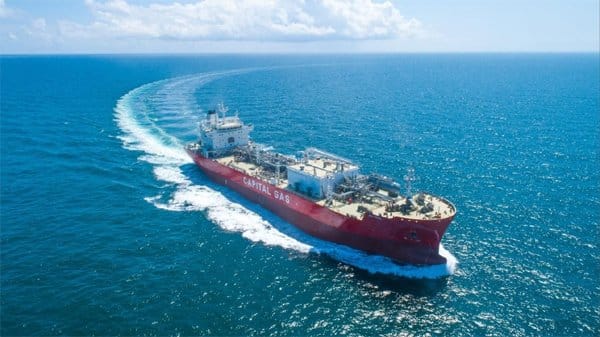
Active completed sea trials in South Korea and now enters the charter market (Capital Clean Energy Carriers)

that matters most
Get the latest maritime news delivered to your inbox daily.
Capital highlights the emerging market opportunities tied to Carbon Capture, Utilization, and Storage. They note that the current carbon capture capacity is around 50 million tonnes per year. They cite data from the International Energy Agency that says capture capacity could reach approximately 430 million tonnes per year by 2030. At the same time, storage capacity, they note could reach approximately 670 million tonnes per year.
As a first mover in this new segment, Capital Clean Energy Carriers is saying the vessels demonstrate its commitment to fleet diversification. The company’s fleet includes 12 vessels to transport LNG. It has nine additional LNG carriers, six dual-fuel medium gas carriers, and three handy LCO2/multi-gas carriers on order to be delivered between the second quarter of 2026 and the first quarter of 2029.
