


With Orderbooks Full, Big Yards May Pass on "Green" Custom Newbuild Orders
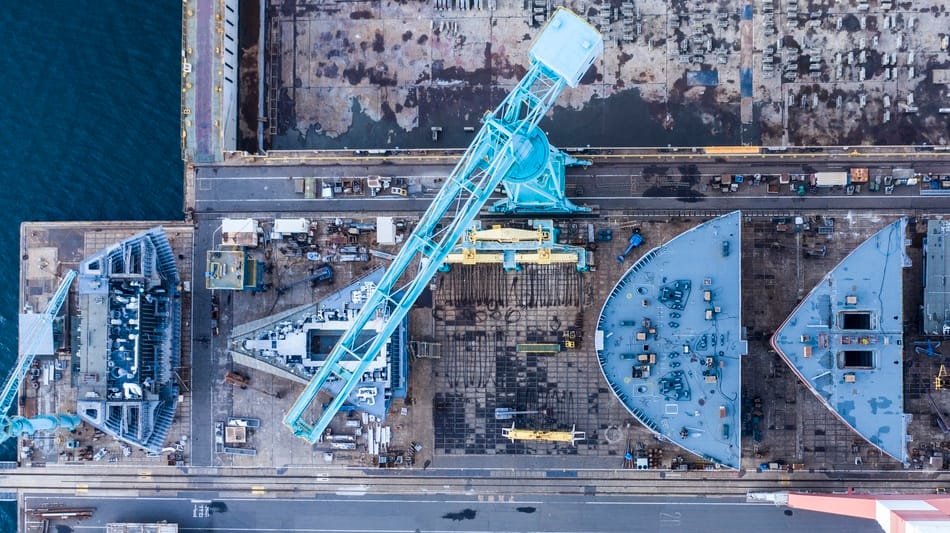
Efficiency was the watchword on the show floor at this year's SMM: the industry's innovators and leaders are focused on reducing use of the bunkers they already have, since every indication suggests that the greenest alternative fuels will only begin to scale up in the 2030s. But suppliers say that when it comes to newbuilds, even comparatively simple efficiency enhancements - a different engine model, custom equipment, a tweak to the hull form - are hard for owners to get right now because big shipyards prefer to build a uniform product.
The problem is commercial. Record orderbooks and scarce drydock space have given high-volume shipbuilders a strong incentive to choose the most predictable orders - and in general, that means serial replications of a proven design. If the owner wants customization, the yard may simply wait for a different opportunity.
"Shipyards typically build on established standard designs and proven production processes," says Dominik Schneiter, CEO of WinGD. "When new propulsion technologies or hybrid solutions are introduced, they often require additional engineering and integration work. Shipyards need to carefully balance innovation with delivery certainty and operational efficiency. This currently slows the adoption of the latest technologies, and it remains an important challenge for the industry as a whole.”
Schneiter is not the only one who sees this as an obstacle to getting innovative technology onto the next generation of ships. "The biggest concern for the shipowners is getting a build slot," says one clean-propulsion supplier, confirming that the biggest shipyards may see innovation as a commercial risk rather than an opportunity right now.
There are ways to get around this, like approaching smaller shipyards that see an opportunity in custom orders. During SMM, Norwegian specialist owner Green Maritime Infrastructure (GMI) signed an order for two hydrogen-powered bulkers from India-based Chowgule Shipyard. At about 3,000 dwt, the vessels will only trade on coastal routes, but they are a rare example of high-spec hydrogen propulsion - and a yard in an emerging shipbuilding region was happy to have the order.

that matters most
Get the latest maritime news delivered to your inbox daily.
The other option is to select efficient technologies that make life easier - not harder - for the yard. If it's a simpler product with fewer components, the shipbuilder will be all too happy to use it, says Mattias Gunnarsson, Vice President of Merchant Solutions Division at MacGregor, a leading supplier of electric and hydraulic cranes, hatches and deck equipment.
"We really push our sustainable electric solutions, not only because they are sustainable, but because they're so much easier to install. There is no hydraulic piping. There is no flushing. There are no leaks. Shipyards start to see that installation hours mean money. Many shipyards try to shorten their delivery times to open new slots, so simplified installation is an opportunity for that," says Gunnarsson.
