


Vessel Backlog Builds in the Baltic Off Russian Ports
Observers have noted that a large vessel backlog appears to be building in the Baltic and the Gulf of Finland as vessels wait to reach Russian ports. The Finnish newspaper Helsingin Sanomat calculated that as of the end of September, there were as many as 150 vessels bound for Russia holding in the region.
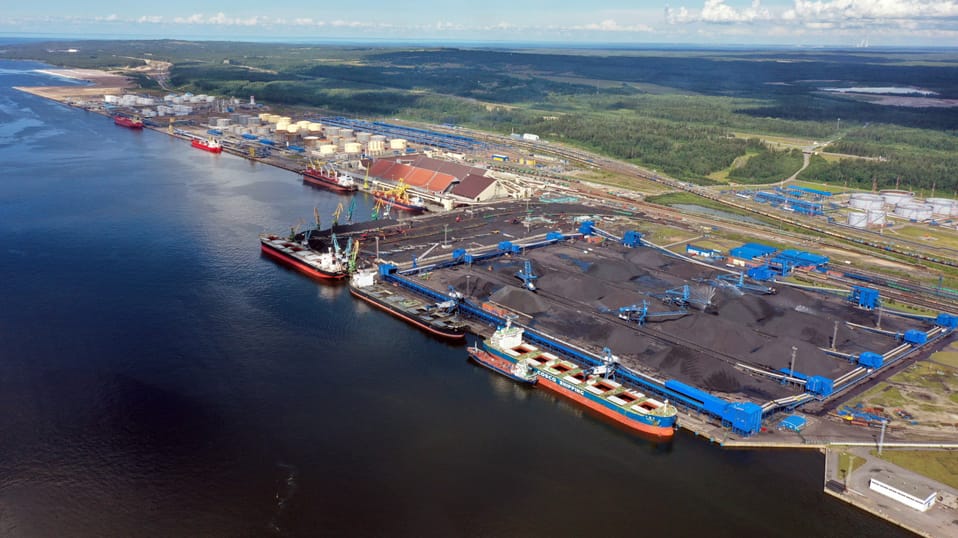
The newspaper’s analysis shows that most of the vessels are trying to reach the ports in the Ust-Luga region, including the oil terminal as well as the neighboring bulk port at Laukaansuu. Some of the others are holding for Primorsk and St. Petersburg.
It reports that the congestion grew through all of September and is now termed as “an exceptionally large number of ships queuing for Russian ports.” Officials at the Gulf of Finland Coast Guard confirmed the paper said that there was a larger than normal number of vessels and a large number of ships waiting for the Russian ports. It noted the number varies and sometimes clears quickly.
Helsingin Sanomat, however, says the backlog appears to be continuing to build. By its calculation, there were 65 tankers and 85 cargo ships waiting on September 30. It spotted two large groupings, one near Laukaansuu and the other further out to sea. This included 16 tankers and 30 general cargo ships in the area around the port complex near Ust-Luga and Laukaansuu.
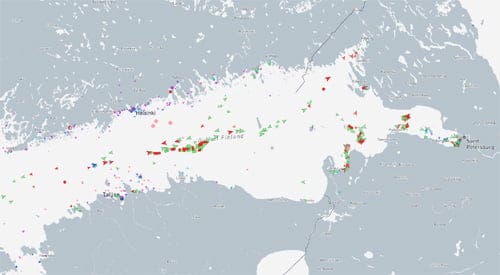
A line of vessels stretches across the Gulf of Finland and into the Baltic, with two large groupings of ships waiting to get into Russian ports (courtesy of Marine Traffic)
It also pointed out that there was a line stretching for more than 30 miles across the Gulf of Finland and into the Baltic. As of September 30, it said there were 46 vessels making up the lineup.
Among the reasons that experts believe are contributing to the buildup is the impact of Ukraine’s attacks in the Black Sea. Traffic into the Black Sea has fallen dramatically over the course of the last two or three months as Ukraine stepped up its attacks. There have been reports that traffic was suspended entirely to some of the Black Sea ports while terminals handling grain and coal were reportedly closed. The strikes, for example, at the Caspian Sea Pipeline terminal, have also reportedly caused tankers to avoid Russian waters in the Black Sea.
Russia has reportedly been forced to shift cargo shipments north to its Baltic ports. Reuters reported earlier in the month that a chemical and fertilizer terminal at Laukaansuu had been repurposed for grain and coal shipments.
Helsingin Sanomat raises safety concerns as the buildup of vessels grows, especially in the Gulf of Finland. Its analysis also indicates that a portion of the vessels have been sanctioned by Ukraine and cited for operations including smuggling arms, transporting stolen Ukrainian goods, and evading sanctions.

that matters most
Get the latest maritime news delivered to your inbox daily.
The report speculates that waiting times in the Russian ports are also contributing to the congestion. It cites data of a 4.61-day wait at Laukaansuu last week.
Finnish authorities told the newspaper they were aware of the backlog and were continuing to monitor the situation closely.
