
Can a US-Approved Sale Clean a Shadow Fleet Tanker?
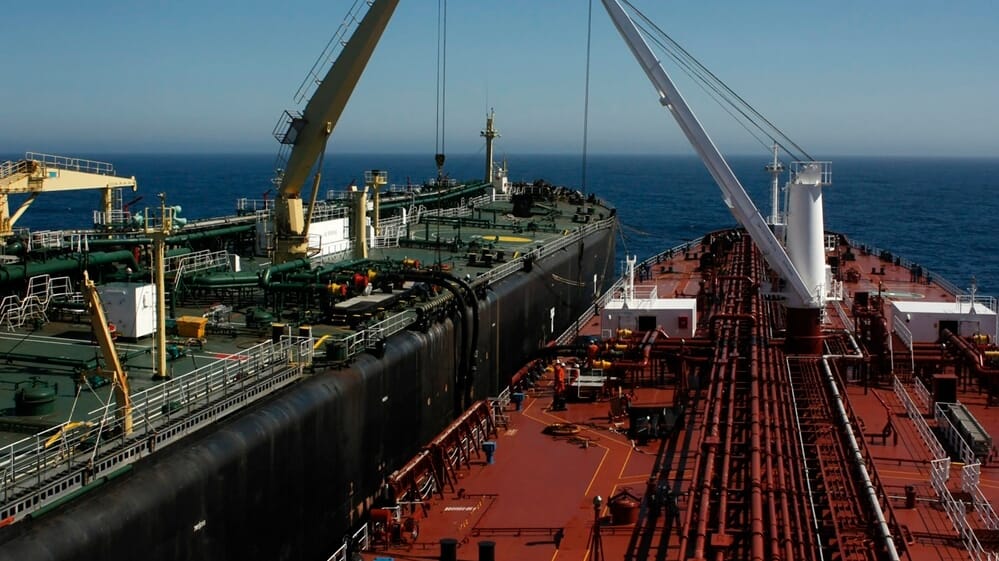
On October 19, US Energy Secretary Chris Wright told an audience in New York that Washington would move some ships from "the bad-guy fleet to the good-guy fleet." "We are converting dark tankers to legitimate tankers," he told Bloomberg. "There is no removing of sanctions."
The idea is simple. Investors buy idle sanctioned tankers, repair them and put them to work carrying oil that is not under sanctions. With tanker rates high and a 15-year-old suezmax reportedly worth about four times its 2021 value, there is money to be made. According to Reuters, a US official familiar with the discussions has said Washington is considering lifting sanctions on individual tankers, case by case. That sits uneasily with Wright's own words about not removing sanctions, and the gap between the two messages is part of the problem.
No written rule or licence has been published yet. But whatever form the scheme takes, one question will decide whether these ships really return to mainstream trade: who will insure them?
The listing follows the ship
Under the EU's Russia sanctions, vessels are listed by IMO number in Annex XLII to Regulation 833/2014. The listing attaches to the hull, not to the owner. Under Article 3s, EU persons may not give a listed ship access to ports, anchorages or locks, register it under their flag, or buy, sell or charter it. Nor may they crew or operate it, or provide it with brokering, financing or insurance.
A change of owner does not change any of this. Nor does a decision in Washington. The EU and the US keep separate lists. The problem bites hardest for tankers that appear on both. A tanker that OFAC has cleared can stay on the EU list, and while it does, an EU insurer cannot cover it, an EU broker cannot place the risk and an EU port cannot let it in. The UK keeps its own list of sanctioned ships, with its own rules and its own procedure for removal.
Brussels does delist ships
The EU is not blind to change. In its 20th package in April 2026, it removed 11 tankers from Annex XLII while adding 46 new vessels. The Commission has said delisting is possible for vessels returning to compliance, and in May the UK removed one of the same tankers from its own list. So a route exists. But it is a separate route, decided in Brussels and London on their own evidence and at their own pace, and nothing obliges them to follow Washington.
Why this matters for P&I
Ten of the twelve clubs in the International Group are run from the UK, the EU or Norway, which applies the EU's Russia sanctions. For a shipowner, International Group cover is what opens doors: charterers, banks, ports and coastal states ask for it. A converted tanker that is cleared in Washington but still listed in Brussels or London is, in practice, shut out of that market. It is left with the kind of cover it had in the shadow fleet: small or unknown insurers, often outside the main regulatory systems.
The purchase itself raises a second problem. Where the seller or its owners are themselves under an EU asset freeze, EU banks, brokers and insurers cannot take part in the deal at all, because the purchase price would make funds available to them.
The third problem is the ships. Analysts point to old hulls, years of patchy maintenance and documents that may hide a ship's real condition. Kpler estimates that only about 24 of the roughly 160 US-sanctioned supertankers it tracks could realistically return to mainstream trade, once age and ownership are taken into account. About 46 of them are already more than 20 years old. Underwriters will price that in, if they quote at all.
The papers will need closer checks
This matters beyond the clubs. Since late 2024, the UK and several Nordic and Baltic states have asked suspected shadow fleet tankers in the English Channel, the Danish straits and the Gulf of Finland to show proof of insurance. Converted tankers will arrive with new names, new owners, perhaps a US authorization letter, and certificates from insurers few people know. Port and coastal officers will need to check not only that a certificate exists, but who stands behind it, and whether the ship is still listed in Europe. A US approval is not an EU delisting.
What underwriters should ask
Before quoting a converted tanker, an underwriter in London, Oslo or the EU should check at least four things:
- whether the IMO number is still on Annex XLII or the UK list, whatever the ship is now called;
- what exactly the US authorization covers, and whether it exists in writing;
- who the new beneficial owners are, who was paid for the ship and where the money went;
- the ship's class, flag and port state control history, including any AIS gaps or ship-to-ship transfers.
Washington can decide whom it sanctions. It cannot decide whom European insurers may cover. If the aim is to bring these tankers back into the mainstream market, the US, the EU and the UK will need to move on the same ships at the same time.
that matters most
Get the latest maritime news delivered to your inbox daily.
Until then, a US-approved sale may give a tanker a new owner, but not a clean record in the market that matters most for insurance.
Farzaneh Javadi is a PhD candidate in Public Legal Sciences at the University of Minho, Portugal, and a researcher at JusGov, where she works on sanctions, maritime trade and AI.
The opinions expressed herein are the author's and not necessarily those of The Maritime Executive.