


Drought Makes Upper Rhine Unnavigable, Driving Barge Rates to New Record
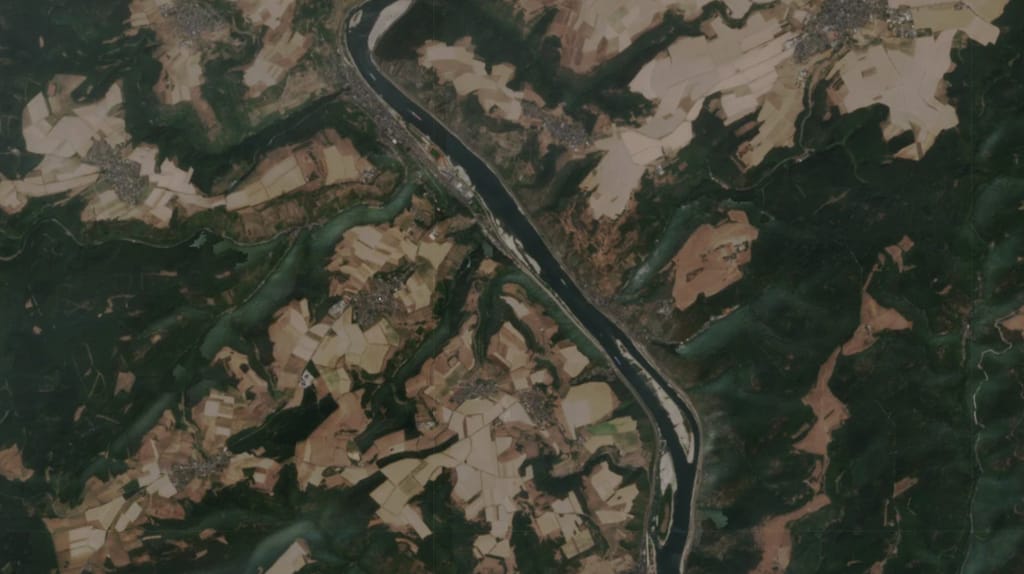
Low summertime water levels are a routine problem for navigation on the River Rhine, especially in recent years, but the intense drought conditions affecting Western Europe have left the waterway all but unnavigable at a key chokepoint - sending freight rates to record highs.
The limiting factor is the gage depth at Kaub, downriver from Wiesbaden. At present it is less than 12 inches, the bare minimum for most barges to transit in laden condition. The shutdown closes off access above Kaub on the Upper Rhine, which serves customers from Mannheim to Strasbourg to Basel, Switzerland.
Even when passable, according to Reuters, barge loadings have been restricted to as little as 10 percent of capacity in order to minimize vessel draft and enable safe passage. This requires barge owners to charge more per tonne transported, since the vessel is still navigating the same route with reduced cargo. Since June, the price has roughly tripled.
"Industry is transferring cargo to rail and road transport, but this is also expensive because of the extra demand," one trader told Reuters.
A shutdown on parts of the Lower Rhine could begin as early as next week, according to Argus, with implications for inland refinery operators that rely on water transport to move products. Rail network capacity is already saturated, and commodity markets in the area are facing substantial disruption.

that matters most
Get the latest maritime news delivered to your inbox daily.
Drought is also affecting the Danube, where record-low water levels are disrupting traffic and exposing relics of bygone eras. Cruise and commodity traffic on the river has effectively come to a stop, and operators of two nuclear power plants in Romania and Hungary have had to shut down because of a lack of cooling water from the river.
The low water levels are driven not just by lack of rainfall, but by extreme heat events that increase evaporation - all made more likely by recent adjustments to average atmospheric temperature, according to a new study by researchers at Imperial College London and ETH Zurich.
