


U.S. Offshore Wind Developers Stop Work and Explore Next Steps
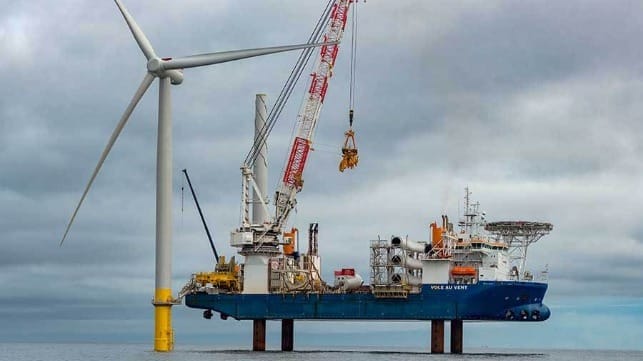
From New England to the Mid-Atlantic regions, offshore wind developers reported they were complying with the government order to suspend offshore installation work while also expressing frustration. The Bureau of Ocean Energy Management followed up the public announcement with a written notification to the developers of the five projects ordering them to stop their offshore work on the Outer Continental Shelf while the government conducts a review.
Several of the projects highlighted that they were just weeks away from beginning to deliver power under their respective power agreements. Ørsted said that its Revolution Wind project was expected to begin generating power in January, while Dominion Energy said its project was “within months” of generating power. Vineyard Wind 1 has already started delivering power as it was proceeding with its commissioning process.
Canary Media obtained a copy of the BOEM letter and reports that it says the Department of War and the Department of the Interior would be reviewing whether the risks posed by the projects can be mitigated. The companies confirmed the notice says it is a 90-day suspension, but that BOEM can extend it for additional 90-day intervals. In the past, the federal courts have been critical of the open-ended nature of the review ordered by Donald Trump in January 2025 and, in one case, set a timeline for BOEM to report back to the court on progress.
“Based on BOEM’s initial review of this classified information, the particularized harm posed by this project can only be feasibly averted by suspension of on-lease activities,” the letter asserts, according to Canary Media. “BOEM will consider all feasible mitigation measures before making a decision as to whether the project must be canceled.”
Each of the projects highlighted that they had gone through years of review. Ørsted specifically noted that Revolution Wind and Sunrise Wind consulted closely and directly with the U.S. Department of Defense Military Aviation and Installation Assurance Siting Clearinghouse to “evaluate and address potential impacts to national security and defense capabilities,” from the construction and operation of the two wind farms.
Equinor, which is developing Empire Wind, highlighted that it is complying with relevant national security-related requirements. It said it plans to continue to work with BOEM and other federal agencies to continue to implement all necessary mitigation for the project. Equinor also highlighted that it has extensive experience in the U.S. and around the world operating offshore energy infrastructure and working with military and civilian authorities to ensure compliance with national security requirements.
Dominion Energy responded by saying Coastal Virginia Offshore Wind is “essential for American national security,” noting that Virginia is the home to major military installations as well as the largest warship manufacturer. It noted that Virginia’s demand for electricity is doubling, and the project is one key element in the plan to meet energy needs, which include AI operations and the largest concentration of data centers.
The Virginia project highlights that it is located 27 to 44 miles offshore and its review and approval involved close coordination with the military.
The impact of the Trump administration order, analysts noted, goes far beyond the projects themselves. They involve multiple subcontractors and have placed orders for shipbuilding, have contracts for support services, and have committed to investments in ports and manufacturing capabilities. Equinor highlights that Empire Wind has dozens of vessels and around 1,000 people who have been working in conjunction with the project.

that matters most
Get the latest maritime news delivered to your inbox daily.
Commentators noted that one commercial-scale offshore wind farm, South Fork Wind off New York, delivered its first power in 2023 and completed commissioning in July 2024. It, along with two smaller pilot projects, two wind turbines for Dominion operating for the past five years, and the Block Island Wind Farm, which has been operating since 2016, were not included in the order and continue normal operations.
The companies each said they would be engaging with BOEM and the other agencies to resolve the concerns. Ørsted said that in addition to engaging with the BOEM and the permitting agencies, it would evaluate potential legal proceedings.
