


Tug Attacked Near Strait of Hormuz
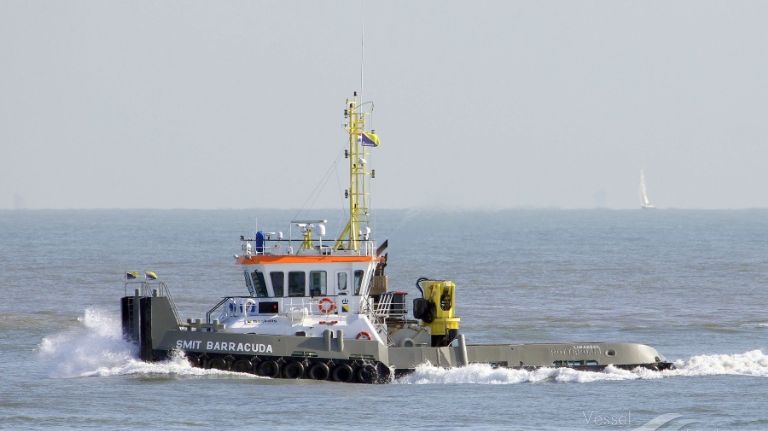
Merchant ships face serious risk of attack in and around the Strait of Hormuz, and not just tankers, bulkers and boxships. On Sunday, a tug was attacked and hit at a position to the east of the Musandam Peninsula, near the seaward entrance to the strait.
The tug was moving southbound parallel to the peninsula when it was struck by two unknown projectiles, according to UK Maritime Trade Operations (UKMTO). One crewmember suffered minor injuries. The vessel was able to continue its voyage despite damage.
Vanguard Tech has identified the vessel in question as the Dutch-flagged tug JIF Barracuda (IMO: 9345506, ex name Smit Barracuda). The vessel's AIS signal was last detected on the 17th, under way off Ras Al-Khaiman and headed in the direction of the strait's western entrance.
The attack's location on the east side of the strait - about 20 nautical miles to the northeast of Khor Fakkan - is situated far from most of the recent kinetic activity associated with the Iranian campaign against GCC-linked shipping, but not all. In recent weeks, suspected Iranian attacks have been reported as far west as Qatar and Al Jubayl.
On Friday, the master of a tanker reported that his ship was approached by unknown assailants in a small boat off Al Jubayl in the central Arabian Gulf. The occupants of the boat launched an RPG at the ship, damaging the port quarter. No harm to the crew was reported.
The fast pace of Iranian attacks has not deterred tanker operators from moving crude through the waterway, despite the risks to their vessels and crewmembers. Analyst Tom Bike identified 11 vessels on the "Hormuz Shuttle" route in broad daylight satellite imaging on October 19, suggesting that the oil is still flowing out of the Gulf.
In an interview with Fox News over the weekend, IMO Secretary General Arsenio Dominguez suggested that such transits should stop until safety can be assured, because seafarers "continue to perish" on the route.

that matters most
Get the latest maritime news delivered to your inbox daily.
"What we've seen right now is an increase in [false-flagged ships] that are taking the risk and act as shuttle tankers in order to bring goods in and out. That's one of the reasons that we're seeing an escalation. It's the irresponsible shipowners that are taking the risk in order to trade," he said. "It is not safe, the negotiations need to take place, the guarantees need to be in place before any seafarers and any ships are put at risk."
Top image courtesy VesselFinder.com
