


Trump: U.S. Will Provide "Risk Insurance" For All Shipping in the Gulf
One day after leading marine insurance underwriters decided to withdraw war risk cover for the Persian Gulf and Strait of Hurmuz, the White House has ordered a foreign-aid policy bank to begin offering "guarantees" for shipping of all nations through the strategic waterway. The decision, if implemented, would relieve pressure on foreign-flag shipowners and allow overseas energy buyers - particularly in China - to continue to purchase Mideast oil and gas.
In a statement, President Donald Trump said that he has ordered the U.S. Development Finance Corporation (DFC) to provide "political risk insurance and guarantees" for the financial security of all maritime trade - especially petroleum - in the Gulf region.
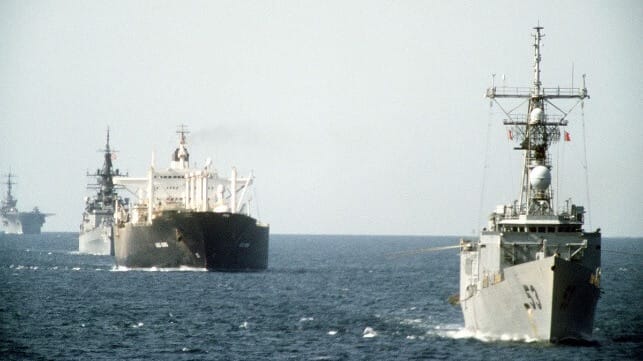
He added that if it becomes necessary, the U.S. Navy will be tasked with escorting tankers through the Strait of Hormuz, a mission reminiscent of Operation Earnest Will (the "Tanker Wars") in the late 1980s. During Earnest Will, participating foreign tankers were required to reflag into the U.S. registry to obtain protection.
"No matter what, the United States will ensure the free flow of energy to the world," Trump promised. "The United States' economic and military might is the greatest on earth."
The intent behind the policy is to keep global energy prices from spiking further, especially as the White House has plans to further intensify attacks on Iran. The price of benchmark Brent crude oil has already risen by 14 percent since the start of the conflict last weekend, and could rise further if key export terminals remain shuttered.
“It’s becoming a growing concern that the energy markets could face pressures in the coming days as the military campaign intensifies and expands in geographic scope,” a person familiar with White House deliberations told Politico on Tuesday. “Access to the Straits of Hormuz is obviously vital for both natural gas and crude oil shipments, especially from Qatar [LNG] and Saudi [crude oil].”
Escort workload
If actualized, the additional tasking of an escort mission would add to the workload of Navy surface forces in the region, which are already engaged with Tomahawk strikes and air defense. An estimated one-third of the deployed U.S. fleet is in the Middle East at present.

that matters most
Get the latest maritime news delivered to your inbox daily.
The practical availability and timing for Navy escorts would also have to be weighed: during the last shipping-defense mission joined by the Navy, the Houthi Red Sea crisis of 2023-5, U.S. and allied naval assets were not initially available to provide escorts, even for U.S.-flagged tonnage. The current drone-and-missile risk zone in the Gulf spans a far larger region, covering ports and sea lanes from Kuwait in the north to Duqm in the south - in shipping terms, a transit distance of roughly 1,000 nautical miles.
Behind closed doors, U.S. Navy officials have already told tanker executives that there is presently no availability for an escort mission, Lloyds List reports - and they have provided no guarantees that there will be in the future.
