


To Offset Declining Frigate Force, UK Debuts Unmanned Strategy for GIUK Gap
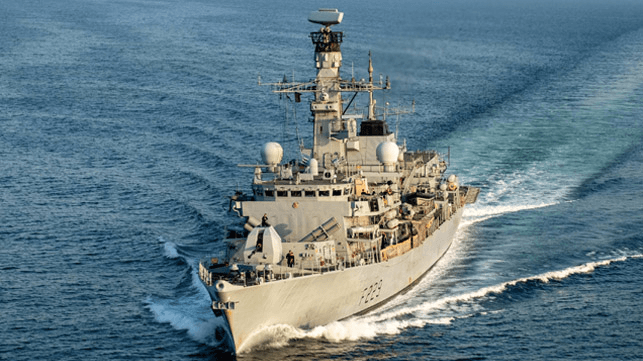
To offset increasing Russian submarine activity in the North Atlantic, the Royal Navy is rolling out a new plan for high-tech monitoring in the Greenland-Iceland-UK (GIUK) Gap, the line of control that separates Russia's Northern Fleet from the open ocean. The service is putting new emphasis on unmanned technology for this task, reflecting the age and uncertain future of its conventional frigate fleet.
In a display day for media last week, British Secretary of State for Defense John Healey welcomed reporters aboard the "experimental ship" XV Patrick Blackett, a test platform for unmanned systems. Items on view included the large unmanned underwater vehicle Excalibur, a large quadcopter, and a mockup of the unmanned helicopter Proteus, among others.
The new "Atlantic Bastion" operating plan is squarely aimed at Russian undersea activities, including perceived threats to the UK's subsea cable network. Russian vessels like the military research ship Yantar have been spending large amounts of time near Britain's fiber-optic comms cables, raising serious concerns about spying and sabotage risks. British officials say that the Russian presence in UK waters has risen by 30 percent in recent years, stretching the Royal Navy's ability to track and monitor the activity. The service's plan is to deploy unmanned devices to watch Russian movements, offsetting the limitations of the aging and overstretched frigate force.

that matters most
Get the latest maritime news delivered to your inbox daily.
But many defense observers view the drone deployments through a more critical lens, suggesting that it obscures a long-term underinvestment in Britain's traditional antisubmarine-warfare capabilities. "The Royal Navy does not have the ships to do this job coherently or credibly and is looking to address it with drones as they are cheaper," RUSI's Prof. Peter Roberts told BBC.
The high-tech GIUK Gap patrol strategy is paired with a newly-inked defense agreement with the government of Norway, which will foster closer links between the two nations' navies. Among other benefits, the "Lunna House" accord will see the two services acquire frigates of the same class. Through standardization, interoperability, access to the Norwegian recruitment pool and investment from the Norwegian state, this could potentially reduce further erosion of NATO ASW capabilities in the North Atlantic.
