


Iran Threatens to Set Ships "On Fire" in Strait of Hormuz
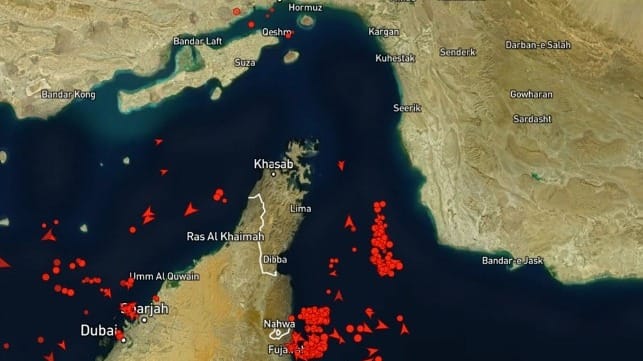
Iran's senior leadership has announced a full shutdown of the Strait of Hormuz and threatened to "set on fire" any vessels passing the blockade. Multiple leading P&I clubs have announced that they are suspending war risk insurance for transits of the strait effectively making the risk exposure too high for tanker owners to bear, and energy shipping traffic through the strategic waterway has ground to a near-halt. As of Monday night, maritime tracking platforms showed virtually no (disclosed) tanker transits through the TSS.
According to the FT, broking sources say that war risk insurers are pulling previously-arranged coverage for future transits of the Strait, transferring the full risk of an upcoming transit to the shipowner for the short voyage. The decision suggests that P&I clubs and reinsurers see so much uncertainty in Iranian attacks that they can't calculate an appropriate rate - even an exceptionally high rate, like the one percent of hull value charged for Ukraine-bound vessels during the peak of the Russian blockade.
"It is already evident that reinsurers’ appetite for war risk exposure is tightening, and in practical terms, it will result in reinsurers withdrawing capacity at short notice," said leading P&I club Skuld in a statement. "Against this backdrop, the association has therefore decided to issue the assureds with a notice of cancellation of the War Risk Cover."
The withdrawal of war risk coverage will take effect on March 5, 72 hours after notice was issued. It extends throughout the Arabian Gulf and the Gulf of Oman. Gard, NorthStandard, London P&I and the American Club have followed suit as well.
Basic P&I, FD&D and Excess Wark Risk are unaffected - but without baseline war risk cover, owners are unlikely to venture into an active combat zone.
Gard said that it was still working on the terms of a buy-back option for shipowners to reinstate their war risk coverage at an extra cost. For now, Gard is not offering reinstatement until after it has ironed out the terms it would like to receive.
Basic P&I, FD&D and Excess Wark Risk are unaffected - but without baseline war risk cover, owners are unlikely to venture into an active combat zone.
In another sign of the added risk and cost for owners who wish to operate in the broader region, the ITF and the Joint Negotiating Group (JNG) have designated Hormuz, the Arabian Gulf and most of the Gulf of Oman as a formal high risk area, triggering extra pay and certain extra rights for seafarers in the region. Owners are also advised to increase security preparedness to ISPS Level 3.
The list of crewmember benefits for this new designated warlike operations area (IBF High Risk Area) includes:
- a bonus equal to the basic wage for the duration of time in the zone
- double compensation for death and disability;
- and a right to refuse sailing, with repatriation at company’s expense plus two months' of wages.

that matters most
Get the latest maritime news delivered to your inbox daily.
The physical and financial risks for owners have added up to a suspension of traffic - for now. According to maritime data consultancy Windward, there were zero active tanker transits in the strait as of late Monday. "The Strait is technically open, but commercial tanker passage has effectively ceased," Windward said in a statement.
Maritime analysts have been quick to note that Iran is heavily dependent upon oil sales to China for revenue, and will not be able to afford to fully close the strait to its own tanker traffic - nor can it risk angering its only real customer. Chinese refiners also buy oil from Iraq, Kuwait and Saudi Arabia, and a shutdown of any duration for the GCC nations' tanker traffic would attract China's attention.
