
Study Finds $1.4B Price Tag for Alaska Green Methanol Cruise Corridor
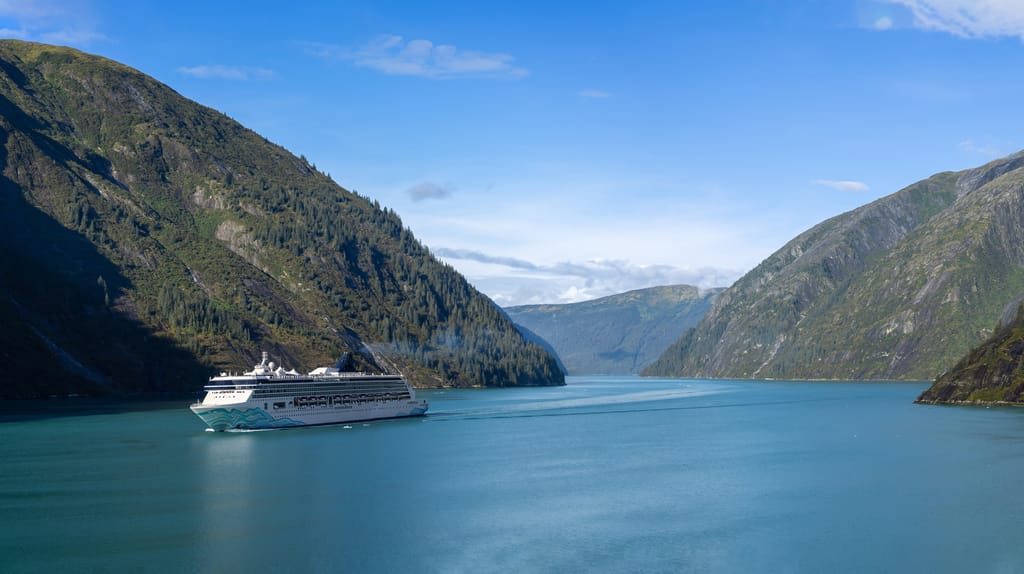
Cruise passengers on the popular Washington, British Columbia and Alaska route would face the prospect of paying hundreds of dollars in extra ticket costs per cruise in order to sail aboard green methanol-fueled ships, a new study finds. The recently-completed review suggests that - in the absence of carbon legislation - regional plans for the "green corridor" could hinge upon whether passengers are willing to pay a steep premium.
In 2022, 15 organizations with a direct interest in cruising along the route came together and established the Pacific Northwest to Alaska Green Corridor project. The primary goal of these "First Movers" was to explore the possibility of the world's first cruise green corridor, which would be achieved by accelerating the deployment of low- and zero-greenhouse gas emission ships.
The partners' first actions included commissioning a feasibility study on the introduction of green methanol-powered ships for deployment by the early 2030s. Now, a study by the Mærsk Mc-Kinney Møller Center for Zero Carbon Shipping has returned the verdict that although the green methanol corridor is technically and regulatorily feasible, it faces hefty financial challenges. Making the project economically viable would require closing a cost gap of $1.4 billion to support corridor operations over a 25-year period.
The additional cost of a green corridor would require a market willing to pay green premiums for low-carbon transportation, which would raise costs for cruise passengers. To make the corridor feasible, passengers must be willing to pay an additional $360-$480 per cruise. The amount could fall to $185-$280 if optimized financing were secured and the proposed IMO Net-Zero Framework (NZF) regulations were adopted. Assuming the NZF is not in place and only optimized financing is considered, passengers would be required to pay between $310 and $405.
"As a result, the project continues to face challenges in achieving economic feasibility. Further exploration of cost management strategies is required to begin narrowing this gap," the study states.
The corridor also faces other obstacles. Specifically, there are still gaps to resolve in regional fuel supply and infrastructure. Evolving U.S. policies are adding to the uncertainties: while the plan was to invest in a U.S.-based green methanol production facility to serve the corridor, the Trump administration's stance on alternative fuels has since changed the dynamics.
The study is based on a scenario in which four cruise ships make 20 round-trip calls in a season and bunker their fuel in Seattle or Vancouver. For this route, 120,000 tonnes of green methanol would be required annually. In effect, this would enable an estimated 320,000 passengers to sail on low-emission cruises, abating 224,000 tonnes of CO2e each season.
that matters most
Get the latest maritime news delivered to your inbox daily.
Over the 25-year lifetime of the corridor, a total of 5.6 million tonnes of CO2e would be abated by the four cruise vessels operating their Alaskan itineraries on green methanol rather than conventional fuel.
"The study enhanced the port's understanding of the elements required to produce, deliver, and bunker green methanol in cruise ships along this route. The port will leverage these learnings as we continue exploring pathways for sustainable maritime fuels in the Pacific Northwest," said the Port of Seattle.