

Strike Damage Confirmed at Giant Saudi Refinery Complex
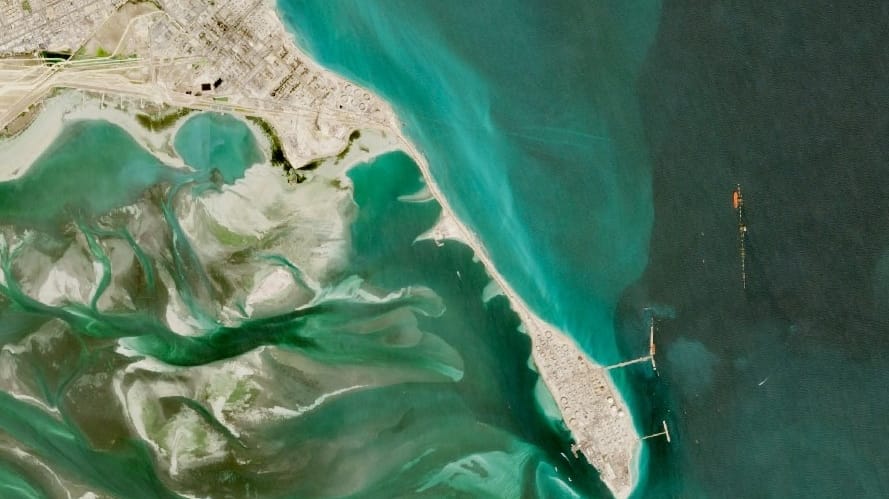
Commercially-available satellite imaging reveals that the Houthi missile strike on the giant oil export hub of Ras Tanura hit a critical component of the site's refining complex.
The unit in question appears to be a cracking unit at the refining complex. Open-source intelligence analysts suggest that the refinery has stopped flaring, a sign that it has shut down or curtailed its operations.
Ras Tanura normally processes up to 550,000 barrels per day, making it one of the largest refineries in Saudi Arabia. The shutdown will reduce throughput for production of diesel, jet fuel, gasoline and bunker fuel, all in short supply on the global market. The timing is poor; most refineries have been running flat-out to capture profits in a period of tight supply conditions, and some have even been extending service intervals to keep running.
The hits on the refinery have not impeded the export of unrefined crude, and Saudi Aramco continues to ship as much as possible out of its Gulf and Red Sea loading terminals. At Ras Tamura and Juaymah, satellite imaging captured nine VLCCs loading simultaneously, enough to carry 18 million barrels at once, according to Bloomberg's Javier Blas. By his calculations, Aramco has fully recovered its prewar crude oil export volumes, and nearly recovered its product exports as well.
According to the Associated Press, there is compelling evidence to suggest that Russian imaging satellites have been used to support Houthi strikes on Saudi energy facilities. Swiss geospatial consultancy Aurorah Geosignal Intelligence told the AP that there was a "100% match" between the movements of Russian government satellites over Saudi sites and subsequent Houthi missile attacks, including events as recent as October 19.

that matters most
Get the latest maritime news delivered to your inbox daily.
Houthi and Saudi officials confirmed to the AP that the Houthis have access to Russian satellite intelligence products. Iranian military advisers in Yemen provide both the raw imaging product and the analysis needed to interpret it, AP's sources said. The officials added that the Houthis also have access to Chinese satellite imaging products.
???? Satelitte imagery confirms that the Ras Tanura Refinery was struck (less than 48 hours ago) damaging a processing unit. https://t.co/W7bVJRSYsg
— MenchOsint (@MenchOsint) October 28, 2026