


Show of Force Scares Off Pirates While Second Vessel Pays Ransom
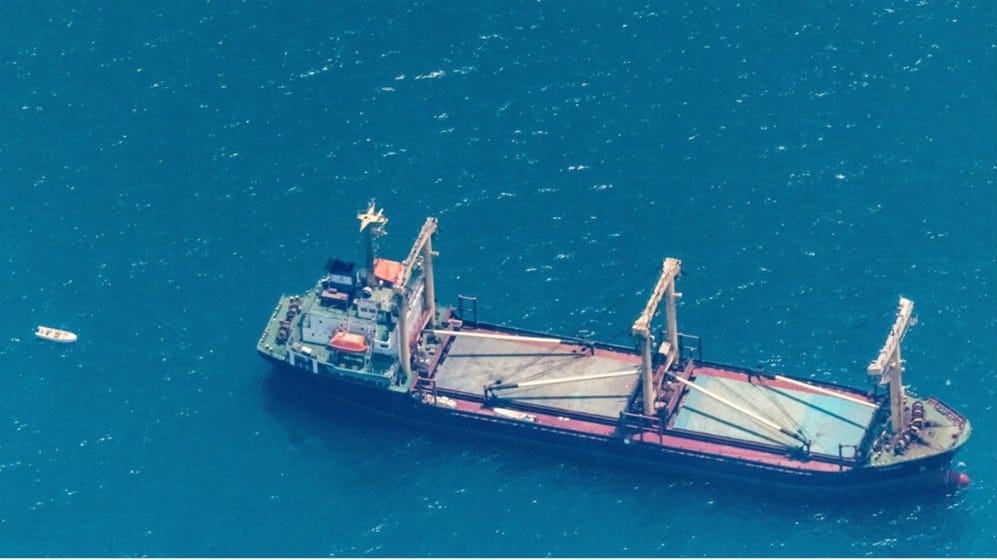
Two of the commercial ships hijacked by Somali pirates were recently freed, while four other small tankers remain under the control of the pirates. The situation continues in what is now reported to be the most active period of pirate activity off the Horn of Africa since 2013.
The EU monitoring and security operation EU NAVFOR Atalanta reports that a show of force was able to scare off one pirate group that had boarded a bulker off the coast of Yemen last Thursday, September 10. The Glamor (24,000 dwt), a Greek-owned bulker registered in Saint Vincent and the Grenadines, was targeted while approximately 98 nautical miles southwest of Al Mukalla, Yemen. The vessel appears to have been operating in and out of Djibouti, and the Maritime Security Centre Indian Ocean (MSCIO) later reported the vessel had been boarded by a pirate action group approximately 38 nautical miles southwest of Balhaf, Yemen.
Atalanta reports that the crew of the bulker was able to stop the vessel and shut down all of its systems as they were being overtaken by the pirate group. They fled into the vessel’s citadel before six armed pirates got aboard the vessel.
The EU operation redirected naval forces when it was advised of the incident, and it reports a Japanese reconnaissance aircraft carried out show of force flights over the bulker. The Indian Navy, according to additional reports, also sent one of its vessels patrolling the Indian Ocean to the aid of the bulker. Atalanta speculates that the pirates, seeing that international forces were responding, and with the crew locked in a safe area, decided to flee the vessel. The company’s security officer later confirmed to Atalanta that the vessel and its crew were safe and the incident had been resolved.
The assault on the Glamor was the 25th incident reported to Atalanta since the start of 2026. It said that it was still monitoring the other vessels that had been boarded and were being held by pirate groups.
One of those vessels, the small cargo ship Sward (8,500 dwt), was released on September 11 after 138 days in captivity. The French news agency AFP (Agence France-Presse) confirmed the release, saying that an undisclosed amount of ransom had been paid. The cargo ship, which is registered in St. Kitts and Nevis, was carrying a cargo of fertilizer bound for Mombasa, Kenya, when it was boarded on April 26. It has a crew of 17, made up of 15 Syrians and two Indians.
Media reports suggest that in addition to having been held captive, the pirates used the vessel as a mothership for other attacks. This included seizing at least two Iranian dhows and the Cameroon-flagged cargo ship Lutuf.
The unconfirmed reports suggest that the ransom was between $1.7 million and $2.7 million for the release of the Sward. The pirates left the ship near Garacad, Yemen, on September 11, with the reports saying they were met and driven away in trucks. The same reports say a ransom of $40,000 was paid for two Iranian fishing boats.
The cargo ship Lutuf was also freed, with varying accounts of the circumstances. The government in Somalia and the Turkish Navy reported the vessel was freed by force, with commandos killing 14 pirates and destroying four small boats. The cargo ship was carrying Turkish military equipment for a base in Somalia. The authorities in the Puntland region of Somalia are disputing these stories, instead saying a ransom of $2.5 million was paid for the release of the vessel.

that matters most
Get the latest maritime news delivered to your inbox daily.
Four other ships remain under the control of the pirates, with two tankers being held as long as the Sward. The Honour 25 was hijacked on April 21 and the Eureka on May 2. The tanker Asana was hijacked on July 17, and the tanker Sibu I (also known as Seamull) was hijacked on August 20.
Reports have indicated that there were ransom talks with demands from countries including Egypt and Pakistan to free the vessels’ crews, who are their citizens. Security analysts have warned against paying ransom as they believe it encourages more piracy. Reports have said the unrest in the region, and possible support from the Houthi militants in Yemen might also be contributing to the surge in piracy activity in the Indian Ocean and off the Somali coast this year.
