


Russian Oil Tanker Arrives Off Cuba Despite U.S. Ordered Embargo
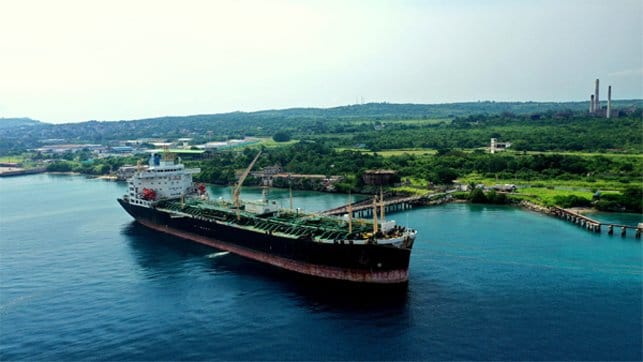
After three weeks of transit and a “cat-and-mouse” game crossing the Atlantic, the Russian-flagged tanker Anatoly Kolodkin is ready to reach Cuban waters late on Sunday and dock by Monday or Tuesday. Sunday afternoon, The New York Times reported, citing “a U.S. official brief on the matter,” that the Trump administration has decided to let the vessel proceed to Cuba.
Russian officials have spoken for weeks in support of the Cuban regime and people. They had said they would be sending humanitarian aid and denounced the U.S. pressure campaign. Cuba has not received an oil shipment since early January, after Nicolás Maduro was deposed in Venezuela, which had been the island’s main supplier.
Trump has said he could do anything he wanted with Cuba, and he would have the honor “of taking it.” However, U.S. officials have been quietly saying they would consider a humanitarian move for the island, which in recent weeks suffered two island-wide power failures. Residents are living with fuel rationing, but the key concern, in addition to power, is the supply of water.
The Anatoly Kolodkin, loaded with 730,000 barrels of crude at Primorsk, Russia, departed on March 8. Someone aboard the vessel had set its AIS transmission for most of the crossing indicating the destination as “Atlantis.” By Sunday, however, the vessel had changed its AIS to read Matanzas, Cuba, arriving on March 31. Its AIS signals have shown the tanker moving at 12 to 13 knots, and by Sunday afternoon, it had passed the eastern tip of Cuba and was sailing along the north shore.
Open source analysis showed the Trump administration had available at least two Coast Guard cutters, USCG Tahoma near Florida and USCG Richard Etheridge south of the Florida Keys. The landing craft USAV Wilson Wharf is also off the coast of Cuba, and an unnamed warship is also north of the Bahamas.
Unconfirmed reports said last month the USCG had been used to intimidate at least one smaller product tanker from approaching Cuba. It was chased off to the coast of the Dominican Republic. Another Hong Kong-flagged product tanker is a bit of a mystery. It loaded diesel in Russia, but in the middle of the Atlantic, started sending messages saying “not under command” and varying course. It vanished, with maritime AI data firm Windward suggesting it might have snuck into Cuba using the AIS signals as a diversion.

that matters most
Get the latest maritime news delivered to your inbox daily.
Others suspect the product tanker, Sea Horse, ended up diverting to Trinidad, where it likely resold its cargo. The ship is now anchored off Venezuela.
Analysts highlight that even if the U.S. is letting this cargo land in Cuba, it only gives the government a few days. It could take 15 to 20 days, sources told Agence France-Presse, for Cuba to refine the crude and another five to 10 days to deliver it. It will also have to choose to use the diesel produced for power generation, transportation with buses or trains, or possibly to fuel tractors and other farm equipment. They expect it will yield about 250,000 barrels of diesel, which would meet demand for about 12.5 days.
