


Report: Instability Costs Western Indian Ocean Economy $1.1B a Year
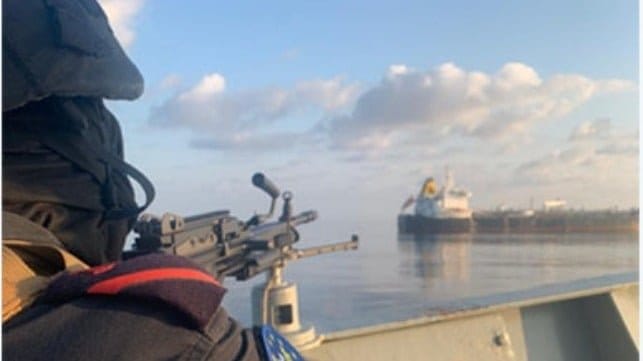
The Western Indian Ocean (WIO) continues to see a rise in maritime threats, with Red Sea security remaining uncertain throughout 2025. The volatile security environment includes a resurgence of piracy along the Somali coastline. The most recent high-profile incident occurred in November, when pirates attacked and boarded the Maltese-flagged tanker Hellas Aphrodite off Puntland's coast.
But as maritime threats intensify, there is a cost for the region's vast blue economy potential. According to a report published last week by the UN Economic Commission for Africa (ECA), maritime insecurity was singled out as a leading factor affecting the growth of ocean-based industries in the WIO. The report estimate that maritime threats are costing the region $1.1 billion annually, equivalent to six percent of the WIO’s gross marine product. (For context, the region’s natural capital is valued at $330 billion, with the blue economy industries in WIO generating $20 billion annually in gross marine product.)
Some of the quantifiable threats that the report focused on include the impact of Illegal, unreported and unregulated (IUU) fishing, estimated at $245 million. With the increase in shipping traffic in WIO, environmental catastrophes could potentially cost the region over $100 million in clean-up costs. A case in point is the Wakashio disaster off the coast of Mauritius back in 2020. The incident involved the grounding of the bulk carrier MV Wakashio, spilling around 1,000 metric tons of fuel oil into pristine ocean ecosystems. The immediate clean-up cost is estimated at $50 million, excluding long-term restoration activities at the grounding site.
Notably, piracy continues as a persistent risk in WIO. Decades of regional efforts appeared to have suppressed the crime, but it is now resurging as piracy networks evolve. Although the peak levels seen in 2010-2012 may not be seen again, piracy will remain as a hidden cost to maritime trade in WIO. At its lowest level in 2021, piracy risk cost the WIO shipping community $160 million, mainly in the form of insurance premiums and private security costs.

that matters most
Get the latest maritime news delivered to your inbox daily.
In commenting about the report, the Secretary General of the Indian Ocean Commission (IOC) Edgard Razafindravahy called for long-term financial planning in maritime security initiatives in the region. “While regional arrangements like the Regional Maritime Information Fusion Center and the Regional Coordination Operations Center have delivered real gains, they lack stability,” said Razafindravahy. “To protect livelihoods, economies and marine ecosystems, these capabilities should be integrated into national and regional budgets, as well as have data gaps closed.”
Indeed, security architectures in the WIO depend on short-term donor funding. Without national commitments from governments in the region, there is only much the regional initiatives can achieve.
