


Panama Canal Sets Record for Annual Tonnage Driven by Shifts in Trade
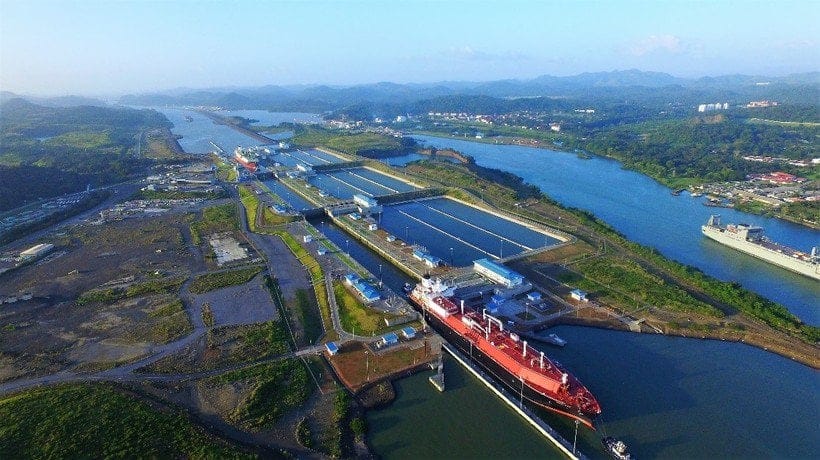
Despite the challenges the Panama Canal has faced due to the drought and effects of El Niño, it completed a strong fiscal year, emphasizing its role in global trade. The canal authority cited a sustained recovery in demand, supported in part by shifts in international trade flows, while also reporting, with a recovery in water levels, it is now restoring the Last-Minute Reservation service to further support shipping.
Speaking with the French news outlet AFP (Agence France-Presse) on Tuesday, officials highlighted a new record for the total volume of cargo moving through the canal. In the FY ending September 30, they report a total of 521 million tons (PC/UMS). That is a 6.5 percent increase versus the previous year and beats the 2022 record of 518 million tons.
Detailing the performance for the year in a presentation today, Panama Canal Administrator Ilya Espino de Marotta reported that the Panama Canal handled 13,951 transits in FY2026, up 4.1 percent from 13,404 in FY2025. Growth, they said, was driven by energy shipping segments and a strong containership performance. It contributed to a 16.6 percent increase in total revenues for the Panama Canal Authority.
The strong demand was also in part driven by the disruptions in global patterns and the strong demand from Asia. Ships have been diverting away from the Suez Canal and Red Sea due to the dangers from the Houthis and then the disruption from the war in the Persian Gulf.
The Panama Canal Authority highlighted growth in its share of larger-capacity vessels that were using the waterway. It notes that transits through the Neopanamax locks accounted for just over 52 percent of total tonnage. It said tonnage through the locks used by the largest ships increased over eight percent this year.
The authority has worked to maintain the operations for the largest ships, with the officials noting they preserved a 50-foot draft throughout the dry season. They also highlighted to AFP that the canal increased the number of daily transits from 36 to 41 for a period of time to adjust for the uptick in demand.
“Far from restricting trade flows, the Panama Canal facilitates international maritime trade by providing its customers with a reliable and safe route,” Administrator Espino de Marotta said during today’s briefing.
The effects of El Niño and the resulting drought have forced the canal to reduce the number of transits, but they recently added back one slot at the Neopanamax locks. Water management efforts also permitted them to delay further planned cuts in the maximum draft levels.
The authority has been encouraging vessels to make reservations for the transit to avoid long delays. That, however, has caused a spike in the price paid at some of the daily auctions, including a record of over $5 million.

that matters most
Get the latest maritime news delivered to your inbox daily.
The authority announced today that it is reinstating its Last-Minute Reservation service for vessels using the Panamax Locks. It is a service that gives vessels without a reservation an additional opportunity to secure a transit slot when one becomes available. They credited the water management efforts and recent rainfall for helping the authority to continue to restore some of the steps taken previously to conserve water.
Recent rainfall in the watershed is approaching average levels. Water levels in Gatun Lake had been fairly consistent at around 84 feet at the beginning of September but had begun to rise. The online dashboard currently shows Gatun Lake at 86.2 feet, which is above the five-year average for October and approaching the average for November.
