


Oman Signs EU No-Tolls Pledge on Freedom of Navigation
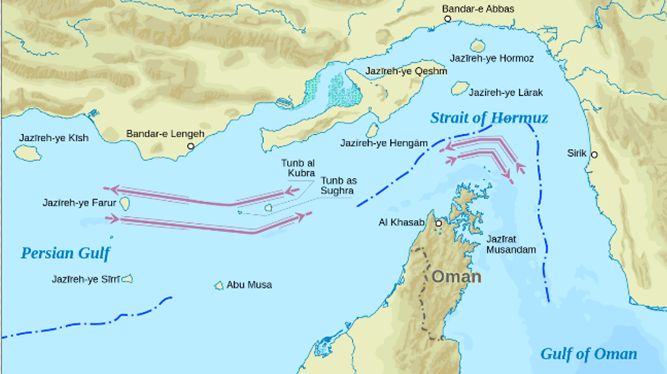
Oman has joined all 27 EU member states and 33 other countries in signing a pledge to maintain the integrity of the United Nations Convention on the Law of the Sea (UNCLOS), and in particular to oppose the imposition of fees and tolls.
As an EU initiative, the pledge is unlikely to attract the endorsement of the United States, nor has it attracted the support of the CRINK (China, Russia, Iran, North Korea) group of nations. But besides Oman, it has also attracted states where international straits run through territorial waters, namely the United Kingdom/France (the English Channel), Denmark/Sweden (the Øresund), Singapore (Strait of Malacca), Canada (which considers the Northwest Passage to be internal waters), the Philippines (South China Sea), the internationally recognized government of Yemen (Bab el-Mandeb) and Japan (La Pérouse and other straits). The pledge has also attracted the support of Bahrain from among the GCC countries, and other Gulf states are expected to sign as well, all of which have a direct interest in maintaining the right of innocent passage through the Strait of Hormuz.
The signing nations pledge to champion multilateral cooperation, and in particular the oversight and coordination provided by the International Maritime Organization (IMO), including support for "defensive and non-escalatory multilateral initiatives" aimed at preserving the freedom of navigation. The pledging nations also reject coercive and unilateral action, which covers Iran's campaign against merchant shipping in the Strait of Hormuz, and oppose measures that would hamper or impair lawful navigation.
Weeks before the war broke out, Oman's Ministry of Transport, Communications and IT, which is responsible for maritime affairs, published guidance (MTCIT 30/2026) covering the passage and presence of ships transiting its territorial waters, including the need to apply for licenses, and other regulations to ensure that the presence of foreign ships in its waters was not abused. Recently, Oman's Maritime Security Centre notified the merchant shipping community of the requirement to keep AIS switched on, conditions for the carriage of weapons and restrictions on lingering or stopping while conducting innocent passage, all in accordance with UNCLOS Article 19.
As subsequent events have proven, maintaining a network of navigation aids, lighthouses and buoys, providing a 24/7 navigation control center and keeping a search-and-rescue service on permanent standby are costly undertakings, and the requirement to apply for licenses would have provided a means to recoup some of these costs. This modest innovation, akin to charging navigation dues as applied in other waters, has now come up against the Iranian demand to charge fees, but for another purpose: as a means both of controlling access and of raising revenue.
Oman has always maintained its commitment to UNCLOS and the international right of shipping to innocent passage, which Oman's permanent representative to the IMO has repeatedly stressed, and this has formed the basis on which Oman negotiated with Iran to reopen the strait. However, the manner in which Iran sought to impose a control regime over the strait resulted in the Gulf countries seeking a postponement of the conference planned for Salalah on September 14.
There does not appear to have been further progress toward any new arrangement, but it can be presumed that discussions of some sort are continuing. Most users of the strait would in any case simply like to see the previous Traffic Separation Scheme (TSS) restored, and in the meantime, it remains to be seen whether Oman adjusts MTCIT 30/2026 to better align it with its signing of the EU pledge.

that matters most
Get the latest maritime news delivered to your inbox daily.
The EU pledge is also of some significance to future arrangements in the Strait of Malacca, where littoral states are feeling the financial strain of providing navigation, control and safety services. There was discussion of possible arrangements at the International Conference on the Strait of Malacca in Kuala Lumpur at the beginning of September. Merchant shipping naturally wants to continue receiving such services for free.
But there may be areas – such as suppression of the continuing problem of piracy – where shipowners would be pleased to see littoral states do more, if they had additional resources. At the Kuala Lumpur conference, there was discussion that such arrangements could be organized under the aegis of the IMO.
