


Maersk and Seaspan Launch Vessel Upgrade Program to Improve Efficiency
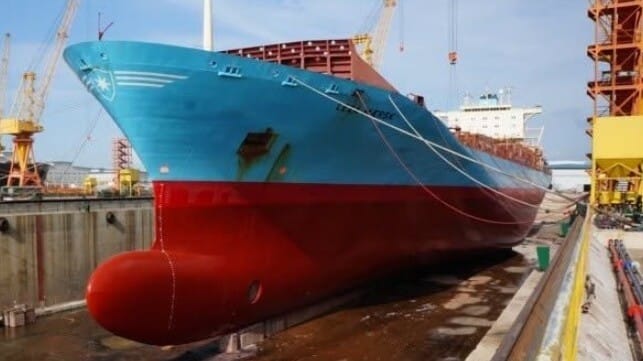
Seaspan, the large vessel owner that leases vessels to the container industry, is launching a vessel upgrade program with Maersk. The companies report commitments for at least $75 million, with additional efforts in planning, to upgrade 18 vessels operating under long-term charters to Maersk.
The program is designed to increase the efficiency of the time-chartered vessels. They report it is focused on unlocking measurable gains in fuel efficiency, cargo capacity, operational flexibility, and emissions reduction.
One project they are highlighting is a jointly developed high-impact retrofit solution for four 13,000 TEU vessels. They are calling it one of the most significant upgrade programs for the shared Seaspan – Maersk time charter fleet.
The retrofit solution consists of the installation of a shaft generator to reduce auxiliary engine fuel consumption, a main engine performance optimization, a new high-efficiency propeller, a pre-swirl device to improve propulsion efficiency, and carbon capture readiness to prepare the vessel for future emissions regulations.
In addition, the lashing bridge will be elevated to increase cargo carrying capacity, and the deadweight will be increased to enhance loading capability. Together, these retrofit measures are expected to improve the vessel’s slot cost by approximately 10–13 percent, while enhancing fuel efficiency, operational performance, and regulatory readiness.
Maersk and COSCO Shipyard have also entered into a one-year non-binding Memorandum of Cooperation with WattSpan, a strategic maritime technology and engineering joint-venture partner to Seaspan. The company is focused on vessel performance, energy efficiency, and decarbonization solutions and will collaborate with Maersk and the shipyard on vessel upgrades, energy efficiency improvements, and maritime decarbonization technologies. Among the efforts, they plan to jointly develop information sharing and future project execution under separate commercial agreements.
The program is representative of the expanding efforts by the ship owners and operators to upgrade existing ships ahead of the pending regulatory issues. Operators are seeking to maximize the efficiency of their ships in the face of rising costs. Maersk has already launched a project to convert several existing ships to methanol dual-fuel capabilities, having completed the first conversion in late 2024.

that matters most
Get the latest maritime news delivered to your inbox daily.
Seaspan also recently completed its first conversion of a vessel to methanol dual-fuel as part of a similar project planned with Hapag-Lloyd. The companies announced plans to retrofit a total of five ships this year. Seaspan and Hapag announced in July 2023 a project with MAN (now Everllence) that initially called for the retrofitting of 15 vessels in the Seaspan fleet operating under long-term charters to Hapag. The agreement includes a further 45 optional engine retrofits.
Hapag has also been pursuing a program of vessel upgrades. The carrier in 2025 reported that it would be modifying over 100 container vessels to reduce fuel consumption, emissions, and costs per tonne-mile, and maximize cargo capacity.
