


Macron: France Could Start Hormuz Peacekeeping Mission Within Days
France, the UK and a coalition of supporting nations have been preparing for the moment when the Strait of Hormuz reopens, getting ready to provide a stand-in peacekeeping force to ensure the return of unfettered freedom of navigation. Now that the U.S. and Iran have signed a deal to lift their respective blockades on the waterway, that mission could be just a few days away, French President Emmanuel Macron told reporters at the G7 summit in Evian-Les-Bains.
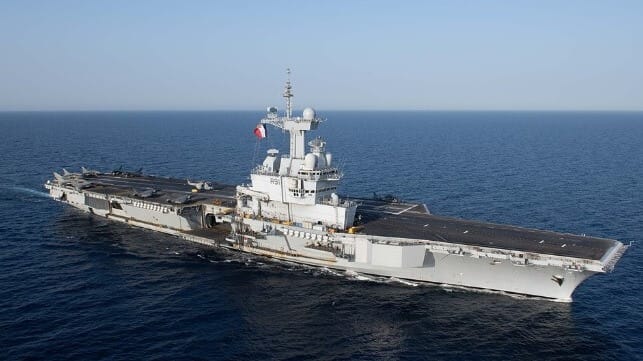
"We are ready," Macron told French channel TF1. "As early as tomorrow we can have fighter jets for surveillance missions, a frigate in the area tomorrow, and the [carrier] Charles de Gaulle, mine-clearing capabilities and everything that comes with the Charles de Gaulle within two, three days."
Early indications suggest that the initial effort would be French and British, and primarily French. Royal Navy air defense destroyer HMS Dragon is deployed with the Charles De Gaulle carrier strike group, but the bulk of the naval capability in the operation belongs to the Marine Nationale. Possible later contributions could come from Germany, Italy and the Netherlands, according to Reuters. France is ready to spearhead the operation, Macron said.
"If the next few days show us that it's all good, then we will deploy with the British and we will lead this mission," Macron told TF1.
The peacekeeping mission could be more complicated than removing mines and conducting patrols. Despite U.S. assurances that Hormuz will fully reopen under the new MOU, Iran's foreign ministry maintains that Iran and Oman will "jointly guarantee the security of maritime traffic" in the strait, not other powers from outside the region. "Any presence of foreign countries, whether to safeguard shipping or clear mines, is unacceptable," an Iranian official told Reuters. "This [peacekeeping initiative] is a trick to ?bring naval forces to the strait, and it will not be accepted."

that matters most
Get the latest maritime news delivered to your inbox daily.
Iran is widely believed to be holding onto its ambition to charge some form of fee for transits - and it has proven that it has the military capability to put traffic at risk when desired if it wishes to enforce its rules.
The transition from conflict to peace is often uneven, and the same may apply in the strait. Most global shipping lines are taking a "wait-and-see" approach before committing their vessels to the contested route. Early reports suggest that caution may be wise: overnight Monday, after the signing of the deal, Iran's Mehr News reported the sounds of three explosions to the south of Qeshm Island. While no official explanation has been given, Mehr understands that the blasts "were likely carried out to manage traffic in the strait."
