


Journalist Tracks Dutch Frigate By Mailing It a $5 Bluetooth Tracker
In the recent past, there has been a rise in cases of operational security (OPSEC) flaws affecting active naval vessels. While navies invest heavily to protect the location of their vessels, inexpensive technologies can easily expose movements if not managed. Most recently, this trend has been reported within the NATO strike group supporting the French aircraft carrier Charles de Gaulle in the Mediterranean Sea.
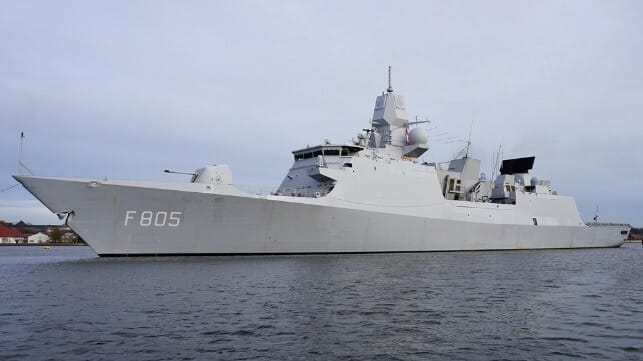
Last week, Dutch regional broadcaster Omroep Gelderland reported that one of its journalists was able to locate the country’s warship HNLMS Evertsen, currently deployed as part of the carrier Charles de Gaulle strike group in Eastern Mediterranean. The journalist is said to have mailed a postcard containing a $5 Bluetooth tracker to the air-defense frigate. The experiment was conducted to test vulnerabilities in sea mail rules. In the past one year, the Dutch broadcaster has been carrying out investigations on how the Ministry of Defense is adapting to the rapidly changing technological environment.
The Dutch military through its postal organization has made it easy for soldiers deployed overseas to receive mail from their families. The journalist followed instructions published online by the Dutch military in sending the postcard package. While the military has robust security clearance measures including X-ray scans for packages, envelopes are not scanned. This made it possible for the postcard containing the Bluetooth tracker to slip through, eventually reaching Evertsen.
The tracker’s route was then mapped starting from an unnamed staging area, a stopover at the Den Helder naval base and arrival at the Eindhoven airport. The package then proceeded to the Port of Heraklion in Crete, where it was delivered to Evertsen.
On March 27, the frigate left the port sailing west along the coast of Crete and later set course in an easterly direction. The tracker remained active for 24 hours but went offline when the warship was near the Cyprus coast. In response to this incident, the Dutch Defense Ministry said that the tracker was found during mail sorting after the frigate left port in Crete. The Ministry added that a review of mailing guidelines is underway. Sending of greeting cards containing batteries has also been banned.

that matters most
Get the latest maritime news delivered to your inbox daily.
Around the same time and location, the French newspaper Le Monde was also able to track the country’s aircraft carrier Charles de Gaulle. The tracking was done using data from the smartphone fitness application Strava, which was being used by a young sailor, either onboard the aircraft carrier or a nearby escort frigate. At the time, the location of the carrier was reported to be 62 miles off the Turkish coast and near Cyprus.
Top image: HLNMS Evertsen (Ein Dahmer / CC BY SA 4.0)

#/media/File:EVERTSEN_0332.jpg)