


Japan Suspends Kawasaki Heavy Industries for Submarine Engine Data Fraud
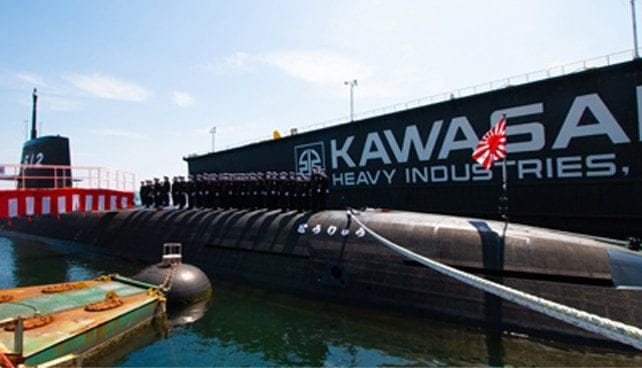
The Japanese Ministry of Defense announced a series of steps it is taking after investigations confirmed that Kawasaki Heavy Industries had supplied fraudulent test data on its engines and provided inappropriate gifts to a number of naval personnel over the past 40 years. Kawasaki Heavy Industries had first announced in 2024 that it was investigating after information surfaced showing a long-term pattern of falsifying test data to ensure engines were delivered on time under their contracts.
Kawasaki Heavy Industries is the long-term supplier of engines for Japan’s submarines and works with Mitsubishi Heavy Industries in the construction of the submarine force. The company had issued announcements in July and August 2024 about the discovery of misconduct in its submarine repairs business and in the testing of marine engines.
The Ministry of Defense reports that it confirmed data for the engines of 23 of its submarines has been found to have been falsified. Kawasaki reports that target data for emission and fuel efficiency performance was used in the trials reports instead of the actual results. The MOD reports that Japan’s 24 current submarines all use KHI engines and that only one vessel, delivered after 2024, has accurate testing data.
Defense officials emphasized that the data did not impact the safety or operation of the engines, but meant that the vessels did not meet the contractual required fuel consumption levels. As a result, the Ministry of Defense decided to suspend Kawasaki Heavy Industries from bidding on MOD projects. The initial suspension was set at 5 months but was cut in half in recognition of the company’s having notified the MOD of the fraud, admitting to the misinformation, and its cooperation.
The manipulated testing data was part of a much wider fraud that began emerging when a whistleblower in February 2024 revealed that IHI Power Systems had been altering fuel consumption data for decades. In July 2024, Hitachi Zosen also issued a report confirming that it had also discovered altered data from its tests, and KHI confirmed its role a month later.
Kawasaki Heavy Industries said its internal investigations showed the practice dated back at least to 1988 and continued until at least 2021, all done to ensure the timely delivery of the engines. On December 26, the company issued a detailed notice after receiving its final reports and called the misconduct “very serious.” It details steps being taken to enhance the compliance and governance system and to restore trust. Among the steps are ongoing efforts to automate inspection processes.
The company also received an internal report about work hour misallocations at the Kobe Shipyard and misconduct within the procurement processes. In August 2025, it was revealed that KHI and other major shipbuilders had billed for fraudulent transactions and overbilled the MOD, and in part, the funds were placed into a fund used to buy gifts for naval personnel.
The gifts included game consoles, golf bags, and matches. While the scheme had gone on for more than 40 years, the reports were able to place a value of $7,400 on the gifts over the past six years. The MOD initially said 13 individuals had been identified as receiving the gifts, but it was lowered to 11 as two people only received official items associated with their work.

that matters most
Get the latest maritime news delivered to your inbox daily.
The Ministry announced last week that three sailors who supervised ship repairs and the supply depots and were responsible for overseeing contracts with shipbuilders, were suspended. A chief petty officer received a 15-day suspension, while another chief petty officer and a petty officer were each given 5-day suspensions. Eight current or former submariners received pay cuts.
Kawasaki Heavy Industries apologized for the conduct and said it has developed three core compliance pillars to prevent future recurrences. It said its system would prevent misconduct, strengthen detection capabilities, and reform the organizational culture.
