


Iran's IRGC Prompts False Alarm in Strait of Hormuz
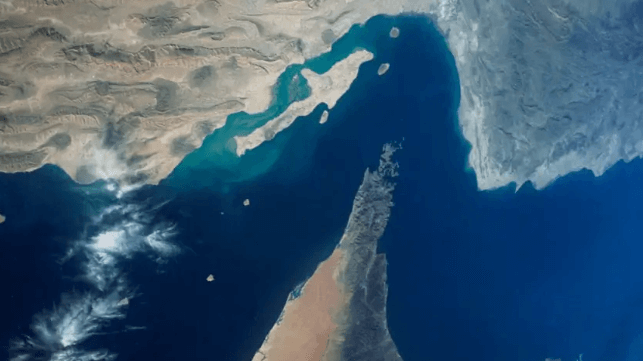
The IRGC Navy has made a number of half-hearted attempts to disrupt traffic in the Straits of Hormuz in recent weeks.
On January 29, the IRGC Navy warned that areas of the Straits of Hormuz would be closed for a live fire exercise. On the next day, CENTCOM warned ‘the IRGC to conduct the announced naval exercise in a manner that is safe, professional and avoids unnecessary risk to freedom of navigation for international maritime traffic’, and the Iranians then canceled the planned exercise.
Several days later on February 3, the United Kingdom Maritime Trade Operations (UKMTO) in Dubai advised that an unidentified ship was hailed on VHF by numerous small armed vessels early and had been requested to stop. This was a poor choice of target for the IRGC to make, as the ship in question was the US-flagged Crowley-managed Stena Imperative (IMO 9666077), chartered under the Department of Defense Tanker Security Program. The master of the ship ignored the request and the nearby USS McFaul (DDG-74) promptly saw off the threat.
The IRGC made a third disruptive attempt when warning that they would carry out a ‘smart exercise’ and live firing off Sirik on the eastern side of the Straits of Hormuz between 03.30 and 18.30 UTC on February 17. Some commentators suggested that this would entail closure of the northern and inbound leg of the Straits of Hormuz Traffic Separation Scheme. However, this lane lies within Omani territorial waters, and Oman would not countenance such a closure.
Oman enforces a strict policy on maintaining unimpeded use of the Traffic Separation Scheme. Ships approaching the Straits are normally hailed separately and successively by the Iranian Navy (Nedaja), the IRGC Navy and the Iranian Coastguard. When vessels are in Iranian waters it is maritime custom and practice for vessels to reply. But if such Iranian calls are made when vessels are in Omani waters, vessels are not obliged to respond, and the Omani authorities will normally jam such calls when their radar systems indicate that the vessel being hailed is in Omani waters.
The Iranian warning of its impending exercise was accompanied by a video showing various IRGC speed boats, but this was historic footage of a previous exercise, and no ships or boats were identified as about to take part in the exercise. The allusion to a ‘smart’ exercise may imply that no actual vessels are involved. An unidentified IRGC Navy Shahid Soleimani Class missile corvette (but likely to be IRIS Shahid Soleimani (FS313-01)) was seen heading East off Kish Island on February 16, but such activity is not indicative of participation in the forthcoming exercise.
All these IRGC-initiated half-hearted events, or non-events, are indicative of Iran’s current state of nervousness and sense of vulnerability. It is significant that the regular Iranian navy (Nedsa) is not playing a part in these charades, and indeed is keeping itself invisible and well out of the way, for the most part by holding off in the northern Indian Ocean.

that matters most
Get the latest maritime news delivered to your inbox daily.
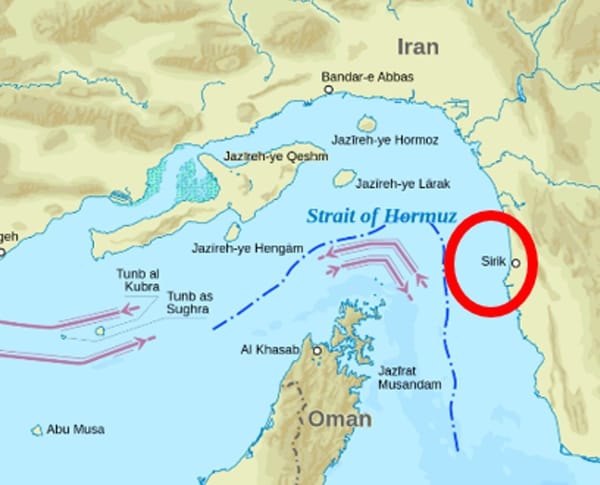
Strait of Hormuz Traffic Separation Scheme shipping channels (Goran Tek-en / CC BY), with the exercise area off Sirik indicated (CJRC).

