


Iran's Drone Attacks Against Gulf Countries are Political Messaging
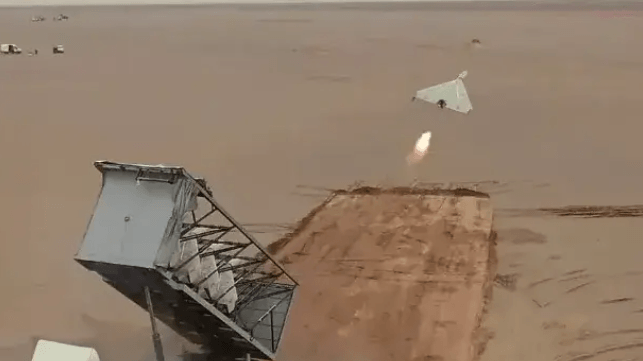
Drone attacks mounted on Gulf states by Iran (or by Iranian proxies) appear to be part of the messaging taking place between Iran and its Gulf adversaries, as negotiations in a more diplomatic format take place separately between Iran and the United States in Islamabad.
Despite official denials, it now appears clear that both Saudi Arabia and the United Arab Emirates have attacked infrastructure targets in Iran, in direct retaliation for Iranian attacks on similar targets in the Gulf countries. The Iranian attacks have often been quite accurate, targeting critical elements for example of oil and gas refining plants which are difficult to replace and which are critical to operational processes, rather than merely targeting structures which burn spectacularly without causing long-term damage.
Saudi Arabia and the UAE have responded in kind, warning Iran in advance of what they are going to do, and why – so as to deter further Iranian attacks. This is a very different type of targeting regime than that employed by Israel and the United States, where the attack plan is shaped by strategic objectives.
Iran has attempted to disrupt this pattern of attacks by using proxies in Iraq to execute these attacks on its behalf. It now has been confirmed by the UAE that the drones launched at the Barakah nuclear reactor complex approached from the west but were fired from Iraq, meaning that the Houthi distancing from the current phase of the conflict is continuing, which is good news for mariners in the Red Sea and Gulf of Aden.
The UAE has now also now withdrawn its attribution of these attacks to Iran directly. When attacks are mounted by Iran’s proxies, identified as the Iraqi Kata’ib Hezbollah, they are directed by an IRGC Qods Force liaison team on the ground. But Saudi Arabia does not treat such attacks as part of the ‘diplomatic exchange’ with Iran, and will respond directly by attacking the militias in Iraq without warning, which then poses a risk of conflict with the Iraqi government – which is failing to control the activities of Kata’ib Hezbollah on their territory.
Iran is also seeking to up the diplomatic pressure on the Gulf countries by tabling their proposals for control of the Strait of Hormuz in the International Maritime Organization headquarters in London, where two notes from Iran – and two counter-proposals from the UAE - were scheduled to be discussed on May 19.

that matters most
Get the latest maritime news delivered to your inbox daily.
The ongoing unconventional form of negotiation between Iran and the GCC states is continuing. It is a reflection of the uncompromising position of Iran, evident in the Islamabad talks. But it also demonstrates that the GCC countries will not accept being treated as being under the Iranian thumb, and are focused instead on re-establishing the IMO-endorsed 1968 Strait of Hormuz Traffic Separation Scheme.
The stalemate – and the increasing pressure being felt by nations who cannot afford to pay the high prices for oil and gas prevailing on the open market – is forcing consideration of other approaches to solving the crisis. Bloomberg has reported that NATO will consider an operation to open the Strait, involving a limited number of nations willing to opt in. But it will not consider the matter until a meeting in Ankara July 7-8. The Daily Telegraph quoted Gen Alexus Grynkewich, NATO’s Supreme Allied Commander Europe, as saying “Am I thinking about it? Absolutely. But there’s no planning yet until the political decision is taken.” The NATO initiative appears to be separate from the Anglo-French post-conflict planning exercise being led by France and the United Kingdom and involving more than 30 nations.
