


In Singapore, Improper Drone Use Can Mean Fines or Prison for Seafarers
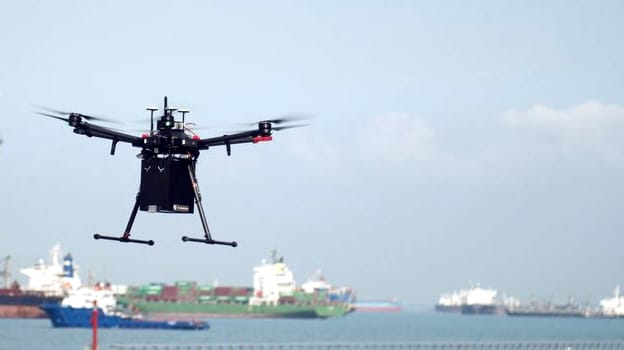
The Port of Singapore has been at the forefront of harbor drone services since at least 2018, when it welcomed the first trials of a cargo-drone commercial delivery system for ships at anchor. While a friendly environment for R&D and commerce, it is also a leader in drone security regulation - a prudent step given the real-world risk of UAV-based sabotage or espionage. Seafarers who decide to launch a personal drone in Singapore's harbor - especially if they're close to Changi Airport - are at risk of hefty fines, and potentially a jail term for egregious offenses.
The Civil Aviation Authority of Singapore (CAAS) has strict rules for UAV use over land and water. Flights are not allowed over crowds, near roads, or near first-responders. Flights above 200 feet are prohibited, as are drone movements within five kilometers of an airport (without prior permission and a permit). The maximum penalty is a fine of up to US$39,000 or up to two years in prison.
The five-kilometer exclusion zone around Changi Airport happens to cover multiple anchorage areas at the eastern end of Singapore's waterfront. Several seafarers have unwittingly found themselves on the wrong side of this regulation, according to a circular distributed to shipping interests by CAAS and the MPA last week.
According to CAAS, two seafarers were caught operating recreational drones in the wrong areas over the summer. In June, a crewmember aboard a local bunker tanker decided to operate a drone at a height of about 140 feet, some three kilometers away from the airport at Eastern Petroleum Bravo Anchorage. The 46-year-old mariner lacked a permit, and was fined about US$4,000 - instead of a 10-day prison term.
In July, a crewmember on a foreign-flagged tanker was caught running a recreational drone at an altitude of 240 feet - well above the statutory limit - in the Eastern Petroleum Charlie Anchorage, less than two kilometers from Changi Airport. The individual received a fine of US$2,300.
that matters most
Get the latest maritime news delivered to your inbox daily.
On shore, tourists and members of the public get caught in drone-use violations at a rate of about 300 reported cases per year, according to the Straits Times. A small number of these cases are prosecuted, but for those that are, the court process can take weeks and real-world fines can be as high as US$10,000 or more.
While Singapore's general-use rules are strict, MPA remains highly supportive of drone technology for commercial purposes. It operates designated "testbed" safe anchorages for shipboard drone R&D, which have been used by some of the biggest names in maritime services to trial new technology in a real-world setting. The MPA also has set up a formal launchpad and preparation area for UAV testing, complete with covered space for setup and operations - one of the world's only port-sponsored drone R&D zones.
