


IMO and Oman Launch “Phased Evacuation” for Transits in Strait of Hormuz
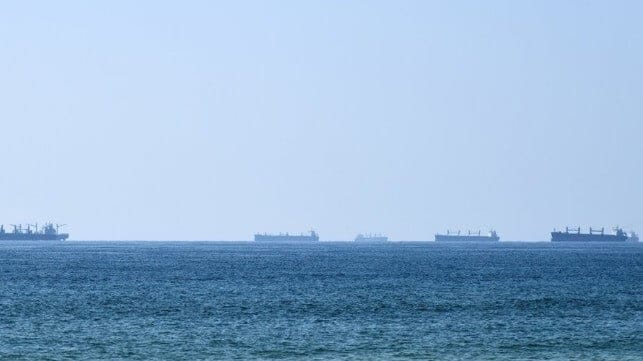
Building on the agreement between the United States and Iran and news of “constructive talks” with reports of “encouraging progress,” the International Maritime Organization, working with Oman, announced the start of an evacuation plan for shipping trapped in the Persian Gulf region. Oman will be taking the lead with the IMO monitoring and providing daily updates on the number of vessels departing the region.
Oman, in its official notice, highlights the need for a “gradual and controlled evacuation of vessel traffic.” It notes that there are two lanes available to the north and the south while reiterating that the normal Traffic Separation Scheme is not safe. Last week, the joint operation issued a warning on Friday after a mine was confirmed, while there were reports that there are as many as 80 mines in the primary lanes.
Because shipping is moving through a temporary maritime corridor, Oman warns of an elevated risk of collisions. It notes that the lanes are confined and require monitoring to ensure security.
“We will begin the implementation of the evacuation plan for over 11,000 seafarers still stranded in the region,” said IMO Secretary-General Arsenio Dominguez while also highlighting the confirmed deaths of 14 innocent seafarers during the conflict. “We have secured the necessary safety guarantees and have thoroughly verified the conditions for safe navigation to support these operations.”
Dominguez referred to it as a “large-scale operation,” while the Omanis said it will be conducted in a phased approach based on groups of vessels. They will be contacting the vessels in the designated groups and allocating a transit day.
It will still be up to the individual ship and its operators, but once they have been given their assigned day, they can move to a designated waiting area in international waters. Masters can opt for either the northern route through Iranian territorial waters or a southern route through Omani territorial waters. Vessels are instructed to contact the coastal state on their selected route to confirm that traffic conditions permit them to proceed.
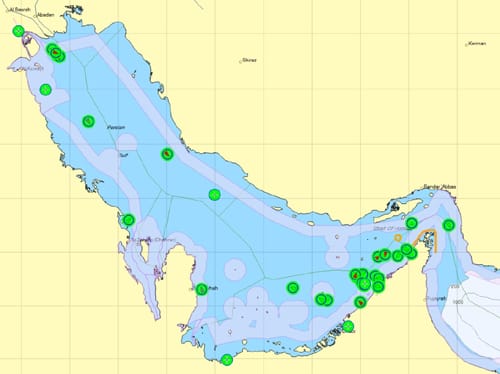
The Maritime Executive learned that the 40 ships received the first designation to make the transit. The map illustrates the location of those ships which can now proceed to the holding area and begin their transits through the Strait of Hormuz.
Oman highlights that the transits will be without imposing any tolls and in keeping with international law to ensure freedom of navigation. Vessels are being instructed to ensure their AIS is transmitting while transiting. The arrangements published by the Royal Navy of Oman, however, do not address the entry of shipping into the Gulf, but they promise further updates.
The International Chamber of Shipping released a statement saying, "The IMO evacuation plan is a welcome development to delivering this coordination and restoring freedom of navigation. It is vital this plan works in harmony, rather than conflicting, with existing mechanisms."
The IMO's move comes as factions in Iran continue to say that the Strait is closed and report that they are not issuing permits. Despite that, indications are that some ships are making it out of the Gulf. Reports have said transit levels are approaching the highest levels since February, before the start of the conflict.
Qatar and Pakistan, as the joint mediators, also issued a joint statement after the first round of discussions between Iran and the United States in Switzerland. It said that the two sides, among other agreements during the talks, had resolved to maintain a “communication line” during the 60-day period. The goal is to honor the terms of last week’s Memorandum of Understanding and to “avoid incidents and miscommunication with the aim of safe passage for commercial vessels through the Strait of Hormuz.”

that matters most
Get the latest maritime news delivered to your inbox daily.
Factions within Iran, however, assert that this is just temporary and after the 60 days, the Strait of Hormuz will become an Iranian waterway. Last week its so-called Persian Gulf Strait Authority announced it would begin requiring ships to have “insurance” for the transit. For the first 60 days, they said it would be free, but after that, they said they might charge fees.
The IMO, however, asserts that Iran and the United States are making “a decisive step” toward restoring maritime security and bringing to an end the unacceptable attacks against civilian shipping.
