


Hurricane Isaias Prompts Shut-Ins for 60 Percent of Gulf Oil Production
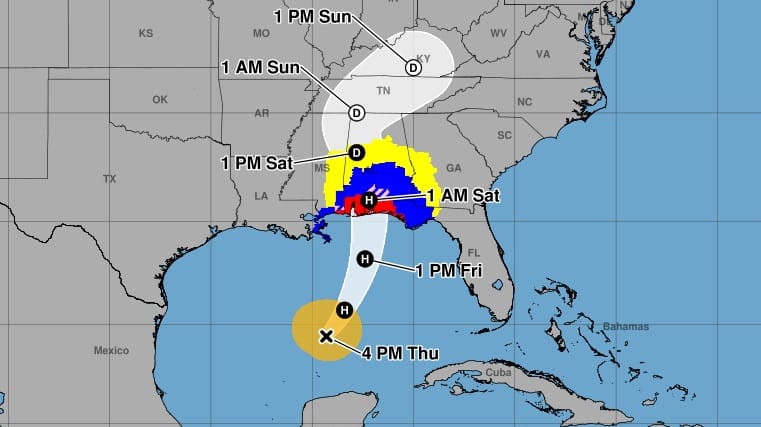
As Hurricane Isaias closes in on the Gulf coast, the National Hurricane Center is warning residents from eastern Louisiana to the Florida Panhandle to get ready for a "life-threatening storm surge."
Isaias intensified as expected overnight Wednesday, and the latest Hurricane Hunters flight into the storm suggest surface wind speeds in the range of 85 knots. The system is moving swiftly at about 10 knots to the northeast, and is expected to turn to the north, putting it on track to make landfall somewhere in the vicinity of the Panhandle late Friday night.
Isaias is moving over warm waters in the northern Gulf, conditions that would normally favor intensification. However, intensifying vertical wind shear will likely offset the effect as the storm gets closer to shore. The relative impact of these two competing factors remains to be seen, but in all events, "Isaias is expected to remain a dangerous hurricane through landfall," the center warned.
The worst of the storm's winds will be concentrated along the coasts of Mississippi, Alabama and the Panhandle, home to the heart of the Gulf shipbuilding industry. But the storm surge - often the most dangerous element of a hurricane - will extend further, from the mouth of the Mississippi eastwards to Suwannee, Florida.
To prepare, the U.S. Coast Guard Heartland is getting ready to reconstitute its forces for post-storm recovery, and it warned on Thursday that this process typically means that its ability to perform SAR operations will be reduced in the run-up to the hurricane's arrival. It advised boaters to secure their craft, ensure that EPIRBs can't come loose and activate, and monitor the National Hurricane Center's alerts. Coast Guard Sector Mobile has set Condition Yankee and advised commercial shipping to prepare to depart port or contact the Captain of the Port for alternatives.

that matters most
Get the latest maritime news delivered to your inbox daily.
Long before it makes landfall, the storm will sweep past offshore oil and gas infrastucture at the eastern edge of the Gulf oil patch. According to the Bureau of Safety and Environmental Enforcement - recently folded into the new Marine Minerals Administration - fully 121 production platforms have been evacuated in the Gulf as a precautionary measure, about one third of the offshore production footprint. Another five non-DP rigs have been evacuated, and four DP rigs have repositioned off location to avoid the worst of the wind and waves.
The evacuations are accompanied by temporary well shut-ins to ensure safety. About 60 percent of all Gulf oil and gas production is now shut in, the agency said in a statement. The brief shutdown will take about 1.3 million barrels per day - more than one percent of all global production - offline until after the storm has passed and facilities are inspected for safety. Though temporary, the shut-in protocol will add to the global energy supply shortfall caused by disruption at the Strait of Hormuz and the southern Red Sea.
