


Ho Chi Minh City Approves $5B MSC Container Terminal
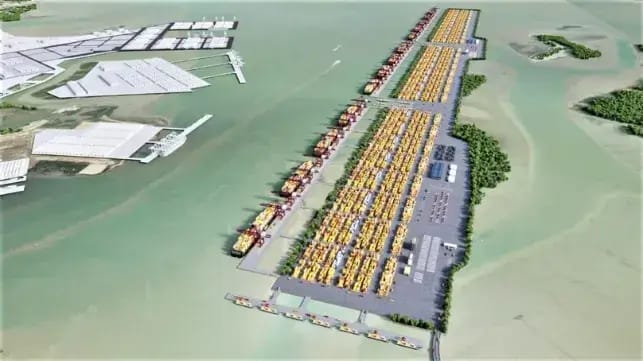
Vietnam’s transshipment port project Can Gio International has made progress, with Ho Chi Minh City this week approving the consortium to lead its development. The partners under the consortium are led by MSC’s Terminal Investment Limited (TIL) with a 49% stake, Vietnam Maritime Corporation with 36% and Saigon Port, a subsidiary of VIMC, with 15%.
The joint venture will see the development of Vietnam’s biggest transshipment port, with Ho Chi Minh City looking to raise its status as a global maritime hub. The development proposal for a transshipment port project has been awaiting the city’s approval for almost four years. The $4.9 billion Can Gio International will be built over an area of 570 hectares on an offshore islet, Go Con Sho, at the mouth of the Cai Mep River. The port is designed to have an initial capacity for 4.8 million TEU by 2030, reaching 16.9 million TEU by 2047.
In the first phase, the port will have up to four berths capable of handling vessels of up to 250,000 tons. The long term goal is for the port to have 13 berths and a total quay length of 7.5 kilometers. In the selection of the consortium, the city had indicated it would focus on among other factors including financial capability and port operation expertise.

that matters most
Get the latest maritime news delivered to your inbox daily.
The port project significantly increases MSC’s footprint in Vietnam's extensive port system. The world’s largest ocean carrier already has a presence in Ho Chi Minh City, operating in the Cai Mep port cluster. Currently, MSC handles more than one million TEU of Vietnamese imports and exports each year.
If implemented, Can Gio adds to the massive port investments being carried out by Ho Chi Minh City. Early this year, the city approved expansion to the Cai Mep cluster, which will see development of the new Cai Mep Ha port project at a cost of $1.95 billion. This port will raise the city’s port system capacity by 10.8 million TEU annually. The port project is designed to serve a dual-role of a national gateway and also as an international transshipment hub.
