


First Maersk – Gemini Cooperation Flagship Transits Suez Canal
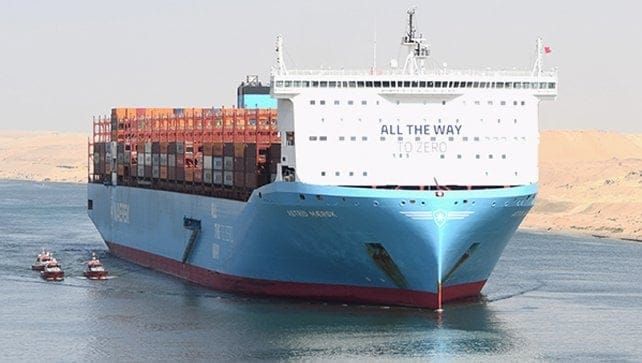
The first of Maersk’s flagship dual-fuel methanol vessels made its scheduled eastbound transit of the Suez Canal, marking the return of one of the liner routes to the Suez – Red Sea corridor. Maersk had recently announced its Gemini Cooperation with Hapag-Lloyd would be restoring a route operating between the Mediterranean, Middle East, and India as the first since the beginning of 2024, and the start of the hostilities by the Houthis.
Maersk, in December and January, made trial trips through the region with the company’s vessels. However, it said that the transits through the Red Sea would continue to “be secured by naval assistance.”
Adm. Ossama Rabiee, Chairman and Managing Director of the Suez Canal Authority, witnessed the transit of the Astrid Maersk (16,592 TEU, built in 2024). It is a key part of the Suez Canal Authority’s efforts to rebuild traffic, highlighting the advantages of the canal and the renewed stability in the region. They noted that the transit completed on Tuesday, February 10, was one of 36 vessels, with a total gross tonnage of approximately 2 million tons, that made the transit. Volumes remain down by approximately half compared to the peak at the Suez Canal.


(SCA)
The ship is reported to have handled containers at the container terminal in East Port Said Port, then bunkered methanol fuel before proceeding through the Suez Canal as part of the southbound convoy on its voyage bound for Oman. Notably, the pictures show a vessel that is carrying a small load of containers compared to its capacity.

that matters most
Get the latest maritime news delivered to your inbox daily.
The Suez Canal Authority also highlighted that its incentives and flexible marketing policies adopted during 2025 succeeded in attracting 784 vessels with a total net tonnage of 36.6 million tons. The chairman said that the incentives and flexible marketing had helped the operation to generate revenues of over $170 million.
The Astrid Maersk received a 15 percent reduction on canal transit tolls as part of the program, which provides for containerships with a net tonnage exceeding 130,000 tons. The ships are receiving the reduction in tolls whether laden or in ballast. Since May, when the authority introduced the policy, it reports that it attracted 64 vessels with a total net tonnage of 9.9 million tons.
