


Diego Garcia Deal Ditched: What Happens Next?
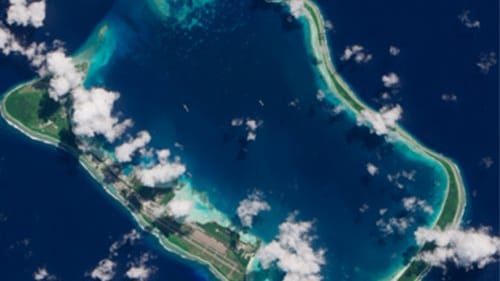
Following a televised discussion between President Donald Trump and UK Prime Minister Andy Burnham at the UN General Assembly in New York, the Diego Garcia surrender deal, which the United Kingdom had negotiated with Mauritius, appears to have been shelved.
Trump described the deal as “terrible” and “ridiculous,” while earlier having called it “an act of GREAT STUPIDITY.” Trump’s opinion is critical, as US assent is required under international law to change the existing 1965 UK-US agreement governing the use of the Diego Garcia, which is formally registered as an international treaty.
The deal envisioned a transfer of sovereignty of the entire Chagos Archipelago to Mauritius, and then a leaseback of Diego Garcia to the United Kingdom to facilitate the continued operation of the Naval Support Facility, on payment by the UK of an annual rent to Mauritius.
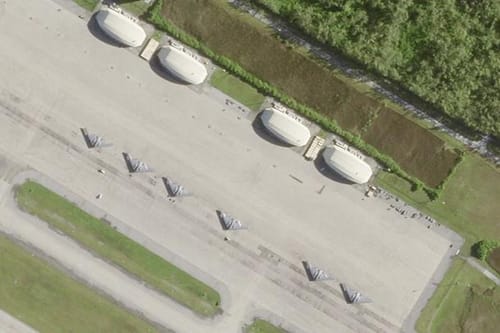
The Diego Garcia ramp in May 2025 while the conflict with the Houthis was ongoing (Sentinel-2c)
The deal had a number of obvious flaws. The UK was to pay rent, from its heavily stretched defense budget, for a lease to an island that has never been found legally to have been anything but British. With sovereignty surrendered, promises by Mauritius about future constraints on the use of the Chagos could not have been legally enforced, leading to questions about Chinese encroachments and exploitation of what for the moment remains the world’s largest marine reserve. Most importantly, it offered no redress to Chagos islanders, who were neither consulted about the deal nor given any guarantees of a right to return to the islands where many of them had been born.
Legally, the lease-back deal agreed between the UK and Mauritius is in effect in suspended animation, as the necessary legislation to ratify the deal failed to pass in the British Houses of Parliament earlier this year. Following the discussions this week in New York, the UK side has agreed that the matter needs to be looked at afresh, and Wes Streeting, the UK Defense Minister, has subsequently described the deal as ‘not good enough’. This all implies that a new deal needs to be negotiated between Mauritius and the UK, one which would need to be acceptable to the United States and guarantee the continued use of Naval Support Facility Diego Garcia. With US bases in the Middle East increasingly vulnerable to newly-developed Iranian missiles and drones, the utility of Diego Garcia – close enough but not too close to the sources of instability in the Middle East – is now probably greater than ever.
Prime Minister Burnham would probably be content to allow the current status quo to continue ad infinitum. He has major political difficulties on his hands at home, and has little interest in being diverted from domestic issues by foreign affairs which do not impinge directly on his immediate priorities.
The Mauritian government will have other views, and is likely now to try to mobilize the Global South in an attempt to pressure both the UK and the United States into acceding to its demands. But President Trump has proven impervious to internationalist pressure in the past. Nor is it any longer clear if such a move would still command the overwhelming support of the UN General Assembly, which had no legal authority but which frightened some British politicians worried about global opinion into negotiating the surrender agreement. Whilst Mauritius advanced its claim on the basis of sovereignty, many suggested that the Maldives had a better claim to the islands and wondered if Mauritius’ primary motivation was to win a generous financial pay-off – which they managed to secure in the now obsolescent agreement.
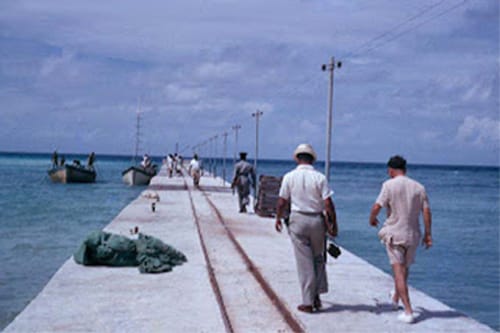
The jetty on Île de Coin, with its tramway for moving copra for shipment, as it was in 1963 (Wikipedia)

that matters most
Get the latest maritime news delivered to your inbox daily.
In the meantime, a group of Chagossians, led by the Islanders’ First Minister Misley Mandarin, are still encamped on Île du Coin, the main island in the atoll of Peros Banhos, 120 nm north of Diego Garcia, with their right to remain endorsed by the British Indian Ocean Territory Supreme Court. They are doggedly opposed to being transferred as chattels to Mauritius, and are winning support for their right to self-determination. Plans are afoot, financed privately, to rebuild infrastructure on the island to support a permanent resettlement of Peros Banhos. In the future, it need no longer be dependent on the production and export of copra, with the touristic advantages of being positioned in the middle of a huge Marine Protected Area.
