


Carrier USS Gerald R. Ford Sets Post-Vietnam Record for Longest Deployment
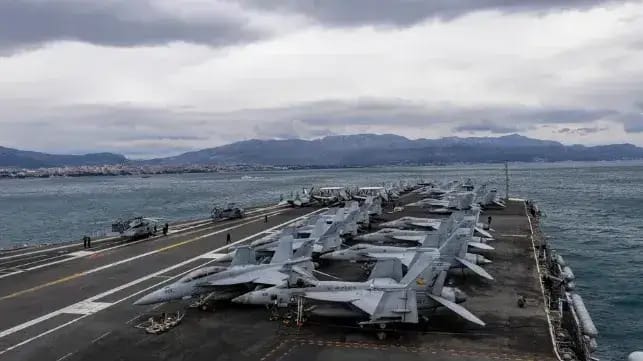
The supercarrier USS Gerald R. Ford has set a new and unwanted post-Vietnam record, achieving 297 days of continuous deployment - exceeding the 295-day mark set by USS Abraham Lincoln in 2019-2020. In addition to its exceptional length, Ford's deployment has been marked by challenges, notably including a laundry-room fire that forced her to return to port for repairs and a reported series of sewage-system problems.
Ford is the first of a new class of supercarriers, the largest and most expensive of the type ever built. At $13 billion, she is a contender for the title of most valuable vessel ever constructed, rivaled only by Shell's groundbreaking FLNG Prelude (exact price undisclosed).
Ford deployed from Norfolk on June 24, 2025 for a routine voyage to Europe, but in November she re-crossed the Atlantic and transited to the Caribbean to augment the pressure campaign on then-Venezuelan President Nicolas Maduro. She was tasked with joining the naval buildup in the Mediterranean in February, then moved into the northern Red Sea to join in strike missions on Iran.
On March 12, Ford sustained a serious fire in a laundry room, damaging berthing areas and forcing large numbers of crewmembers to seek improvised sleeping arrangements. Combat operations continued, but Ford was eventually pulled off station and sent to Souda Bay for repairs. She then transferred to Split, Croatia, where work to fix interior damage continued, and then returned to sea for a patrol in the Eastern Mediterranean.
If the carrier left station today and returned to Norfolk, she would still be deployed for another two weeks for the long journey back, reaching at minimum the 310-day mark. If her time in the Mediterranean is extended into early May, pushing back her return to Norfolk until late May or early June, Ford could easily surpass the all-time record set by USS Midway during the peak of Operation Linebacker (April 10, 1972 to March 3, 1973, a total of 332 days).
The Navy has long warned that extended deployments disrupt maintenance periods, wear out equipment and prolong repairs for months or years, thereby increasing the burden on other carriers. If yard periods run over because of unplanned repairs caused by excessive use, a smaller pool of carriers has to cover the same level of tasking from combatant commanders.
The carrier USS George H.W. Bush has deployed from Norfolk and may relieve Ford; the Navy is building up its presence in the Mideast in case combat with Iran resumes, and Ford - though already extended several times - could contribute to strike missions or to anti-drone defense if required.
At present, preliminary talks between Washington and Tehran are progressing, but on Thursday, Defense Secretary Pete Hegseth warned that strikes on Iran would resume if no deal is reached.

that matters most
Get the latest maritime news delivered to your inbox daily.
"You [Iran] are digging out your remaining launchers and missiles with no ability to replace them. You have no defense industry, no ability to replenish your offensive or defensive capabilities," he said. "If Iran chooses poorly, they will have a blockade and bombs dropping on infrastructure, power and energy."
Central Command is said to have quietly resisted Hegseth's requests to target civilian infrastructure - for example, roadway bridges - by subtly recommending military targets instead, Maj. Gen. Randy Manner (ret'd) told MS Now earlier this month. "I believe that people [in the military] are already saying 'no' to the hierarchy," he said. "The idea of attacking bridges that are clearly, overwhelmingly for civilian use would be a war crime, and . . . the planners in CENTCOM would not permit that."
