
Beyond Sanctions Lists: Navigating Fragmented Enforcement in Maritime Trade
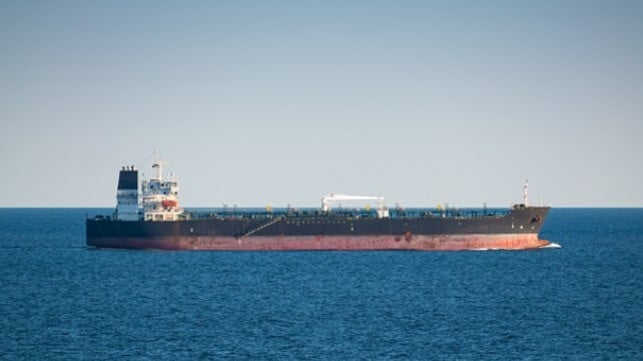
In the first week of January 2026, US and UK forces seized a Russian-flagged tanker in the North Atlantic. Finland detained a freighter suspected of cable sabotage. Sweden held a sanctioned cargo vessel in the Baltic. Three separate seizures, three different jurisdictions, all within days of each other.
The message from regulators is clear. The era of warnings has ended.
Twelve months ago, I was advising to prepare for uncertainty. Now I'm telling them to prepare for enforcement at an unprecedented pace and scale.
The numbers tell the story. Nearly 600 vessels now sit on EU sanctions lists, up from under 200 at the start of 2025. OFAC sanctioned over 180 vessels in a single January 2025 action. The Trump administration imposed sanctions on Rosneft and Lukoil, Russia's two largest oil companies, in October.
In December, Washington declared Venezuela's Maduro regime a "foreign terrorist organization" and announced a complete naval blockade of sanctioned tankers. We all know what happened next.
The divergence problem
Historically, sanctions from the US Office of Foreign Assets Control (OFAC) provided a reliable "North Star" for global compliance. Whatever the US had to say was essentially mirrored by the EU, UK, and other major economies like Australia and Japan.
However, signs of divergence are emerging.
Today, there are lines of division between the U.S. and European sanctions policies. The EU has pushed ahead with 19 sanctions packages while the US held back on major Russia enforcement until late 2025.
Looking ahead, there is no clarity whether any potential peace deal with Russia would include lifting of sanctions, or whether lifting by the United States would be replicated or resisted by European authorities. For maritime operators, this creates a compliance puzzle with no easy answer: a vessel or counterparty cleared under one regime may be prohibited under another.
Why does this matter practically? Because companies now have to rely on multiple regulatory bodies with different approaches to the same events. You might trade in dollars, which exposes you to OFAC. But if you have EU nationals in your workforce, you're also subject to EU designations. And these regulatory bodies have their own ways of distributing information to the outside world. OFAC is reasonably structured. The EU? They give you a PDF. Here are the 160 companies and 24 individuals and 50 vessels you're not allowed to deal with. Now make sure you don't.
Keeping up has become a race against fragmented, fast-moving information.
Why maritime faces the heaviest compliance burden
Maritime companies operate globally, which makes them especially vulnerable to evolving sanctions risks.
Complex ownership structures, often involving Special Purpose Vehicles designed to obscure ownership, combine with tactics like AIS manipulation, frequent flag changes, and indirect leasing arrangements to create major enforcement challenges.
Even without direct dealings with sanctioned entities, businesses can inadvertently breach secondary sanctions through indirect, hidden associations. For instance, a vessel previously owned by a sanctioned entity, cargo passing through restricted jurisdictions, or shipping partners unknowingly engaging with sanctioned parties.
Ship-to-ship transfers remain the highest predicate offences leading to vessel sanctions. The practice itself is legitimate. Vessels routinely transfer cargo in port as standard operations. But it's also a common method for hiding the origin of cargo.
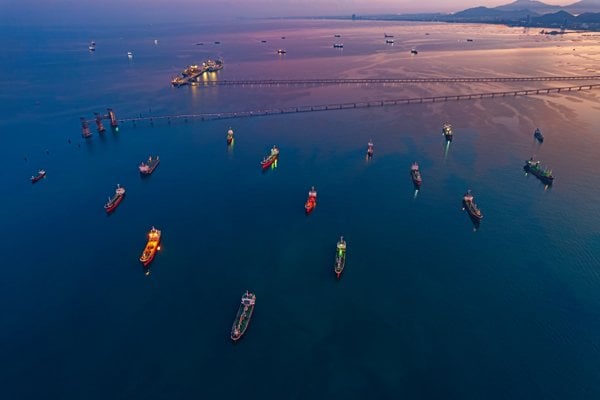
Hotspots in Malaysia, Iraq's Basra, and elsewhere have become concentrated zones of illicit activity. Vessels turn off their AIS signals, meet in the middle of the sea, exchange cargo, blend products, and mask where the cargo originally came from.
Checking whether a vessel is directly sanctioned is no longer complicated, many providers can tell you that. The harder question is: has this vessel been engaging with sanctioned vessels? That could be a different, more complicated answer.
Sanctions are here to stay. How technology can help
Economic sanctions remain the 21st century's primary tool for penalizing countries in violation of international laws without resorting to military force. I don't see that changing.
The bad actors may shift, but the reality remains the same. The question for maritime businesses is whether their compliance infrastructure can keep pace. The companies relying on manual processes and fragmented systems are already struggling.
Staying ahead in today's fast-moving, fragmented sanctions environment requires far more than human effort.
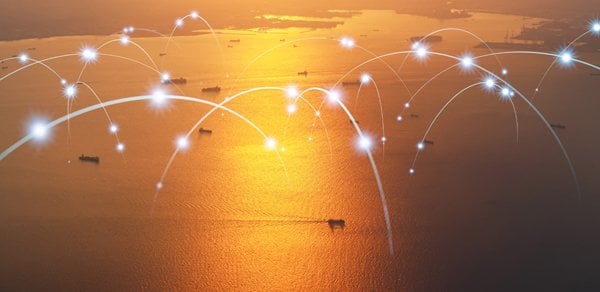
Maritime companies need continuous, real-time access to sanctions and company data, as both regulatory updates and business relationships can change instantly. With enforcement tightening across multiple jurisdictions, round-the-clock monitoring is essential to ensure businesses don't unknowingly violate sanctions or fall into compliance gaps.
This is where Marcura's compliance solutions provide a competitive advantage:
World-class maritime data ecosystem – Leveraging a trusted, centralised source for vessel and counterparty data stress-tested by millions of transactions.
Consolidated sanctions monitoring – Tracking updates from multiple jurisdictions in real time, reducing the risk of missing regulatory changes.
AI-powered screening – Identifying hidden direct and indirect links to sanctioned entities, helping businesses avoid exposure.
Automated due diligence – Flagging potential compliance risks before they become costly problems, ensuring proactive risk management.
Looking ahead
Relying on outdated compliance processes is no longer an option. Investing in advanced compliance tools is the only way to stay ahead of evolving regulations, mitigate risk, and maintain uninterrupted operations.
Marcura's maritime compliance solutions offer a single source of truth, with real-time risk insights, automated compliance checks, and early warnings, helping businesses stay agile, reduce risk, and operate with confidence.
Andrei Grigoras is SVP of Compliance Solutions at Marcura
This article is sponsored by Marcura. For more information visit the company online.
The opinions expressed herein are the author's and not necessarily those of The Maritime Executive.
