


As Vessel Casualties Mount in Gulf, IMO Endorses Safe-Passage Exit Route
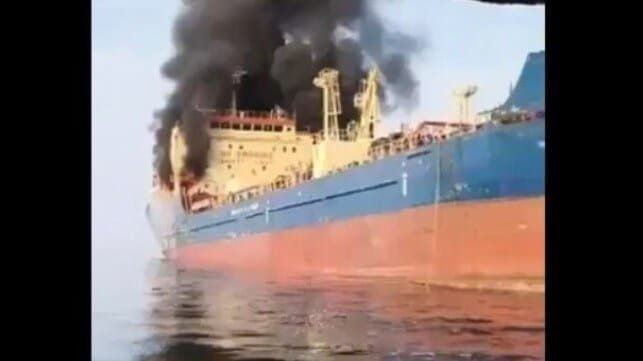
Amidst the ongoing exchange of fire in the Arabian Gulf region, thousands of seafarers are caught in the middle. In the early hours of Thursday morning, two more vessels were hit by projectiles during periods of active Iranian strikes, reportedly leaving one vessel burned and its captain missing.
At about 0300 hours local time Thursday, an unnamed vessel was hit by a projectile at a position about 11 nautical miles off the coast of Khor Fakkan, UAE, a busy anchorage area. According to UK Maritime Trade Operations (UKMTO), a fire broke out aboard the ship. Maritime security consultancy Vanguard Tech understands that 15 out of the 16 crewmembers abandoned ship, and the survivors were rescued by a good Samaritan vessel. The master of the burning ship is reportedly missing.
Separately, a Qatari tug was hit by drone debris about four nautical miles to the east of the LNG plant at Ras Laffan, which came under heavy Iranian attack Wednesday night. The tug - identified by Vanguard Tech as the Halul 69 - sustained damage to one bridge window, but no injuries were reported.
The kinetic effects of the conflict are the most serious risks, but reports out of the Gulf suggest that thousands of seafarers face varying degrees of deprivation because of the security situation. According to IMO, there are 20,000 crewmembers and more than 3,000 vessels of varying sizes stuck in the Gulf. The International Chamber of Shipping has received reports of ships running low on supplies, unable to berth for replenishment due to security restrictions.

that matters most
Get the latest maritime news delivered to your inbox daily.
"Our biggest concern at the moment is the impact of an ongoing war on the stores on board the ships," ICS marine director John Stawpert told AFP. "It's obvious things like food and water, in the first instance, and then seeing if there is a way to supply them with fuel."
At an urgent meeting called this week, IMO endorsed an international proposal for a safe-passage framework that would allow the vessels trapped in the Gulf to leave via the Strait of Hormuz, without risking Iranian fire. "I am ready to start working immediately in negotiations to establish a humanitarian framework to evacuate all vessels and seafarers trapped. However, for this to materialize, I will need the understanding, commitment and, above all, the concrete actions from all relevant countries and stakeholders," said Secretary-General Arsenio Dominguez in closing remarks on Thursday.
