


Appeals Court Suspends Hawaii’s “Green Fee” for Cruise Ships Pending Appeal
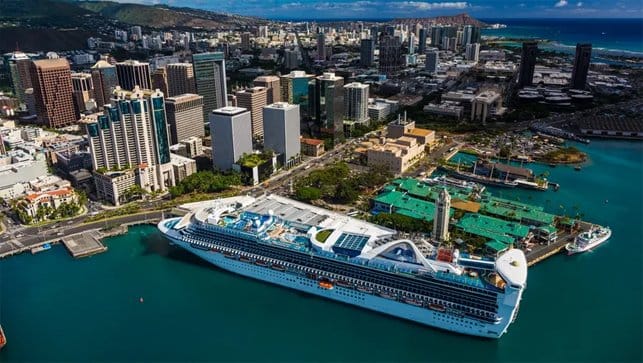
Hawaii’s hotly contested and closely followed “Green Fee,” a new tax on hotels, short-stay rentals, and cruises, suffered a setback just hours before it was due to go into effect. It is the first tax of its kind imposed on tourists to contribute to the state’s costs of addressing environmental issues.
Two judges on the U.S. 9th Circuit Court granted on New Year’s Eve (December 31) a last-minute request for an injunction in a suit brought by the cruise industry trade group, Cruise Lines International Association, challenging the legality of the tax. A lower court had denied the request for an injunction, saying the cruise industry had failed to show it was likely to prevail in its lawsuit against the State of Hawaii.
The lower court had cleared the way for the 11 percent tax to be imposed for the first time against the fares paid by cruise passengers starting on January 1. The law, which was signed by Hawaii’s government in May 2025, extends the “green fee” to cruises for the first time for the days the ships are in Hawaiian waters, regardless of port calls or at sea. In addition, the law permits the local authorities to add a further three percent surcharge, bringing the total to a 14 percent tax for each day a cruise ship passenger is in Hawaiian waters.
The circuit court let the law stand, which also includes an increase in the green fee charged to hotel guests and short-term rentals, starting on January 1. The court, however, halted enforcement on cruise ship passengers while the legal challenge is being decided.
Hawaii’s governor had said the new fees could provide $100 million per year that the state would use to fight the impact of climate change. It could include projects for sand replenishment as well as other coastal activities. The government cited the issues from rising sea level and erosion, as well as devastating wildfires such as the one that destroyed Lahaina in 2023 and more recent ones last fall in Hilo and the Big Island of Hawaii.
The cruise industry argues that the U.S. Constitution limits states' rights to charge taxes on interstate commerce and for waterway use. They contend that only the U.S. Congress could impose such fees for entry into a state’s waterways and noted that the fees are not for services or the ports. They said the fees would make the cost of cruises prohibitive, especially for families. They also challenged a requirement for the cruise lines to advertise participation and to educate their passengers.

that matters most
Get the latest maritime news delivered to your inbox daily.
The lower court judge had noted uncertainty in the application of the laws and the U.S. Constitution when it comes to these types of challenges. The court had said, however, that CLIA failed to prove its case to a level of certainty to warrant the preliminary injunction. The merits of the complaint are yet to be heard.
Many jurisdictions have looked to find steps to limit the environmental impact and issues such as overtourism on popular destinations. Juneau in Alaska has agreed to a daily cap on the number of cruise ships and passengers, while Bar Harbor, Maine, has begun refusing large cruise ships, and Key West, Florida placed limits on large cruise ships. The cruise industry counters that it is at the forefront of environmental issues and that commercial shipping plays a much larger role in the environmental concerns of ports and coastal communities.
