


After U.S. Bust, Four Tankers Turn Around Instead of Calling in Venezuela
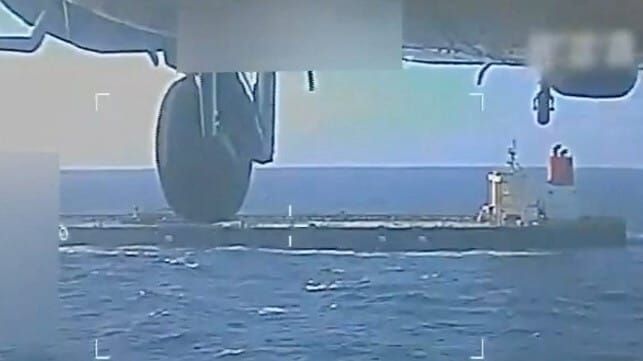
Venezuela's oil exports are coming under heavy pressure after the U.S. seized the VLCC Skipper off the country's shores last week. The boarding netted 1.85 million barrels of oil and one 20-year-old supertanker for the United States, satisfying a court-ordered arrest warrant and generating millions for the U.S. Treasury, but its more significant impact may be to deter other tanker operators from engaging in Venezuelan trade.
According to TankerTrackers.com, four "legitimate" tankers that were en route to Venezuela to lift crude have now turned around and headed back the way they came. This may be due to more than just the seizure of the supertanker Skipper: Venezuela may be unprepared to load newly-arrived tankers. On Monday, state oil firm PDVSA reported that its administrative computer systems had gone down due to a cyberattack, taking all of the tracking software for oil loadings offline. "There's no delivery [of cargoes]," one official with PDVSA told Reuters.
In an internal notice seen by Argus Media, PDVSA's managers told employees that the cyberattack centered on the Oriente Norte division, and the intruders had been deleting data on computer systems used for port and pipeline operations. Employees were instructed not to turn on their computers in order to contain the spread of the infection, the memo said.
Import cargoes may also be affected, though evidence is less clear. One tanker carrying Russian-origin naphtha for use as a diluent - needed to make Venezuela's extra-heavy crude liquid enough to pump and transport - may also have canceled an imminent offload and left Venezuelan waters, Reuters reported. The product tanker Boltaris, a stateless vessel falsely flagged in Benin, anchored just off Maracaibo on December 8; on December 10, the day Skipper was seized, Boltaris got under way again and headed out on her return voyage - without appearing to stop first to offload, according to AIS data provided by Pole Star Global.

that matters most
Get the latest maritime news delivered to your inbox daily.
AIS data can be falsified, and only imaging can definitively resolve tanker movements. Boltaris' previous visit to Venezuela (in January 2025) also ended in a "turnaround" without an AIS-visible port call alongside a pier.
Separately, Venezuela has laid blame on Trinidad and Tobago for allegedly supporting the seizure of the tanker Skipper. As the U.S. military ramps up its presence in the Caribbean, the island nation has allowed U.S. forces to set up ship-tracking radars on its shores and to use its airports for logistics, drawing Venezuela's ire. In a statement, the regime of Venezuelan dictator Nicolas Maduro said that in retaliation, it would immediately suspend joint agreements on offshore natural gas development that it had reached with the government of Trinidad.
