
Errors and Inexperience Sank Bounty, Killed Two
A combination of faulty management and crew risk assessment procedures, as well as crew inexperience, contributed to the sinking of the tall ship Bounty in October 2012, says the U.S. Coast Guard. Specifically, choosing to navigate a vessel in insufficient material condition in close proximity to an approaching hurricane was highlighted in the investigation report just released.
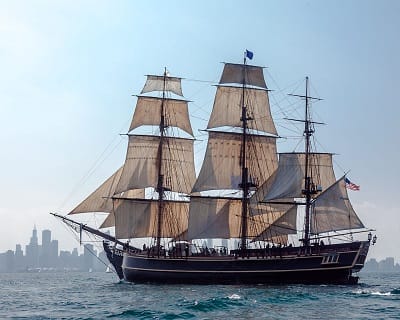 Prior to the Bounty’s departure from New London Connecticut on October 22, 2012, Hurricane Sandy was 125 miles east southeast of Nassau in the Bahamas, headed northbound off the Atlantic Coast. The master held a meeting with the crew to inform them of his plan sail out to the east to monitor the track of the hurricane, and then to choose what course to take, as he believed that, during a storm, a ship was safer at sea than in port. He gave all of the crew the opportunity to leave the vessel if they did not feel up to making the trip. No one chose to leave.
Going against forecasts, the master placed the vessel in the direct path of the storm. Seas of 20 to 30 feet and winds up to 90 knots were experienced and the vessel took on water. Crew members were injured and the vessel’s pump and power equipment failed to keep pace with requirements.
Given the injuries to crew and problems with dewatering, the master and chief mate called for assistance, but soon after, with no power and water in the bilges continuing to rise, the master directed the crew to prepare to abandon ship. The plan was to abandon ship at first light in order to ensure the Coast Guard was on scene and conditions were as favorable as possible.
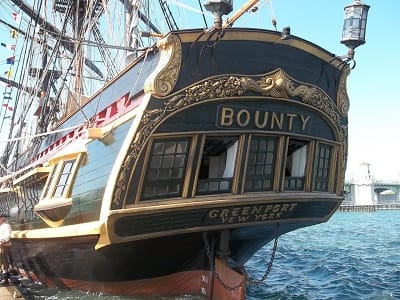 However, at approximately 03:30, the water reached Bounty’s tween deck level, and the crew were forced to retreat to the weather deck. They had donned immersion suits and prepared “ditch kits.” At approximately 04:26, the vessel rolled to starboard. Although it did not capsize fully, the heeling moment was sufficient to force the crew to abandon ship. Most were able to enter into two canopied life rafts.

that matters most
Get the latest maritime news delivered to your inbox daily.
Around 06:30, Two MH-60 Jayhawks arrived on scene and rescued most of the 16 crew from the life rafts, one from the open ocean. The airborne search continued and the missing deckhand was recovered unresponsive and later pronounced dead. The search for the master continued, and ultimately encompassed approximately 10,000 square miles of search patterns. The search lasted four days, but the master was not located.
The report can be accessed here.
