


GAO: Coast Guard Addressing Marine Firefighting Challenges, but Gaps Remain
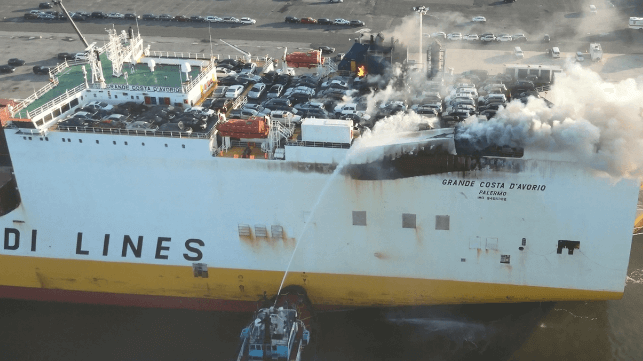
Fires on vessels present serious dangers to passengers, crew, and firefighters; can have significant environmental impact; and can affect billion-dollar commerce in busy ports. Marine fires present unique hazards that are incredibly dangerous and challenging incidents for firefighters to respond to, including vessel instability, tight onboard spaces, and the need for specialized resources that are not typically available in many ports.
The U.S. Government Accountability Office (GAO), the non-partisan, fact-based arm of Congress, recently published a report highlighting the prevalence of these fires and the Coast Guard’s efforts address them.
According to Coast Guard data, 886 nearshore marine fires occurred between 2015 and 2025. About a quarter of these were classified as serious because they resulted in either death, injury, over $200,000 in damage, or a total loss of the vessel. The figure below shows the locations of these marine fires, including incidents where fire departments responded.
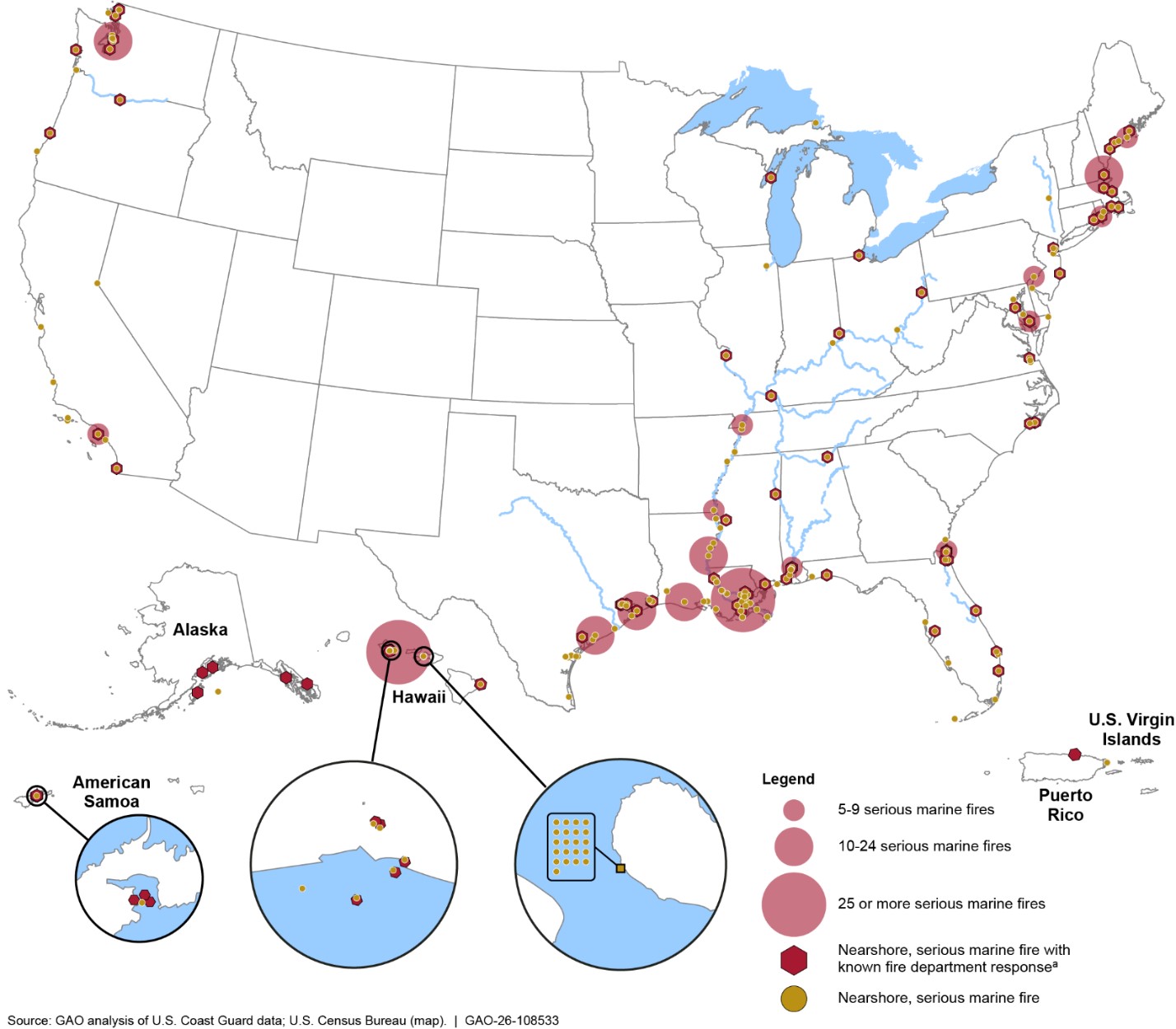
Total Nearshore, Serious Marine Fires, 2015–2025
Fifty-five people died in serious marine fires from 2015 through 2025. These included the deaths of land-based firefighters, such as a 2023 incident where two Newark firefighters died while responding to a fire on a large vehicle cargo vessel.
Following the Newark fire, the Coast Guard established a task force to identify and address marine firefighting challenges. The task force took several steps to address these challenges, including developing guidance for standardizing marine firefighting plans and a tool to quickly collect and share information during a marine fire. But some gaps persist:
Training for firefighters. The Coast Guard, the National Transportation Safety Board, and fire chiefs have found that available training on preparing for and responding to marine fires for land-based firefighters is limited. In response, the Coast Guard partnered with an emergency response organization to develop online training videos on marine fires for firefighters. But Coast Guard officials and fire chiefs told us that ensuring firefighters have hands-on training, like vessel tours and exercises with “boots on boats,” will better prepares firefighters for complex marine fires, instead of virtual or classroom training alone.
Funding. While formal marine firefighting training is available at several institutions across the country, fire chiefs in four ports GAO spoke with said they have trouble justifying the training because of budget constraints. For example, one fire chief told GAO that tuition for one firefighter to attend a 5-day training course may cost $500, but the total cost of attendance would be around $6,000 because of enrollment, lodging, and overtime costs. Fire chiefs also said that some fire departments lack resources, such as fireboat assets and water pumps, to provide effective responses to marine fires. Fire departments have used federal Port Security Grant funds to address these issues in the past. GAO made recommendations to improve this program in September 2025.
Delayed vessel response plan activation. The Coast Guard also found that sometimes vessel owners or operators delay activating vessel response plans, which dispatch pre-contracted resources to respond to a worst-case scenario. For example, vessels may use a “wait and see” approach, not activating a plan until the situation deteriorates and endangers firefighters. However, the Coast Guard has not developed or distributed more detailed guidance on when to activate vessel response plans, such as by including scenarios of fires that warrant activating a plan.
Fires on Vessels that Use Alternative Fuels. Vessels that use alternative fuels are becoming increasingly common and can pose significant risks to the environment and firefighters. However, GAO found the Coast Guard’s existing regulations for requiring vessel response plans do not cover certain vessels that use alternative fuel sources—such as ferries powered by lithium-ion batteries or container ships powered by ammonia. Not having a response plan for such vessels can delay firefighting efforts. For example, representatives of the resource providers said they could not respond to a marine fire on one of these vessels for 3 to 4 days until contract details were finalized with vessel owners. Additionally, one fire chief told us that land-based firefighters may not be trained for the hazards associated with vessels using alternative fuels, which could lead to career-ending injuries.
GAO recommended that the Coast Guard engage with fire departments and maritime stakeholders to coordinate shipboard training opportunities and distribute information on factors to consider when determining when vessel response plans should be activated for marine fires. GAO also recommended that Congress consider amending the law to ensure vessels using alternative fuels prepare vessel response plans.

that matters most
Get the latest maritime news delivered to your inbox daily.
Taking these steps would help increase safety and reduce environmental risks of marine fires.
To learn more about these and other issues, see the full report here.
The opinions expressed herein are the author's and not necessarily those of The Maritime Executive.
