
Farewell the Nedaja: The Extraordinary Ineptitude of the Iranian Navies
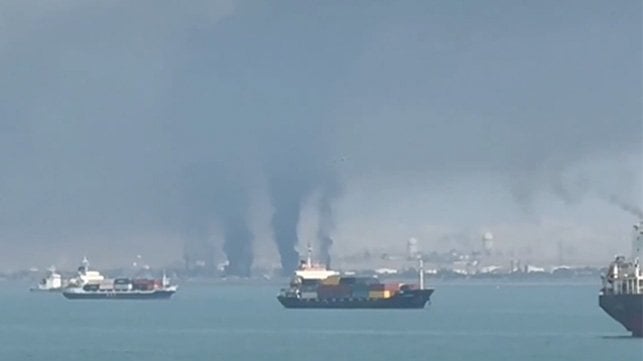
Those lost at sea deserve some respect, but not every sailor of the regular Iranian Navy (known as the Nedaja) and its IRGC Navy (Nedsa) counterpart has yet gone down with their ship.
Admiral Brad Cooper (Commander CENTCOM), in a video update covering the progress of the war against Iran, revealed that CENTCOM naval and air forces had accounted for 17 Iranian naval vessels by March 3, and that there were no longer any Iranian surface combatants in the Gulf, Straits of Hormuz, and Gulf of Oman sea areas.
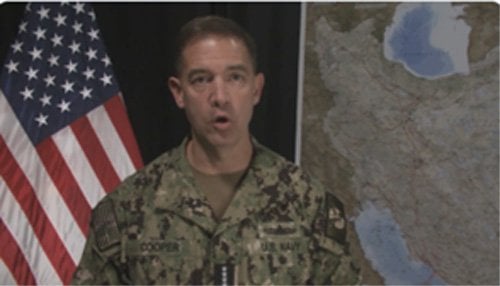
Adm Brad Cooper announced on March 3 that US forces had destroyed 17 Iranian naval vessels and cleared those remaining from the Gulf, the Straits of Hormuz, and the Gulf of Oman (White House video)
Nedaja commanders have consistently failed to disperse their vessels in times of tension, instead often bringing vessels into the Bandar Abbas Naval Harbor when they would have been far safer either going out to sea or sheltering in the many civilian ports along Iran’s long coastline. Vessels have consistently also been concentrated in Bandar Abbas, rather than dispersed between Chah Bahar, Jask, and Bushehr, the other principal naval ports and regional commands.
To make matters worse, both the Nedaja and the Nedsa have consistently berthed the same class of vessel in the same positions on the dockside, such that it would not even be necessary to have up-to-date coordinates to hit a target of value at one of these berths.
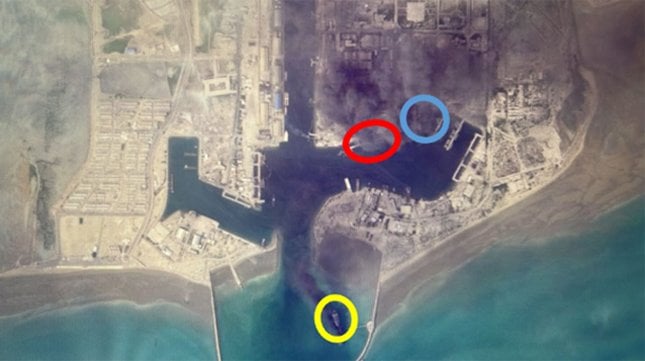
Bandar Abbas Naval Harbor at 12.00 (UTC) on March 2 (Sentinel-2/CJRC). Yellow: berth of IRINS Makran (K441). Red: berth recently of 2 x Moudge Class frigates. Blue: Berthing area of IRINS Zagros (H313) and Hengam Class logistic vessels.
Iranian press coverage of Nedaja and Nedsa activities has consistently placed greater emphasis on making vainglorious publicity statements, at the expense of maintaining a veil of secrecy over Nedaja and Nedsa deployments, and of the capabilities of weapons systems with which their ships are equipped. Such statements have tended only to impress home-team cheerleaders and have not proven to be any form of deterrent to the adversaries that the Iranians are now facing.
The emphasis on propaganda as opposed to operational proficiency has been starkly demonstrated by the demise of the Moudge Class frigate IRINS Dena (F74). The Iranian authorities clearly thought attendance at the Indian International Fleet Review in Vizag on February 18 was of greater value than deploying the frigate to screen what was already a growing US naval presence in the Gulf of Oman. In contrast, the US Navy withdrew its Arleigh Burke Class guided-missile destroyer USS Pinckney (DDG-91) from the Review for operational reasons. It was doubly inexplicable when IRINS Dena then proceeded at a leisurely cruising speed towards the northern Indian Ocean once hostilities had broken out, and when this area was packed with US 6th Fleet ships. The demise of IRINS Dena was inevitable.
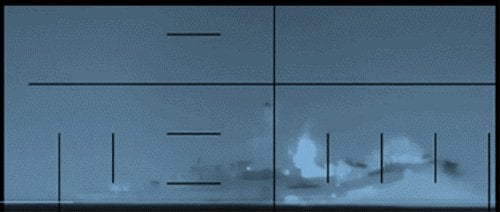
The periscope view as the stern of IRINS Dena (F75) fractures and lifts out of the water when hit by a Mk 48 torpedo fired by a US Virginia Class nuclear attack submarine off Sri Lanka (CENTCOM video)

that matters most
Get the latest maritime news delivered to your inbox daily.
It is not as if the commander of the Nedsa Rear Admiral Shahram Irani, and his senior officers had not been warned. From feedback received in online comments, there have been some keen readers of The Maritime Executive website among the Nedaja’s senior leadership, who should probably have paid more attention to the weaknesses in their seamanship and operational security, which were regularly pointed out in these pages.
The opinions expressed herein are the author's and not necessarily those of The Maritime Executive.