
India Moves to Accelerate Expanding Shipping Capacity by Adding 62 Vessels
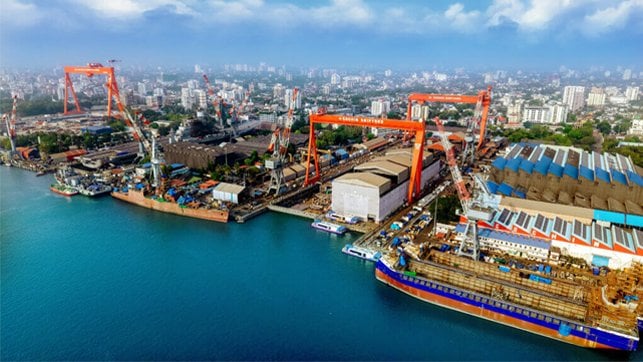
India’s Minister of Ports, Shipping, and Waterways, Sarbananda Sonowal, mapped out an ambitious plan to rapidly expand the country’s domestic maritime capabilities. The government has already set a high priority on building its commercial maritime operations, and now the minister told an inter-ministerial meeting it is even more important, highlighted by the recent global situation.
The Minister said that the hostilities in the Middle East and the closing of the Strait of Hormuz had further highlighted the vulnerabilities and the need to make India more self-reliant. The ministers acknowledged that India had brought home more than 3,000 seafarers stranded due to the U.S. war with Iran. The country had dozens of ships trapped and worked hard at its diplomatic channels to get its tankers and gas carriers released, bringing vital cargo to its ports.
“We must act with urgency to strengthen our fleet, shipbuilding capacity, port infrastructure, and the broader maritime ecosystem,” the minister said, underscoring the need for a coordinated national effort. He said all the ministries represented needed to work together and also had to involve the ministers of Petroleum and Natural Gas, Chemicals and Fertilizers, and Commerce and Industry.
He announced a goal to add 62 new vessels to India’s domestic maritime fleet in FY 2026-2027. Furthermore, he said the government would back it with an investment of US$5.4 billion. He said the goal was to add 2.85 million gross tons to the fleet.
The minister said that, based on the current global scenario, the focus includes container vessels, LPG carriers, crude oil tankers, and green tugs. This would also be in addition to an effort by the Shipping Corporation of India to acquire 59 new vessels.
Indian Prime Minister Narendra Modi has already highlighted the government’s high priority on reducing the country’s dependence on foreign shipping. Currently, approximately 90 percent of Indian commerce and trade is transported on foreign-flagged vessels, but Modi has set a goal for at least 20 percent of India’s exports to be on Indian-flagged vessels. He has also said that transshipping should grow from the current 20 percent to 75 percent by 2030.
The government has already taken a series of steps to revise its cabotage regulations. It is ending waivers for foreign ships in transshipments and cargo movement between domestic ports. This has prompted major carriers, including CMA CGM, Maersk, Mediterranean Shipping Corporation, and Hapag-Lloyd, to begin efforts to transfer vessels into the Indian registry. This month, CMA CGM is working on completing the transfer of its sixth containership from Malta’s registry to India.

that matters most
Get the latest maritime news delivered to your inbox daily.
Shipbuilding is also a top priority, with the government spelling out financial programs to support new construction and the expansion of the industry. It is calling for domestic yards to expand capacity and also for the development of new shipbuilding clusters. The goal is for India to become a top 5 shipbuilding nation by 2047.
The minister instructed the participants in the inter-ministerial meeting to develop an actionable white paper that lays out the roadmap for achieving the accelerated expansion of the Indian merchant fleet. He told them to identify gaps and work with the broader group of ministers to develop the plan for the maritime supply chains.