
US Supreme Court Rules Cruise Lines Can Be Sued Under Cuban Libertad Act
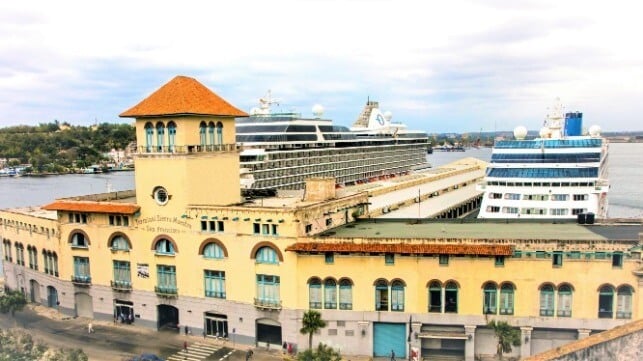
The United States Supreme Court handed down its ruling saying four cruise lines could be sued for their use of the pier in Havana, Cuba, under the Libertad Act passed by the U.S. Congress in 1996. The case has been seen as a potential watershed in the long-running fight for compensation for assets seized during the 1959 Cuban revolution and other events around the globe.
At issue was the cruise lines' use of the docks in Havana between 2016, when the United States lifted many of its restrictions on Cuba under President Barack Obama, and June 2019, when Donald Trump reinstated the restrictions and let a presidential waiver over enforcement of the Libertad Act lapse. The Havana Dock Company, which built and operated the docks under a 99-year concession before the Cuban revolution, sued Carnival Corporation, Norwegian Cruise Line Holdings, MSC Cruises, and Royal Caribbean Group, contending they profited from the use of confiscated property.
The case alleges the cruise lines carried nearly one million passengers to Cuba between 2016 and 2019 using the piers that were tainted property, seized by the Cuban government in 1960 from Havana Docks. Under the Cuban Liberty and Democratic Solidarity Act (known as the Libertad Act or the Helms-Burton Act for its sponsors), companies were given the right to sue for compensation from their seized properties.
A federal district court in Miami found for Havana Docks and awarded damages of $440 million. However, a U.S. Court of Appeals reversed the decision. The cruise line case was argued before the U.S. Supreme Court in February over the interpretation of the act. Among the defenses presented by the cruise lines is the argument that the concession for the piers was to have expired in 2004. Further, it is argued that the cruise lines were operating under permits issued by the U.S. government.
The Supreme Court, in an 8 to 1 decision, ruled that the property was, in fact, “tainted” by the 1960 seizure and that Havana Docks only had to show that the cruise lines had used the confiscated property. The majority opinion written by Justice Clarence Thomas disagrees with the appellate court’s ruling, finding that the act generally makes those who use property tainted by a past confiscation liable to any U.S. national who owns a claim on that property. Havana Docks' claim for the lost docks was certified at $9 million in 1960.
In a concurring opinion, Justice Sonia Sotomayor, joined by Justice Brett Kavanaugh, raises concerns that the majority opinion, however, is too broad. She believes it was unlikely that Congress intended in the act that “someone who suffered a finite loss to reap infinite recoveries.” She believes the claim should be finite and not go on so long as anyone continues to make any commercial use of the docks. Justice Sotomayor, in her opinion, raises another point, highlighting that the cruises were operated at a time when U.S. policy was that they were lawful and beneficial to both Cuba and the United States.
The solo dissent came from Justice Elena Kagan, who focused on the assertion that the Cuban government always owned the docks. She points to the 2004 expiration of Havana Docks’ contract. She warns the Supreme Court’s interpretation of the act “treats all property interests as if they were perpetual ones." She sides with the Appellate Court, saying that Havana Docks’ claim should fail because the cruise lines did not use the docks during the time-limited concession.
The ruling sends the suit against the cruise lines back to the lower courts for further arguments.
There are other cases under the Libertade Act also pending in the U.S. courts based on Trump’s 2019 decision not to extend the suspension of the act. Presidents before Trump had suspended the enforcement of the act.

that matters most
Get the latest maritime news delivered to your inbox daily.
The Supreme Court in February also heard a case under the act brought by Exxon Mobil seeking compensation from the Cuban state-owned oil company CIMEX. The U.S. energy company lost its oil and gas assets in Cuba, which were seized by the Castro regime after the revolution and handed over to the state oil company.
In 2022, it was noted that more than 40 Libertad Act suits had been filed, including cases against commercial shipping companies Maersk, MSC, Crowley Maritime, and Seaboard Marine. Some of the cases brought under the act, such as Crowley Maritime and American Airlines, have reportedly reached settlements, while others will be impacted by the decisions in the cruise line case and the yet-to-be-announced decision by the Supreme Court in the ExxonMobil case.