
Nigeria Ports Blocked After Collision Involving Maersk Feeder and a Barge
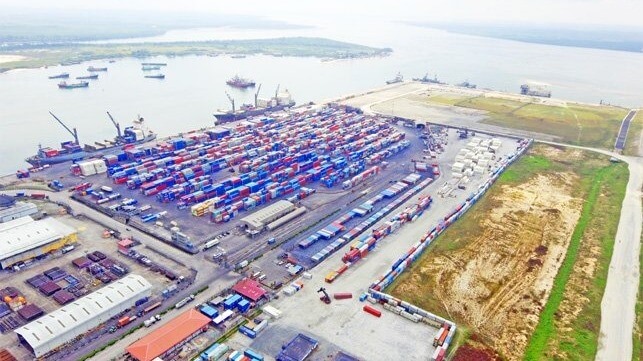
A feeder containership operated by Maersk was involved in an incident in Nigeria’s Bonny Channel, which has left the ship aground. According to media reports, the Maersk Valparaiso is blocking access on the channel and ship access to Port Harcourt and the Onne port, where it was headed.
The 23,359-dwt feeder has a capacity of 1,740 TEU and operates on a route linking Nigeria, Ghana, Togo, and Côte d'Ivoire. Built in 2010, the feeder is 175 meters (574 feet) in length. Registered in Singapore, it has been operating for Maersk since 2022.
According to media reports, the Maersk Valparaiso was inbound to the West Africa Container Terminal located in Onne Port with approximately 717 containers. Maersk’s terminal operator APM runs the terminal.
The Daily Trend newspaper reports the vessel was maneuvering in the channel, preparing to dock at berth 4 at Onne. It apparently collided with a fuel barge coming from the Onne Oil and Gas Free Zone. The barge grounded, and according to the Daily Trend, the Maersk vessel became “stuck in the mud” in the channel.
The vessel’s AIS signal continues to show status as “aground” as of Thursday, May 21, with the newspaper quoting people saying it has been aground for four days. They write that at first, the hope was that the tide would help the vessel to move, but it has remained stuck. Nigerian officials are reported to be working on a plan to refloat the vessel.

that matters most
Get the latest maritime news delivered to your inbox daily.
For now, the access channel to both ports remains blocked. The Daily Trend quotes sources saying congestion is growing in the Bonny Anchorage. Vessels are unable to arrive or depart from the Oil and Gas Free Zone.
Onne Port was developed by the government and converted to a unique Public-Private Partnership approach by the Federal Government of Nigeria. It has emerged as Nigeria’s second-largest port for exports. APM highlights the terminal for its excellent hinterland connections to the rest of Nigeria. It reports the terminal has a capacity to handle vessels up to 4,500 TEUs and an annual throughput capacity of 361,000 TEUs.