
US Container Imports Are Expected to Decline Monthly After an Early Peak
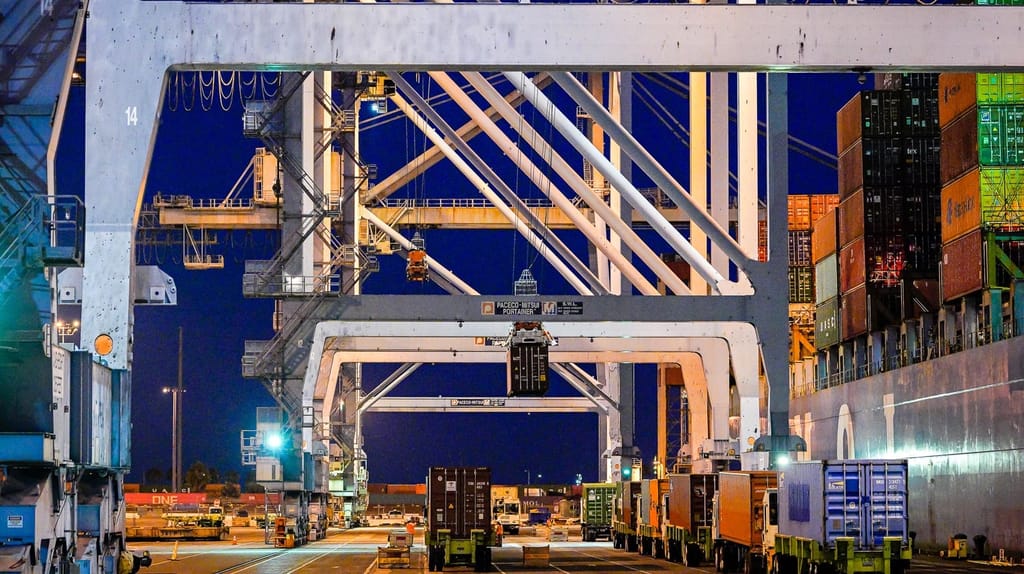
U.S. container import levels remain high, but according to the National Retail Federation, they have peaked early and are starting to decline steadily month-over-month. The trade group for retailers believes importers adjusted the timing of their volumes to beat the latest round of tariffs and that 2026 overall will end the year with volumes flat compared to the last two years.
The group’s Global Port Taker shows that volumes peaked much earlier than in past years. In its first forecast for the full year, the NRF says total container imports are expected to be 25.5 million TEU. That compares with 25.4 million TEU in 2025 and 25.5 million TEU in 2024.
“We had an early peak season this year as retailers brought in merchandise ahead of tariff changes in late July and responded to other uncertainties in the supply chain like the ongoing disruption brought by the conflict in Iran,” said Jonathan Gold, the NRF Vice President for Supply Chain and Customs Policy.
Gold highlights that one tariff policy ended, but that another began with the new program affecting 99 percent of U.S. imports. Donald Trump has indicated that he still firmly believes in the tariff policy and will continue to implement it despite broad opposition and negative rulings in the courts.
“While ports have remained busy this summer and spread out the peak season, this year’s busiest month appears to have arrived in May,” highlighted the NRF. It explains that the peak shipping season historically came in late summer or fall, but was moved up ahead of the uncertainty of the July expiration of the Section 122 tariffs.
As such, the group estimates that June volumes were at 2.23 million in TEU, 2.21 million in July, and will come in at 2.22 million TEU in August.

that matters most
Get the latest maritime news delivered to your inbox daily.
It predicts a steady decline each month for the rest year. While it expects volumes could be up as much as 3 percent year-over-year for September and October, it sees the monthly volumes declining to 2.16 million TEU and then 2.13 million TEU. November is forecast at 2.03 million TEU and a slight end of year uptick to 2.06 million TEU for December.
The group points out that despite expectations that consumers might become more cautious due to increases in the cost of living, spending levels have so far remained resilient. It says this is despite high gasoline costs and persistent geopolitical uncertainty.
