
UK Report on Fatal 2023 Collision Finds Vessels Did Not Follow Safety Regs
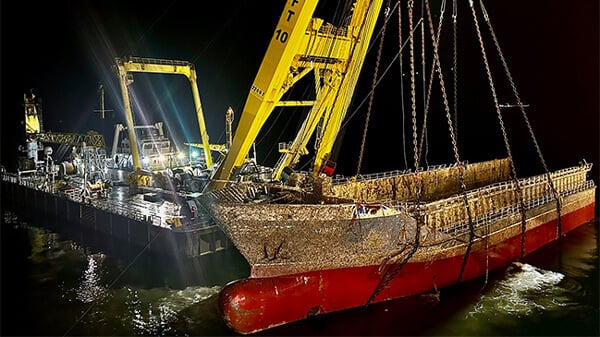
The UK’s Marine Accident Investigation Branch issued its final report on the October 2023 collision of two cargo ships in the German area of the North Sea, calling the accident “wholly avoidable.” It was critical of the actions of both crews, calling their attitudes “reckless,” and also criticizing the efforts of the German Bight vessel traffic service.
The UK conducted the investigation because the five seafarers who perished were working aboard the Isle of Man-registered general cargo ship Verity, a smaller cargo ship built in 2001. The vessel had departed Germany bound for the UK with a crew of seven and carrying 3,262 tonnes of steel coils. It collided with the Bahamas-registered bulker Polesie at approximately 0500 on the morning of October 24, 2023, with the bulker traveling at a speed of 12 knots. The Polesie had a crew of 20 and was traveling from Germany to Spain with a cargo of 32,997 tonnes of feed barley and wheat.
The Verity was badly damaged during the collision, with a large breach in its side, double bottom, and cargo hold. The ship immediately began to list and sank in less than five minutes. Although the crew had mustered after the accident, they did not have time to get into survival suits. Five of the crew were lost, with one body, the captain, recovered, and four missing after the sinking. The vessel was later salvaged and inspected during the investigation.
MAIB conducted an extensive review, releasing a detailed 82-page report. It notes that the Verity, because of its age, size, and regulations, did not have a Voyage Data Recorder. Because key members of the crew perished and because of restrictions on interviews, MAIB notes it was not fully able to explore the rationale behind the Polesie’s watchkeeper and the decisions of the staff at the German Bight vessel traffic services.
It was able to reconstruct many of the actions and conversations, concluding there were “significant shortcomings” by the watchkeepers on both vessels, specifically as it pertained to the application of the International Regulations for Preventing Collisions at Sea. It highlights that under the regulations, Verity was required to keep clear of Polesie.
“Specifically, both watchkeepers were willing to accept inappropriately close passing distances given that their room for maneuver was not overly constrained by navigational hazards or limited by other traffic,” writes MAIB. “The early use of very high-frequency radio could have avoided ambiguity as to each vessel’s actions. When actions were eventually taken to avoid a collision, they were neither positive, so as to be readily apparent to other observers, nor made in ample time.”
It also concluded that the vessel traffic services were late in their efforts to intervene. MAIB writes that the staff did not use “standard marine communications phrases, which might have helped alert the watchkeepers to the seriousness of the situation.” It also notes the use of a duplex radio channel that it says hampered the passing of critical information. The vessel traffic service made a second attempt at intervention, but it came too late, so that MAIB calls it “counterproductive.”

that matters most
Get the latest maritime news delivered to your inbox daily.
The recommendations from the report called for the shipping companies to remind crews to comply with regulations and the standards for keeping a safe navigational watch. It also recommended that the German Directorate General for Waterways and Shipping review the duplex VHF radio channels and improve guidance to its personnel on the international communication protocols. Finally, it recommended that the Isle of Man Ship Registry propose to the International Maritime Organization the extension of the VDR requirements.
MAIB believes the problems were not with the regulations and did not propose amendments. Instead, it cites the lack of adherence to critical “rules of the road” and the lack of clear actions by the crews to avoid the collision.