
Op-Ed: America’s Offshore Fleet Is a National Security Asset
The Coast Guard should take advantage of commercial assets to further its mission, says OMSA's Aaron Smith
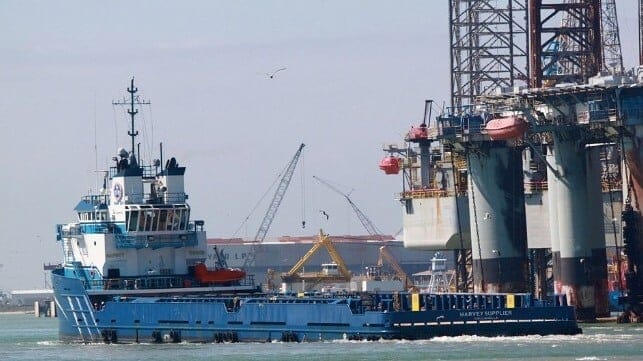
The U.S. vessels that construct and support offshore energy are technological triumphs. These vessels are built for long-duration operations, crane operations, and modular mission profiles. Many combine satellites, lasers, and environmental sensors to automatically hold position within a matter of feet. Some of these vessels have cranes that can install hundreds of tons of equipment thousands of feet below the ocean surface. Designed to support complex offshore missions far from shore, they can be adapted quickly for national security roles with limited modification.
For decades, those of us in the offshore maritime industry have made a straightforward case to policymakers. America’s offshore fleet is not just an economic engine. It is a strategic national asset. Too often, that argument was acknowledged politely as a talking point but never put into practice.
The U.S. Coast Guard’s recent solicitation seeking commercial vessels to expand federal operational capacity publicly signals the federal government is explicitly recognizing commercial vessels, particularly those serving offshore energy, are essential to national security and maritime readiness.
This is not a symbolic move. It is a practical one. And it deserves attention to ensure it actually happens.
The Coast Guard is seeking vessels capable of operating across the Caribbean, the Gulf of Mexico, the Atlantic, the Pacific, and the polar regions. That scope reflects the reality of today’s security environment. Look no further than the recent developments in Venezuela. Maritime threats are global, persistent, and increasingly complex. Drug trafficking, illegal fishing, gray zone activities by foreign competitors, and expanding Arctic activity all demand sustained presence, capability, endurance, and flexibility at sea.
The offshore energy fleet already meets or exceeds many of the performance requirements outlined in the Coast Guard’s solicitation and can be further improved and customized to a multiple of roles quickly via containerized equipment. The same capabilities that allow them to service offshore energy infrastructure make them ideal platforms for logistics, surveillance support, and specialized mission execution in support of federal agencies.
But national security is not only about steel and systems. It is also about people.
America’s offshore fleet is expertly operated by American mariners who are citizens of this country and who have a direct stake in its security and prosperity. These men and women bring more than technical expertise. They bring allegiance, accountability, and inherent alignment with U.S. national interests. That matters. In an era of heightened geopolitical competition, relying on vessels crewed by foreign nationals introduces risks that could be overlooked in procurement discussions.
A U.S.-crewed commercial fleet is a strategic advantage. It ensures able assets and trusted operators on sensitive missions, protects operational integrity, and sustains a maritime workforce that can be mobilized in times of crisis. Readiness depends not only on platforms, but on people who understand the mission and share the nation’s interests.
What is notable is not that these capabilities exist, but that they are now being formally recognized as a more integrated part of our strategic fleet.
For too long, U.S. maritime policy treated commercial capability and national security capability as separate conversations. That division never reflected reality. Nations that better develop maritime power do not draw such lines. They view commercial shipbuilding, vessel ownership, mariner labor, and military readiness as parts of a single ecosystem.
China understands this clearly.
China’s commercial shipbuilding dominance is not the result of market forces or military power alone. Together, they are the product of deliberate state policy. Subsidized shipyards produce vessels that serve commercial markets while retaining clear military utility. These ships operate globally, including in and around U.S. waters, displacing American vessels and American mariners. The strategic implications are difficult to ignore.
If the United States allows subsidized foreign-built and foreign-operated vessels to continue undercutting domestic operators, we are not just losing market share. We are outsourcing our domestic economic needs and surrendering control over defense capability.
National security is not built overnight. It is built through sustained investment in domestic capacity, workforce, and ownership. When commercial fleets disappear, they do not reappear when conflict emerges. Once lost, capability is difficult and costly to rebuild.
The offshore energy fleet represents one of the most advanced segments of the U.S. maritime industry. But most importantly, they are operated by experienced American mariners who work in demanding conditions every day.
Investing in this fleet is a strategic choice.
The Coast Guard’s solicitation signals that federal agencies are beginning to align operational needs with domestic commercial capability. That alignment must continue and expand, reflecting the Trump administration’s clear focus on rebuilding American-built, American-owned industries critical to national security. This priority has been guided by the president’s strategic vision and implemented through leadership at the Department of Homeland Security, including senior adviser to the secretary for the Coast Guard, Sean Plankey.
OMSA hopes to see federal agencies continue to double down on prioritizing U.S.-owned and U.S.-operated vessels whenever possible. It means commercial, energy, and regulatory policy must address unfair foreign competition that distorts markets and undermines domestic capabilities. It means federal investment should reinforce advanced U.S. commercial capability rather than outsourcing it. And it means advancing and sustaining a skilled American maritime workforce that directly contributes to national security.
National security depends on logistics, mobility, trust, and resilience. Those qualities do not reside solely in uniformed fleets. They reside in commercial vessels and in the American mariners who operate them, maintain readiness through constant operation, and can be called upon when the nation needs them most.
The Coast Guard’s recognition of this reality is overdue, but welcome. The question now is whether policymakers will treat it as a one-time procurement opportunity or as the beginning of a broader strategic shift.
America does not need to invent all new defense and homeland security capabilities. It first needs to protect, strengthen, and leverage the commercial capability it already has.
The offshore fleet is ready. The workforce is committed. The strategic logic is clear. Now is the time to act like it.

that matters most
Get the latest maritime news delivered to your inbox daily.
Aaron Smith is president of the Offshore Marine Service Association.
Top image courtesy Roy Luck / CC BY SA 2.0.
The opinions expressed herein are the author's and not necessarily those of The Maritime Executive.

