
Op-Ed: In Shipping, Unenforced Sanctions Are Too Easily Ignored
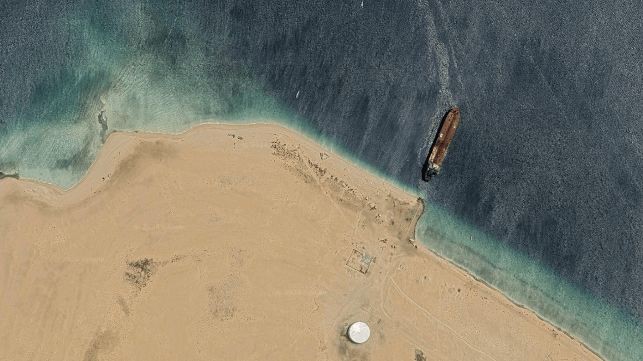
The recent movements of the sanctioned chemical/oil products tanker Silver (IMO 9309576) are a rich illustration of how the attractions of profit so easily overcome political loyalties, and how sanctions are ignored by the unscrupulous without consequences.
The Silver is false-flagged in landlocked Mali, and is subject to secondary sanctions by the EU, UK (OFSI) and United States’ OFAC, for transporting Russian crude oil and petroleum products. The ship has been previously known as the NS Silver and the Sapphire.
Although owned and managed from Dubai, the Silver was sanctioned by OFAC on January 10, 2025 for its association with the Joint Stock Company Sovcomflot, Russia’s largest shipping company. Sovcomflot was sanctioned by the EU, OFSI and OFAC in March 2022, following the Russian invasion of Ukraine.
The Silver is managed by Stream Ship Management FZCO, a Free Zone company based in the IFZA Business Park, Dubai Silicon Oasis, Dubai, United Arab Emirates. Founded in 2023, Stream Ship at one time managed 46 tankers, most of them previously controlled by Sovcomflot. Likewise, some Stream Ship staff have previously been associated with Sovcomflot.
Although all such details are prone to frequent changes, which may explain why current commercial registry records are difficult to find, the Silver has been recently owned by Brigantine Shipping Inc., of the same address.
Silver has a history of shipping Russian oil from the Black Sea to ports in the Mediterranean. Her most recent journey, however, commenced at Iran’s Kharg Island crude loading terminal. She then transited the Straits of Hormuz and loitered in the Fujairah Anchorage, during which time she briefly made a trip close into port, possibly making a quick stop alongside. Probably on January 19 she set off, lingered en route, and crossed into the Red Sea to anchor off Salif, a port controlled by the Houthis - without first calling in to Djibouti for inspection, as is required by the UN Verification and Inspection Mechanism for Yemen (UNVIM) team.
During the time she was anchored off Salif, she is likely to have come into the close-by oil terminal for unloading. In recent days, the Silver set off for Port Sudan, where she was scheduled to arrive on February 1, and is now indicated as being at anchor off the port.

that matters most
Get the latest maritime news delivered to your inbox daily.
Most of the details gathered about this particular voyage can be discovered by an amateur with an internet-connected computer anywhere in the world. In this one voyage of the Silver, there is common enterprise between entities associated with Russia, Iran, the UAE, the Houthis and the Sudanese government, all in clear breach of numerous UN and sanctions in multiple other jurisdictions, and in activity which is easily traceable. Breaking sanctions can clearly be done without fear of consequences to wider diplomatic and trade relations, and without fear of retaliation.
Such a situation only prevails when those breaching sanctions can rely on those imposing them to ineffectively follow due legal process. Either sanctions should be retired or enforced; otherwise, actors will resort increasingly to simple, effective but ultimately dangerous direct, unregulated action, a broad risk to the wider maritime community.
The opinions expressed herein are the author's and not necessarily those of The Maritime Executive.
