
UAE Exits OPEC, Casting Shadow Over the Oil Cartel's Future
The United Arab Emirates has announced a decision to leave the Organization of Petroleum Exporting Countries (OPEC), a major blow to the supply cartel that has exerted influence over global oil prices since 1960.
"The UAE’s decision to exit from OPEC reflects a policy-driven evolution aligned with long-term market fundamentals," said UAE energy minister Suhail Mohamed Al Mazrouei in a statement. "We thank OPEC and its member countries for decades of constructive cooperation. We remain committed to energy security, providing reliable, responsible, and lower-carbon supply while supporting stable global markets."
The UAE has been a member of OPEC for nearly 60 years, and is one of its most important swing producers. Like Saudi oilfields, the UAE's wells can vary their production rates without suffering long-term damage, giving national oil company ADNOC the ability to increase or decrease output as desired to affect global supply levels - and influence global prices. But in recent years, Emirati leaders have chafed at the restrictions that OPEC places on their ability to make sovereign decisions about export sales, and tensions have been brewing for some time. While the announcement of the country's exit was sudden, it was not unexpected.
"The country wants to increase output capacity and actually use it, rather than keep production capped, especially after the war ends and Hormuz [opens]," commented UAE-based Middle East energy analyst Amena Bakr, a senior researcher at Kpler. "The UAE is positioning itself as a more flexible, market-responsive producer and wants to tap into the capacity it’s invested in without constraints."

that matters most
Get the latest maritime news delivered to your inbox daily.
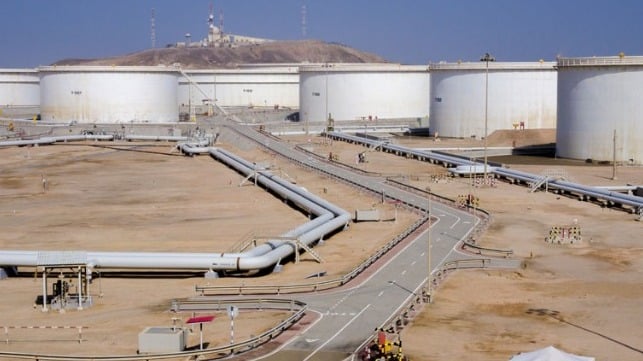
The move may strengthen the UAE's earning potential, and give it more flexibility to invest in pipeline capacity to loading ports on the Gulf of Oman - a desperately-needed backup, since Iran has demonstrated an ability to close the Strait of Hormuz to Emirati tanker traffic. ADNOC maintains a pipeline to Fujairah for export of its regional benchmark Dubai grade, but it is not large enough to accommodate full-rate production; this has forced the UAE to curtail output by shutting in wells, an undesirable choice that will take months to reverse when the conflict ends.
For OPEC, the UAE's exit is a blow, warns Bakr. For now it will have little market effect, as much of OPEC's output is already trapped west of Hormuz and there is little prospect of increasing supply in the near term. But the Emirates were the third-largest producer in the bloc, and their swing capacity made them an influential member. "It shakes group cohesion and makes everyone wonder who will leave next," Bakr said in a social media post. "Is this the end of market management?"