

Tanker Linked to Trump's Russian Diesel Waiver Pauses off U.S. East Coast
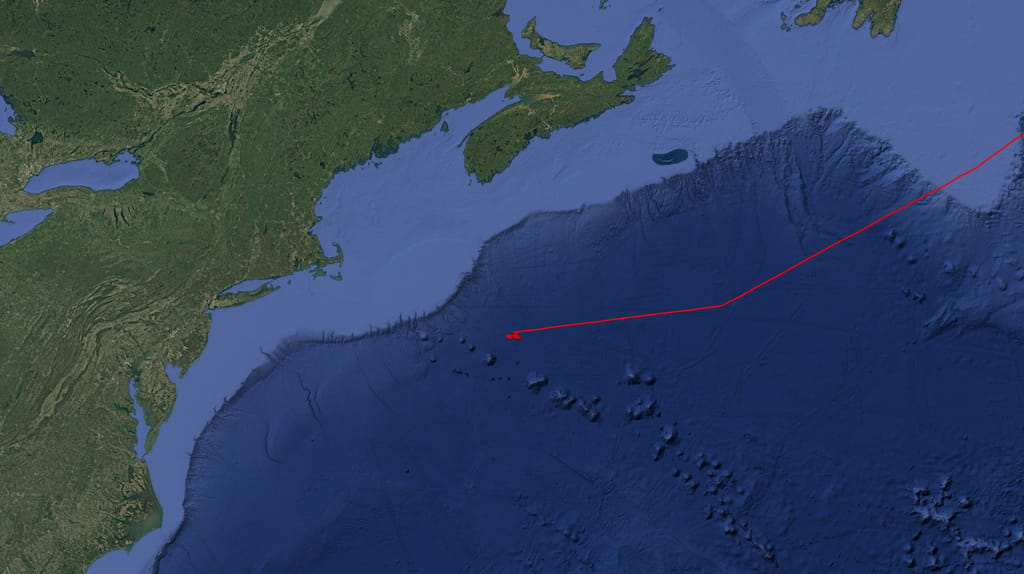
A Greek-owned tanker believed to be carrying a cargo of Russian diesel fuel appears to have paused a planned voyage to the United States, based on AIS data.
The product tanker Agioi Fanendes is one of several vessels believed to have loaded diesel at a Russian Baltic Sea terminal for delivery to the U.S. East Coast or Gulf Coast, part of an agreement between the Kremlin and the White House to free up scarce Russian distillate supplies for international sale. The U.S. produces more middle distillates than it can consume, but because of soaring global wholesale prices and a booming export market, domestic pump prices for diesel have hit historic highs across the United States - despite a regional abundance of the fuel.
Last month, ahead of the U.S. midterm elections, President Donald Trump reached an agreement to waive sanctions on Russian diesel fuel and import comparatively small quantities into the U.S. market - about 2.2 million barrels in October, 3.7 million in November and another 7.4 million barrels thereafter. The U.S. consumes about 120 million barrels of diesel per month.
The initiative to bring more diesel into the United States from Russia has attracted intense scrutiny from Ukraine's supporters in Congress, who note that the law prohibits the importation of Russian fuel, and that the president does not have unilateral waiver authority. The Ending Importation of Russian Oil Act of 2022 banned all Russian energy products from the United States; waiving the Act would require the consent of Congress and the president's certification that the war in Ukraine is over. Absent those conditions, Russian fuel imports are against the law, critics say - despite the U.S. Treasury's assurances to the contrary.
Environmental NGO Greenpeace has identified five vessels it believes to be linked to the diesel deal. Four have diverted southwards after transiting around England, away from the United States and potentially towards Brazil. Only the Agioi Fanendes remains near U.S. shores, and is expecting a frosty welcome.
According to intelligence service Kpler, the Fanendes took on a cargo of 40,000 tonnes of ultra-low sulfur diesel at Primorsk on October 23, then got under way for the Port of New York and New Jersey, with a projected arrival time of November 7. In late October, the governor of New Jersey - whose state contains all of the petroleum terminals within the seaport complex - slammed the plan and said that she would try to prevent any tankers involved from berthing. "Make no mistake: Trump's diesel deal with Putin is corrupt and illegal, and I am evaluating options to stop it from arriving at a port in New Jersey," Governor Mikie Sherrill (D) in a statement.
The owner of the Agioi Fanendes has also received a personally-addressed letter from Sen. Richard Blumenthal (D-CT) warning that unloading the cargo on U.S. shores would be an "illegal transaction or aiding and abetting it."
The Fanendes has been holding position in the Atlantic since November 9, broadcasting "for orders" on AIS, based on data provided by Pole Star Global. The tanker's next destinationis uncertain, but Energy Secretary Chris Wright suggested Tuesday that the cargo would likely go to a buyer abroad.

that matters most
Get the latest maritime news delivered to your inbox daily.
"It'll go to another port," Wright told Reuters. "We just want ?that diesel going into the world markets."
The White House's diesel deal is expected to be the only Russian export volume for the fuel for the foreseeable future, according to Reuters. Its refineries battered by Ukrainian drone strikes, Russia is conserving the production of diesel for its own war effort and for its domestic economy - but has carved out a small quota to make good on its pledge for the White House.