


Salvage Operation Has Cleared More Than Two-Thirds of MSC Baltic III
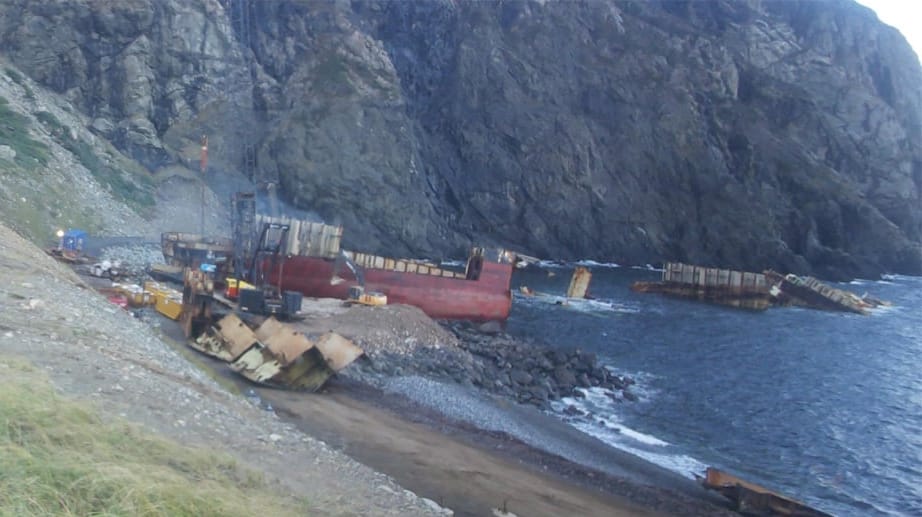
The salvage and recycling operation for the wrecked containershp MSC Baltic III continues to make strong progress. The Canadian Coast Guard in its most recent update on the operation says that Resolve Marine has removed approximately 68 percent of the tonnage of the vessel, with the remaining sections being pulled toward shore.
The latest figures compare with just over 6,000 tons that had been recovered as of the beginning of October. At that point, they said approximately 55 percent of the vessel’s tonnage had been recovered and sent for recycling. The latest calculation puts it at 7,445 tonnes recovered.
The 207-meter (679-foot) vessel had blacked out and beached on the coast of Newfoundland in February 2025. The focus of the first phase of the salvage operation was to remove the fuel from the ship and other potential pollutants as well as the cargo. The second phase, which focused on the recycling of the vessel, began in May 2026 with a contract to Resolve Marine.
After removing the accommodation block, most of the deck gear, and cargo hatches, the operation during the summer began cutting away the upper portion of the hull. By the end of July, the deconstruction of the upper portions of the hull was completed, and they began the pulling operation to move the remaining portion forward toward the shoreline for cutting and lifting. On September 9, a large portion of the bow section was removed from the MSC Baltic III.
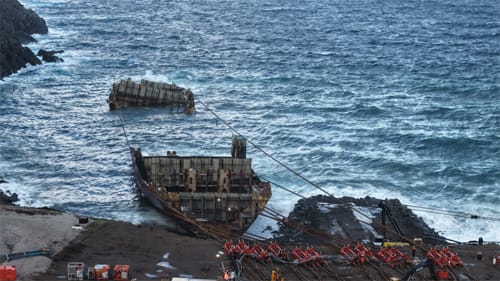
Remaining sections of the hull are being pulled forward with large chain pulls (Canadian Coast Guard)
According to the latest report, the forward and midship section of the hull have now been moved forward a total of 170 meters (557 feet). Resolve Marine has also commenced pulling the stern section forward, having moved it a total of 78 meters (256 feet).
The operation will continue until winter conditions overtake the area. They have not said if the hull will be fully recovered this year, but in the past said some operations could continue into 2027. The operation also calls for a restoration of the cover where the ship grounded after the wreck is cleared.
The Canadian Coast Guard reported a heavier level of oil release during this phase of the operation. The tanks were emptied, but they had warned that there was residual oil in the systems that would likely be released. The new report mentions observed sheening in Cedar Cove, which has had shoreline impacts, including oiled vegetation and debris, as well as fresh tar stains, balls, and smears. There have also been three deceased birds recovered from the area, although the cause of death is not yet confirmed.

that matters most
Get the latest maritime news delivered to your inbox daily.
The sheening typically occurs according to the Coast Guard following rough seas, which it says is to be expected due to the residual fuel onboard. Tank cleaning continues to remove residual fuel in areas that can be safely accessed to further reduce the risk of pollution entering the marine environment.
Daily shoreline monitoring also continues when it is safe to do so.
Under Canadian law, MSC Mediterranean Shipping Company is paying the cost of the removal and recovery operations.
