
Russia Operating Burned-Out Kerch Ferries as Barges
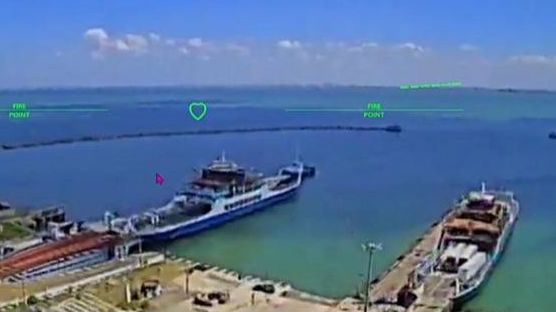
Ukraine's strategy of denying logistics access to the Crimean peninsula continues to advance on multiple fronts, including the thorough destruction of the ferry service across Kerch Strait, according to Ukraine's Unmanned Systems Forces. So badly damaged are most of the ferries on the route that Russian operators have resorted to towing burned-out ferry hulls on the short run back and forth across the strait using tugboats.
According to the USF unit 414 "Magyar's Birds," capacity on the Kerch crossing is down by 75 percent within two weeks of the start of the concentrated campaign of attacks on Russian shipping, and the USF is confident that the rest will be disappearing too.
Russian forces use the ferry route as an alternative to the adjacent Kerch Strait Bridge, primarily for movements of flammable and hazardous goods. Early in the war, Ukraine targeted the bridge while a trainload of fuel was making the crossing, and the resulting fire caused structural damage to the rail span - an incident which Russia is keen not to repeat. By targeting the ferry, Ukrainian forces are augmenting their shoreside drone campaign targeting Russian fuel supplies in Crimea - and potentially forcing flammable cargoes back onto the bridge.
The ferry Yeysk was struck on July 12, and damaged so thoroughly that it is not expected to be restored. Freighter SKS-One was hit three times, leaving it uneconomical to repair. Likewise, the ferry Mariya was repeatedly hit and taken out of service permanently.
Two vessels were fully disabled by multiple repeated strikes, the Lavrentiy and Panagia, have been pressed into service as deck barges. Lacking means to propel themselves, they are shuttled back and forth across the strait in a tug-and-barge configuration.
"The combined daily capacity of the four formerly operational ferries under standard non-combat conditions – 180–250 vehicles per day. Or rather, it used to be," claimed Magyar's Birds in a statement.
The unit identified the next Kerch replacement ferry vessel by name, and requested that the crew bring it into range more quickly.
Tanker strikes continue
Separately, on July 19, Ukrainian forces hit three Russia-linked tankers in the Black Sea and four oil depots in Stavropol, according to Ukrainian President Volodymyr Zelensky. Overnight Saturday, two additional tankers were destroyed in the Black Sea, along with a floating crane in the Sea of Azov.
One of the tankers hit on Friday was a Chevron-chartered, Norwegian-owned Suezmax, Nordic Zenith, and the strike left it damaged too much to load oil.
The Nordic Zenith was present off the Russian coast in order to load at the Western JV-operated Caspian Pipeline Consortium terminal. The CPC line carries almost exclusively Western-produced, Kazakh-origin oil, but passes through Russian territory on partly Russian-owned infrastructure. As it generates revenues for Russia, it has been repeatedly targeted by Ukrainian forces, despite the ownership interests of American oil majors - and despite protests from the Trump administration.
The Security Service of Ukraine (SBU) identified one of the shadow fleet tankers as the Emirati-owned Avero, alleging that it had moved Russian crude oil to China and India. While under way in the Black Sea in ballast condition, Avero's stern was struck and damaged by one of Ukraine's unmanned surface drones, taking a hit in a vulnerable location underneath the counter on the starboard quarter - a preferred target area used to strike the engine room and disable the vessel, without sinking it or causing a large spill. The SBU's surface drones continue to sporadically target shipping, though the focus of attention in the region has turned to the USF's Fire Point "middle strike" winged attack drones.
??? ??????? ?? ???? ?????? «????????? ?????» ?? ?? ??? ????????? ? ???????????????? ????
— ?? ??????? (@ServiceSsu) July 19, 2026
?? https://t.co/lqKxAkQeev pic.twitter.com/9W6v2f6KOw

that matters most
Get the latest maritime news delivered to your inbox daily.
Ukrainian forces also continued long-distance strikes on the Moscow region over the weekend, destroying two civilian retail warehouses and killing eight people and wounding more than 60 others. The towering pillar of smoke from the warehouse strikes loomed over Moscow and was visible from space.
— 414 Magyar's Birds (@414magyarbirds) July 18, 2026
