
Calls for Australia to Stabilize Regulations and Costs to Grow Cruising
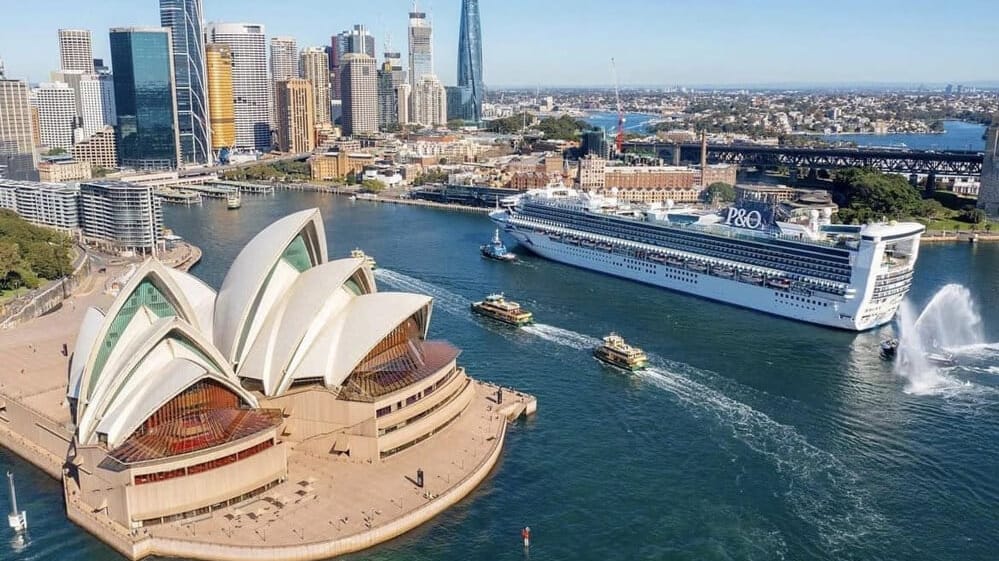
While Australia is reported to be the fourth largest overall cruise market, an alliance of the cruise industry, suppliers, and businesses that benefit from tourism issued a new call for Australia to stabilize its regulatory and cost environment. The group asserts that cruising, while being a big contributor to the regional economy, is declining in Australia because of a lack of a competitive environment.
The so-called “Australian Paddock to Port Alliance” launched its new campaign, saying that cruise lines spend A$1.5 billion (US$1 billion) annually in Australia and that spurs a total contribution of more than A$7.3 billion (US$5.2 billion) annually. They assert the industry supports more than 22,000 jobs.
However, the reports indicate that the number of passengers cruising from Australia is on the decline and not keeping pace with the broader industry. The Australian division of the trade group CLIA (Cruise Lines International Association) said 1.45 million Australians took a cruise in 2025, which was up 9.5 percent, largely driven by shorter duration cruising. It was the first time Australian cruising had beaten the 2018 record of 1.35 million passengers. Of that number, approximately 1.16 million sailed on cruises from Australia to New Zealand and the South Pacific, while approximately 286,000 Australians flew to cruises outside Australia, an increase of 17 percent.
The concern is in part based on reported declines in future bookings during the so-called “wave period” when people typically make their annual reservations. Further, the number of cruise ships based in Australia continues to decrease. Carnival Cruise Line is the only brand to have cruise ships based year-round in the market, and it has reported plans to reduce the number of cruises with a seasonal repositioning of one of its larger cruise ships to North America in 2028.
“Australia is struggling to attract ships to our waters because of regulatory uncertainties and rising costs, so we are becoming uncompetitive as a destination and losing tourism to other countries,” said CLIA Australia Executive Director Joel Katz in April while reporting the annual results.
Local sources use Sydney port calls as an example by highlighting that the costs in Sydney are up to twice as much as Miami, and that cruise lines can find significantly lower-cost ports elsewhere in Asia. In addition, the Coastal Trading (Revitalising Australian Shipping) Act 2012, which regulates the transport of cargo and passengers between Australian ports, requires the cruise lines to file for permits, which need to be renewed every one or two years, making long-term planning difficult for the lines.
Australia and New Zealand also introduced some of the strictest biofouling regulations that have required cruise ships to frequently clean or treat their hulls. In 2023, it made headlines when multiple cruise ships were denied entry to New Zealand’s most sensitive areas. The cruise ships were being diverted from Milford Sound, Fiordland National Park, and ports along the South Island.
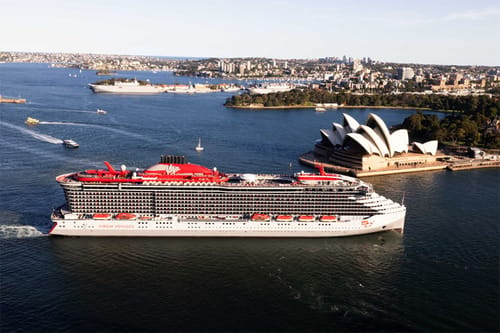
Virgin Voyages only operated one season from Australia in 2024, although they had called it a target market (Virgin Voyages)
Some cruise lines, including Disney Cruise Line, Virgin Voyages, and Cunard, stopped homeporting in Australia. Others send ships seasonally with a focus on air-sea travel from North America and other regions. One positive note emerged recently as Royal Caribbean International announced it would have three ships, Ovation of the Seas, Anthem of the Seas, and Voyager of the Seas, seasonally in Australia between November 2027 and April 2028.
“Cruise lines have been warning that Australia is becoming uncompetitive as a destination and risks losing cruise tourism to other countries, due to regulatory uncertainties and rising costs. This is despite the fact that demand is very strong and Aussies are cruising in record numbers,” says Katz.
While the problem appears to be becoming more acute as Australia diverges from the growth the industry is seeing internationally, it has been brewing for years.
Carnival Corporation has long complained about the challenges in the market. A decade ago, it moved to expand in Australia by transferring ships from other brands “down under.” In 2015, the then P&O Cruises fleet was increased to five ships. Carnival Corporation said Australia was one of the fastest-growing cruise markets with an average annual passenger growth rate of 20 percent. In 2016, it also announced an order for the first newbuild cruise ship for Australia.
Even before the pandemic shutdown of cruising, Carnival Corporation had complained about the poor returns from its operations in Australia. It retreated in Australia, reporting the sale of older ships and shifting the planned newbuild to the North American market. It said the regional infrastructure in Australia and the South Pacific was “not improving fast enough” to support a 133,500 gross ton newbuild.
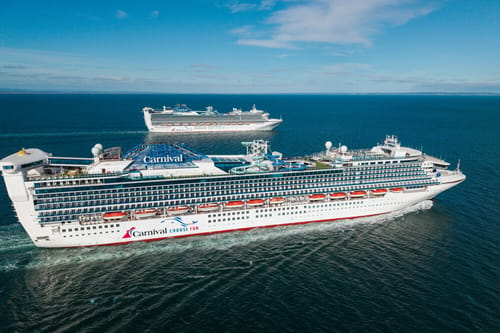
Carnival Cruise Line took over the two former Princess Cruises ships that were sailing for P&O Australia, but one will now go from year-round to seasonal (Carnival Cruise Line)
After the pandemic, Australian cruising was restored with two ships transferred from North America, but only one of the older ships returned. The repositioning, however, continued with Carnival announcing in 2024 that in a “strategic move,” it would be “sunsetting” the P&O Cruises Australia brand and folding it into the Australian operations of Carnival Cruise Line.
“Given the strategic reality of the South Pacific’s small population and significantly higher operating and regulatory costs, we’re adjusting our approach to give us the efficiencies we need,” said Carnival Corporation CEO Joel Weinstein. Even after the consolidation, it has now announced that starting in April 2028, the Carnival Adventure (108,865 gross tons with accommodations for up to 3,150 passengers) will reposition to North America for the northern hemisphere summer. It follows Carnival Luminosa (92,720 gross tons with accommodations for up to 2,800 passengers), which already operates seasonally between Australia and Alaska.

that matters most
Get the latest maritime news delivered to your inbox daily.
“We are asking for stable, practical and competitive settings so Australia can continue to attract cruise ships, passengers and investment, said CLIA’s CEO Joel Katz.”
The new alliance reports it will work to demonstrate the value of cruising to the regional economy and jobs market. It says it will also be advocating for stable, practical, and competitive settings that keep more cruise activity in Australia.
